
Should I poke a hole in a bulging ceiling?
A crew should do it safely at the lowest point with a bucket below. Doing it alone risks a sudden drop of wet drywall and insulation onto the person underneath.
Ceiling leaks in older brick houses can come from roofs, upstairs fixtures or pipes. The water is traced first, then the ceiling and cavity are dried before any repair work begins.
(888) 471-9821Call about the stain
A bulging or dripping ceiling holds water and can drop without warning, so keep people out from beneath it.
Place a bucket and let a crew open a small hole at the lowest spot, which releases trapped water in a controlled way.
If water reaches a light fixture or fan, turn off that circuit from the panel and keep clear of the fixture.
Take pictures of the stain, the ceiling and anything above it, such as a bath or roof, then call for help.
Ceiling leak cleanup typically costs $800 to $14,000 or more, depending on the source and the size of the wet area. One stain dried in place costs the least, while a sagging ceiling, two apartments or a collapse needs removal and longer drying.
For a planning number on your own loss, try the water damage cost calculator. Ranges are typical, not a quote: the water category, the square footage, the material class and how fast drying started move the final figure, which comes from the walkthrough and the moisture map.
The crew follows the stain upward with a meter and a thermal camera to a roof, a bath, a pipe or an appliance above.
A sag is drained at the lowest point, floors are covered and furniture is moved so falling drywall causes less harm.
Wet drywall and insulation are removed in clean sections, then a wet vacuum and wands pull moisture from the cavity.
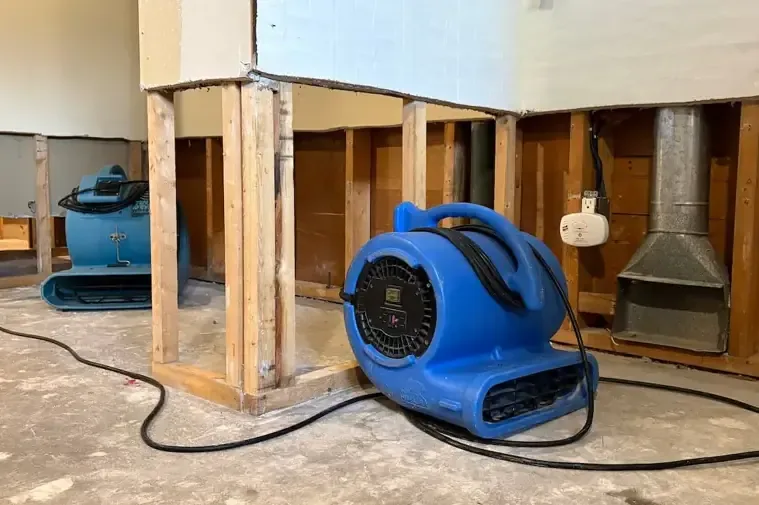
Air movers and a dehumidifier run until the joists, drywall and trim read dry, with a log sent to the adjuster.
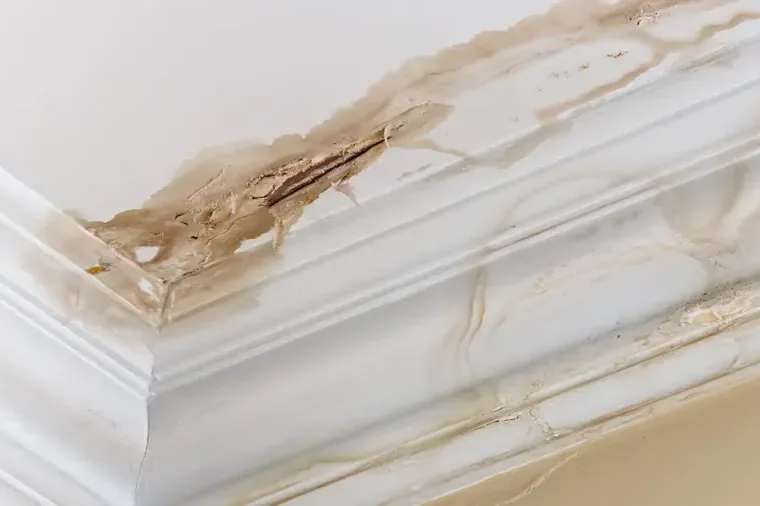
A ceiling stain looks small from below, but the wet area above it is often much larger. Insulation and drywall hold water like a sponge, and gravity pulls it to the lowest spot, so the visible stain may sit far from the true source. A small brown ring can mean a large wet area above, and the first hours decide how much drywall must be replaced.
In Nutley's older brick houses, the water can come from a roof that sheds rain badly, a bathroom fixture upstairs or a supply pipe in the joist space. The crew traces the water before opening anything, so drying focuses on the actual path instead of a guess, and the repair that follows stays as small as possible. Tracing also tells the owner whom to call next, such as a roofer or a plumber.
A ceiling that bulges can hold gallons of water, and the weight can bring drywall down. Relieving the water at a controlled spot is safer than waiting. Once the sag is released, the crew removes only what is soaked, which keeps the repair small and neat.
Joists and insulation need airflow even when the surface looks dry, because moisture left in the cavity can return as stains and peeling paint weeks later. See roof leak water damage for storm cases and burst pipe damage when the water began inside a pipe.
Ceiling leak crews work across ZIP code 07110, including Avondale, Glendale and the apartments and brick houses near Franklin Avenue and Memorial Park, at any hour of the day or night.
The same service nearby: ceiling leak water damage in Orange, Bloomfield, Verona.
A crew should do it safely at the lowest point with a bucket below. Doing it alone risks a sudden drop of wet drywall and insulation onto the person underneath.
Only after the cavity is dry. Paint over damp drywall bubbles and peels, and trapped moisture can soften the board, rust fasteners and bring the stain back.
A moisture meter and a thermal camera follow the damp trail upward, and the crew checks the roof, the baths, the appliances and the pipes above.
Fiberglass that holds water usually is. It sags against the drywall and stays wet for a long time, so removal speeds up drying and protects the new ceiling.
A roofer or plumber repairs the source. The restoration crew dries the structure and sends logs to the adjuster, so repairs and drying can run in parallel.
A single section often dries in several days. Two levels or a full ceiling can run longer, and readings decide the end, not the calendar.
Sudden leaks are often covered, while long term seepage may not be. Photos, moisture logs and the repair invoice help the claim, so keep every receipt from the first day.
Say where the stain is and what sits above it, and the dispatcher lines up the right crew, ladders and drying tools.