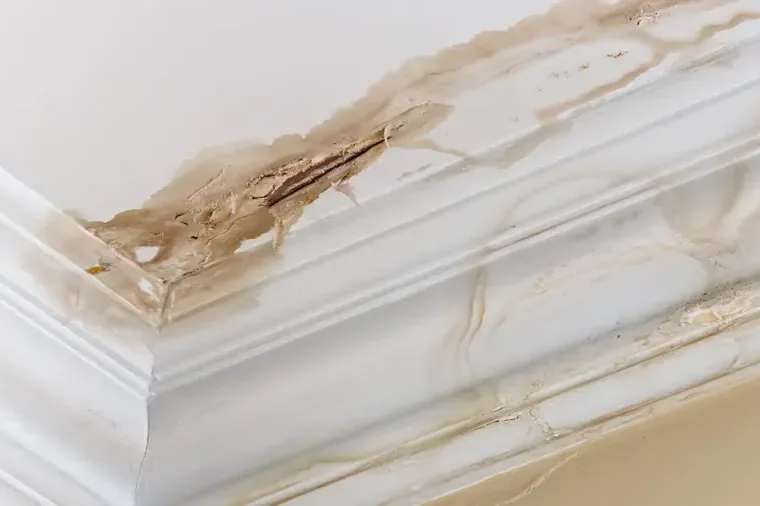


Can a stained ceiling be painted over?
Not until the source is fixed and the drywall and insulation are dry. Painting over damp board traps the moisture and the stain returns.
A brown stain or a bulging ceiling means water is sitting above it. Heavy downpours and storm emergencies can send water through roofs, and the crew relieves the pressure, finds the source and dries it.
(888) 471-9821Stop the ceiling drip
Stay clear of a bulging or sagging ceiling, and clear furniture and electronics from beneath it.
If water is dripping, set a bucket below. A small hole at the lowest point can drain a bulge safely, but leave larger sags to the crew.
Turn off any light fixture or fan in the wet area at the breaker, because water inside a fixture is a shock hazard.
Take pictures of the stain, and call so the crew can open the area and read the moisture.
Ceiling leak repair runs $800 to $2,500 when one stain can be dried in place and $2,500 to $6,000 when a sagging section is removed. Leaks that reach two units or cause a collapse run $6,000 to $14,000 or more.
For a planning number on your own loss, try the water damage cost calculator. Ranges are typical, not a quote: the water category, the square footage, the material class and how fast drying started move the final figure, which comes from the walkthrough and the moisture map.
The crew clears the area, drains any bulge into a bucket and shuts off power to wet fixtures before opening the ceiling and checking above it.
Meters and a thermal camera trace the water along the joists to a roof leak, a pipe or an appliance above.
Sagging or stained drywall is cut back to dry edges, and wet insulation is bagged so the cavity can dry, and the opening is kept as small as the readings allow.
Air movers and dehumidifiers run until readings match dry reference material, then the logs and photos go to the adjuster for the file.
A ceiling stain is rarely the whole story. The water usually travels along joists before it appears, soaks the insulation above and stays there, which keeps feeding the drywall long after the rain or the pipe has stopped. Ceilings are one of the few places where damage can fall on people, so safety comes before drying.
Heavy downpours and storm emergencies in the township can send water through roofs and into ceilings. Plumbing above, such as a bathroom or a washer, causes just as many stains.
Pinpointing the source matters because a repair at the wrong spot leaves the leak running. The crew checks the room above, the attic space and the wall tops, then reads the moisture along the joists until the dry edge is found.
Wet drywall can hold many times its normal weight before it drops. The crew relieves trapped water, supports or removes the board and keeps people out of the room. Delay raises the odds of a collapse and of damp insulation spreading the moisture. Painted ceilings often hide the damage. A brown ring, blistered paint or a soft spot under a finger are signs that the board has absorbed water, even when the surface feels dry.
Drywall seams, texture and paint are replaced only after the cavity reads dry. Roof causes are covered under roof leak water damage, and wet floors above fall under water extraction. Texture matching and paint are the last step, not the first. Skipping the dry-out beneath a fresh coat is the most common reason a stain returns after the repair.
Crews respond to wet ceilings across ZIP 07003, from Brookdale and Watsessing to Ampere North, Silver Lake and the blocks around Bloomfield Avenue and Broad Street, plus homes near Bloomfield College and the Bloomfield Green Historic District.
The same service nearby: ceiling leak water damage in Orange, Nutley, Verona.
Not until the source is fixed and the drywall and insulation are dry. Painting over damp board traps the moisture and the stain returns.
Keep clear, place a bucket under the lowest point and call. A small hole can release trapped water safely, but a trained crew should open larger sections.
A roof leak usually appears after rain and sits under the roof deck. A pipe leak shows up regardless of the weather and often follows a bathroom or kitchen above.
Most of the time, yes. Wet insulation holds water against drywall and framing and rarely dries in place, so it is bagged and replaced after drying.
Small sections dry in a few days, while larger or multi-level losses take longer. The IICRC S500 window of 24 to 48 hours marks the target for starting.
Sudden leaks from pipes, appliances and storm openings are commonly covered, while slow neglect usually is not. Photos and drying logs help the claim.
Yes. A tenant should notify the landlord right away, photograph the damage and keep the area clear, then call a crew if the landlord has not.
Water hidden above a ceiling keeps soaking the board and insulation. One call brings meters, removal and drying.