
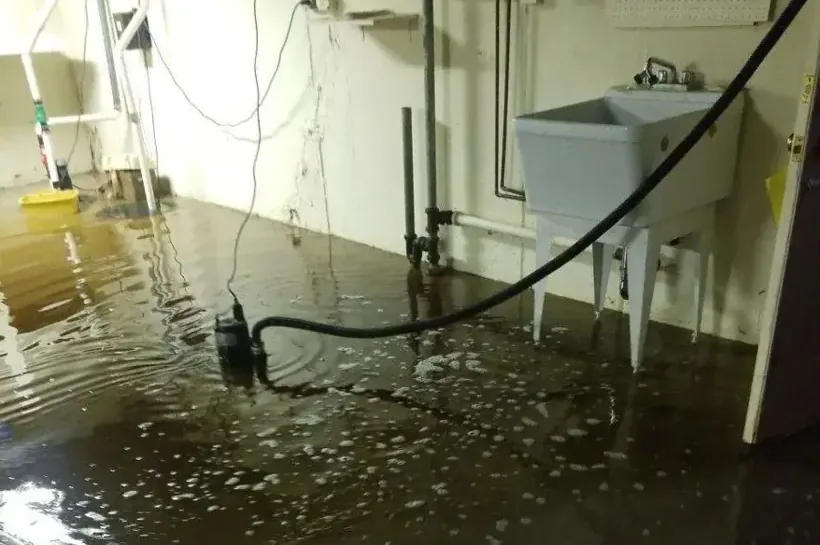

Is storm flood water in Orange dangerous?
Yes. Outside runoff is Category 3. It can carry sewage, fuel and chemicals, so avoid contact, keep children and pets away and wear boots and gloves if you have to walk through it.
The flood cleanup crew pumps out storm water that came in through doors, window wells and garages, treats it as contaminated, removes soaked materials and dries the house to verified readings.
(888) 471-9821Clear the storm water out now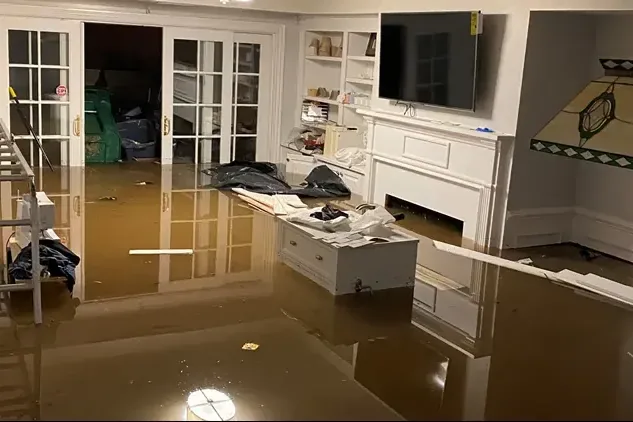
Do not go into a flooded basement or garage while water is still coming in or while it covers outlets.
Only from a dry spot. If the panel is in the flooded area, wait for the utility or an electrician.
Storm runoff carries soil, oil and sewage, so wear boots and gloves and keep children and pets away.
Photograph the waterline on the walls, the damaged contents and where the water came in.
Storm and flash flood cleanup here typically costs $2,000 to $40,000 or more. A few inches of runoff in an unfinished cellar sits at the low end; a flooded finished basement or ground floor with contents loss sits at the high end.
For a planning number on your own loss, try the water damage cost calculator. Ranges are typical, not a quote: the water category, the square footage, the material class and how fast drying started move the final figure, which comes from the walkthrough and the moisture map.
Once the water stops rising, the flood cleanup crew runs submersible pumps and truck-mounted extraction to take the level down fast.
Because outside runoff is contaminated, carpet, pad, insulation and the lower drywall it touched come out and are bagged.
Floors, framing and walls are washed and treated with an EPA-registered antimicrobial before any drying equipment goes in.
Air movers and dehumidifiers run against the framing and slab, with daily readings and photos kept for the flood claim.
Flash floods start fast. The National Weather Service defines a flash flood as a rapid rise of water into a normally dry area, beginning within six hours of the heavy rain that causes it. In a dense city like Orange, paved ground sends that rain to the lowest doors and window wells in minutes.
Water that came in from outside picked up soil, oil, fertilizer and often sewage on the way. Under the IICRC S500 standard it is Category 3, so the flood cleanup crew removes porous materials it touched and treats everything left before drying. The National Weather Service flood safety page covers what to do while water is still rising.
Rising surface water is usually covered by flood insurance, not a standard homeowners policy. Either way, the claim rests on the high-water photos, the list of removed materials and the drying logs. Ready.gov's flood checklist covers getting ready for the next storm. For water that came up a drain instead, see sewage backup cleanup.
After a storm, many houses on the same blocks flood at once, so photos, a moisture map and a list of removed materials taken on the first day keep a flood claim from stalling.
The restoration team covers ZIP 07050 and 07051, from Main Street and the Orange station area out along Central Avenue, Scotland Road and Highland Avenue to the blocks near the East Branch of the Rahway River.
Nearby coverage reaches East Orange, West Orange, South Orange, Glen Ridge, Montclair.
Yes. Outside runoff is Category 3. It can carry sewage, fuel and chemicals, so avoid contact, keep children and pets away and wear boots and gloves if you have to walk through it.
Usually not for rising surface water; that falls under flood insurance. Wind-driven rain through a damaged roof is treated differently. Check your own policy and talk with your insurer.
As soon as the water stops rising and power to the flooded area is off. Starting within the first day or two limits how far water wicks into walls and framing.
Because storm water is contaminated. Drywall and insulation it touched cannot be reliably cleaned, so a flood cut removes them above the wicking line and lets the framing dry.
Hard items like metal and glass can usually be cleaned. Upholstery, mattresses, paper and particleboard soaked by flood water are usually discarded and listed for the claim.
Usually five to ten days once removal is done, depending on how much framing, slab and masonry got wet. Daily readings decide when the equipment comes out.
A rapid rise of water into a normally dry area, starting within six hours of heavy rain, according to the National Weather Service. In a city, paved ground speeds it up.
Outside runoff is contaminated from the start. Getting it pumped out and the soaked materials removed tonight protects the framing.