What should I do when my washer floods the floor in Orange?
Close the washer supply valves, unplug it only if you can reach the plug from a dry spot, extract what you can, pull nearby rugs and photograph the hose and the floor.
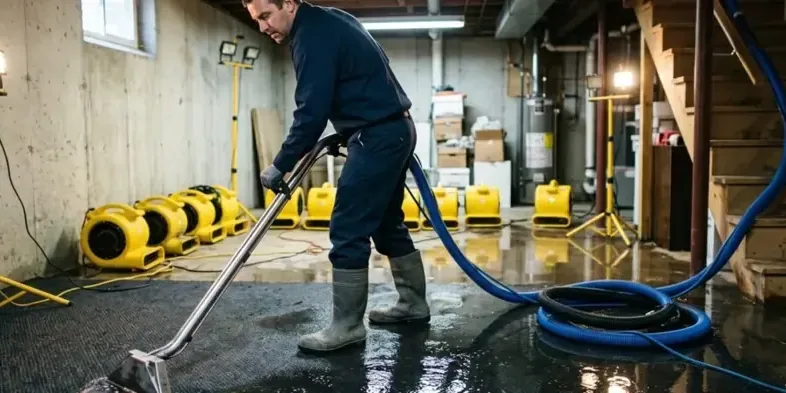
When a washer hose bursts or a dishwasher or ice maker leaks in an Orange kitchen or laundry, the extraction crew pulls water from under cabinets and flooring and dries the subfloor and the ceiling below to verified readings.
(888) 471-9821Washer flooded the floor? Call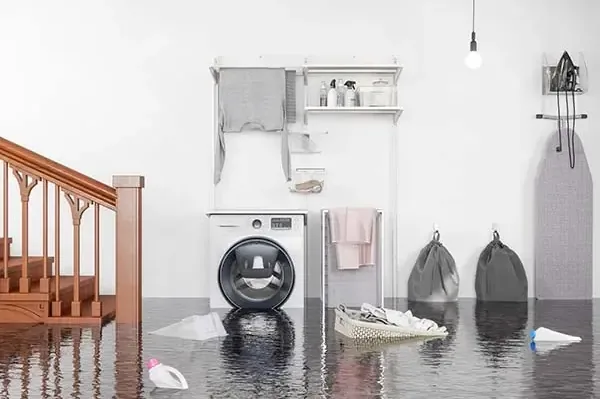
Close the supply valves behind the washer, under the sink for the dishwasher, or behind the fridge, or close the main.
Pull the plug only if you can reach it without standing in water; otherwise cut the circuit at the panel.
Water hides under cabinets, so removing the kick plate lets air in and shows how far it ran.
Take timestamped photos of the failed hose or part, the floor and any stain on the ceiling below.
Appliance leak water damage cleanup here typically costs $700 to $12,000 or more. A washer leak on a cellar floor sits at the low end; a dishwasher or ice maker leak under kitchen cabinets that reached the ceiling below sits at the high end.
For a planning number on your own loss, try the water damage cost calculator. Ranges are typical, not a quote: the water category, the square footage, the material class and how fast drying started move the final figure, which comes from the walkthrough and the moisture map.
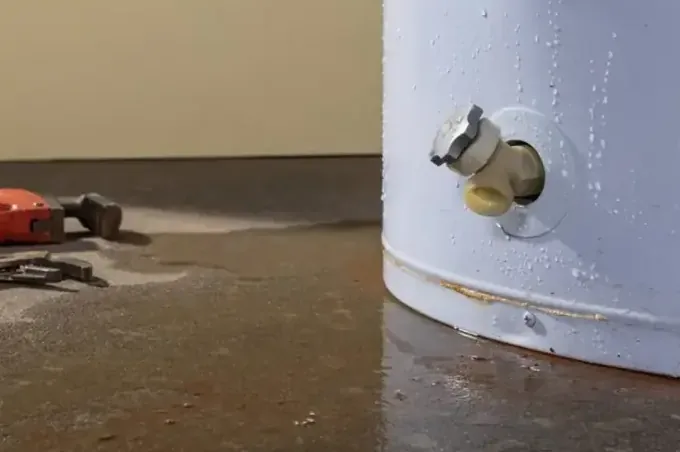
The tech who does the walkthrough confirms the supply is shut and notes the burst hose, cracked fitting or failed valve for the claim.
Water is pulled from the floor, from under the appliance and from cabinet bases, and toe-kicks come off so the void can be reached.
Moisture meters check the subfloor, the cabinet bases and the ceiling below, since appliance water travels under flooring fast.
Air movers and dehumidifiers push air under the cabinets and across the floor, with daily readings until the subfloor is dry.
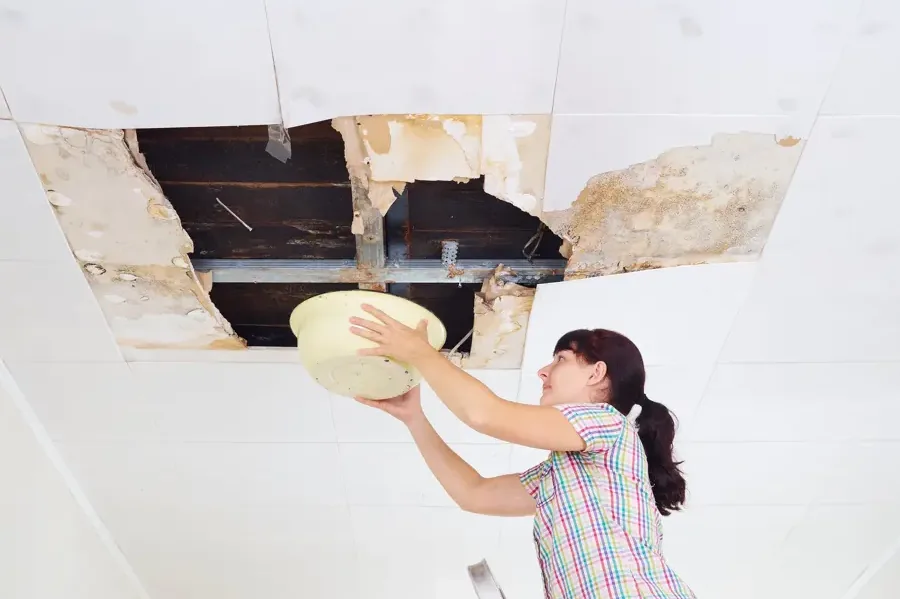
Appliance leaks are fast and quiet. A washer supply hose that bursts sends water at full house pressure, and a dishwasher or ice maker leak can run under the cabinets for days before the floor feels soft. Either way, most of the water ends up somewhere out of sight.
A burst supply hose is clean, Category 1 water. Washer drain water and dishwasher discharge are Category 2, so soaked carpet and pad are cleaned or removed rather than simply dried. The restoration team sorts that out at the walkthrough, because it changes what can be saved.
Braided steel washer hoses, a leak sensor and shutting the washer valves when the house is empty all help. EPA WaterSense covers household leak checks, and the Department of Energy's Energy Saver site covers appliance upkeep. When the leak reached the floor below, see ceiling leak water damage.
Cellar laundries add one more risk: a washer drain hose that slips out of a laundry tub or standpipe empties a full load onto the floor, and that Category 2 water runs straight toward the floor drain and any stored boxes in its path.
The restoration team covers ZIP 07050 and 07051, from Main Street and the Orange station area out along Central Avenue, Scotland Road and Highland Avenue to the blocks near the East Branch of the Rahway River.
Nearby coverage reaches East Orange, West Orange, South Orange, Glen Ridge, Montclair.
Close the washer supply valves, unplug it only if you can reach the plug from a dry spot, extract what you can, pull nearby rugs and photograph the hose and the floor.
Water from a burst supply hose is clean Category 1. Water from the drain hose or a tub that overflowed during the wash is Category 2 and is handled with more caution.
Usually not. Pulling the toe-kicks and drying the cabinet bases and subfloor in place works for most clean-water leaks. Cabinets with swollen particleboard may need replacing.
Usually two to four days for one room caught early. Water under flooring or in the ceiling below takes longer. Readings decide when the equipment comes out.
Sudden leaks from a burst hose or failed part are commonly covered after the deductible, while the appliance itself may not be. Check your own policy.
Yes. A slow drip can soak the cabinet base and subfloor for weeks, and wet materials can support growth within 24 to 48 hours of staying wet.
Water under cabinets and flooring keeps spreading out of sight. Get it extracted and the voids drying today.