
What should I do when water comes through my ceiling in Orange?
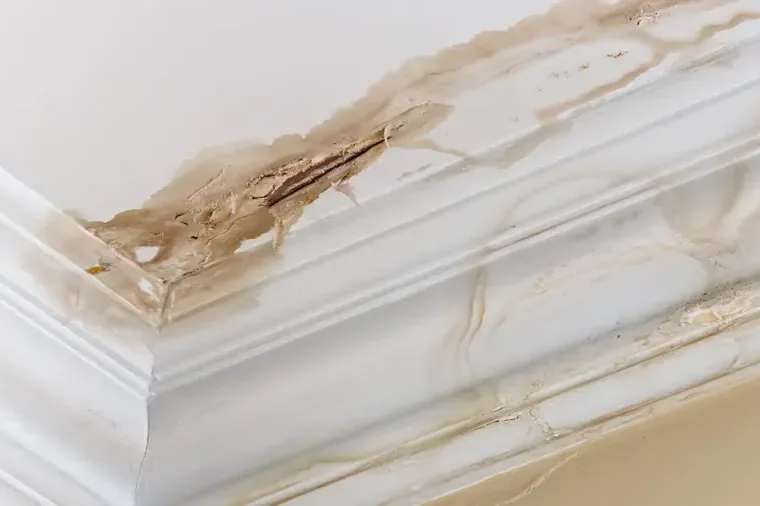
Keep people out from under any sag, cut power to ceiling fixtures, shut off the source above if you can reach it, catch the drips and photograph everything.
When water comes through an Orange ceiling from a bathroom, a pipe or the apartment above, the restoration team traces the source, drains sagging plaster or drywall safely and dries the joist bay to verified readings.
(888) 471-9821Ceiling dripping? Get help now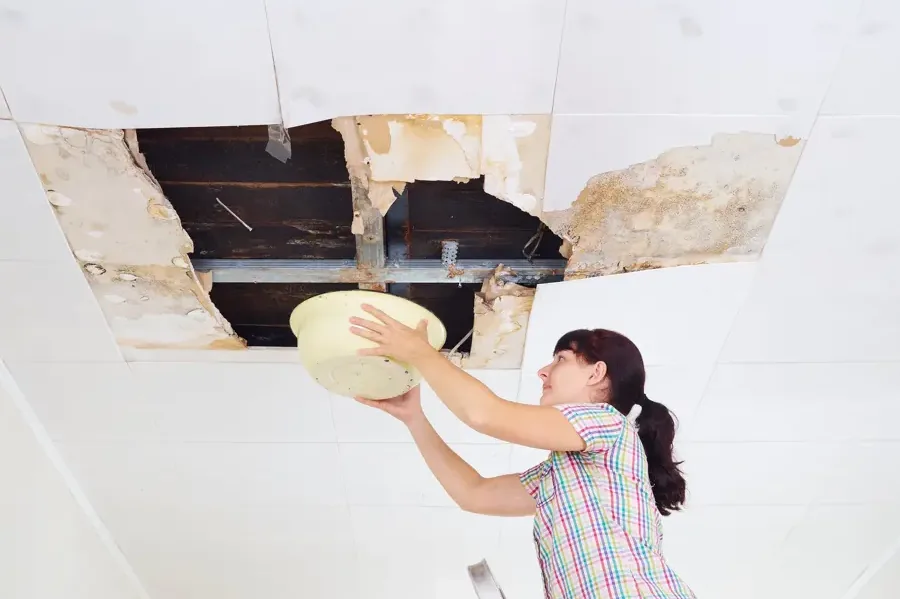
A bulging ceiling can hold gallons of water; keep people out of the room below it.
Turn off the circuit for any light or fan where water is dripping, from the breaker panel in a dry spot.
Check the bathroom, kitchen or apartment directly above, and shut off the fixture or the main if the source is there.
Set buckets and tarps under the leak, and photograph the stain, the drip and the room above.
Ceiling leak water damage repair here typically costs $800 to $14,000 or more. A small clean-water stain dried in place sits at the low end; a collapsed plaster ceiling below a bathroom or a leak through two apartments sits at the high end.
For a planning number on your own loss, try the water damage cost calculator. Ranges are typical, not a quote: the water category, the square footage, the material class and how fast drying started move the final figure, which comes from the walkthrough and the moisture map.
The tech who does the walkthrough checks the sag and the fixtures, cuts power to wet circuits and drains a bulging ceiling through a controlled hole.
Moisture meters and thermal imaging follow the water back to the bathroom, pipe or apartment it came from, which also sets the water category.
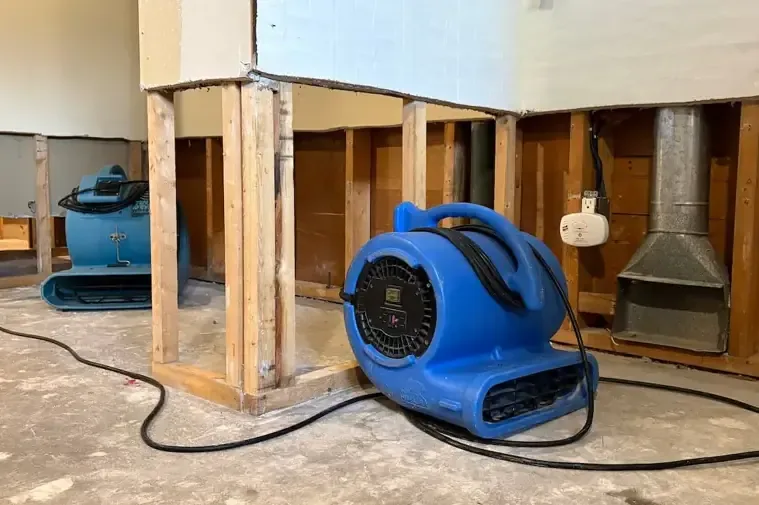
Plaster or drywall that sagged or crumbled is removed, and the joist bay is opened enough to get air across the wet framing.
Air movers aim into the open bay, dehumidifiers run in both rooms, and readings continue until the joists and subfloor are dry.
A ceiling leak is an interior problem: the water started inside the building, in a bathroom, a supply pipe, a drain or the apartment upstairs. That sets it apart from a roof leak, which starts at the roof and the attic. The source decides the water category and who else is involved.
Drywall that soaks through usually sags and comes out. Plaster on lath is heavier and more rigid; caught early it can often be dried in place, but plaster that has separated from the lath is a falling hazard and comes down. Readings and a careful look at the keys decide which it is.
Water from a toilet or drain is Category 2 or 3, so wet ceiling material is removed rather than dried. When a leak crosses two apartments, each unit gets its own moisture map and photos. EPA WaterSense lists the household leaks worth checking, and the EPA indoor air quality page covers why damp rooms need drying fast. For leaks that start at the roof, see roof leak water damage.
After the source is fixed and the bay is dry, the ceiling is closed up again. Patching over a damp joist bay is the most common reason a ceiling stain comes back weeks later, which is why the readings come first.
The restoration team covers ZIP 07050 and 07051, from Main Street and the Orange station area out along Central Avenue, Scotland Road and Highland Avenue to the blocks near the East Branch of the Rahway River.
Nearby coverage reaches East Orange, West Orange, South Orange, Glen Ridge, Montclair.
Keep people out from under any sag, cut power to ceiling fixtures, shut off the source above if you can reach it, catch the drips and photograph everything.
A controlled drain hole relieves the weight of trapped water, but it should be made with a bucket underneath and the power off. If the sag is large or plaster is cracking, keep clear.
Often, if the plaster is still attached to the lath and the leak was clean water caught early. Plaster that has separated or crumbled comes down for safety.
It depends on the cause, the lease and each party's insurance. A separate moisture map and photo set for each unit helps every insurer involved.
Usually two to four days for a stain dried in place, longer when the joist bay is opened or the water came from a drain. Readings decide when it is dry.
No. A ceiling leak starts inside, from a bathroom, pipe or the unit above. A roof leak starts at the roof, flashing or attic, and is handled on its own page.
Yes. Water in a light fixture or fan box is a shock hazard. Turn off that circuit and have the fixture checked before it is used again.
A soaked ceiling gets heavier as it holds water. Get the sag drained and the bay drying before it lets go.