
Does the crew repair the roof?
No. A roofer handles the roof. The crew dries the attic, insulation, ceilings and walls inside, and shares moisture findings with the roofer so repairs target the right spot.
Roof leaks follow heavy storms on a built-out grid of brick houses and tree streets. The wet attic, insulation and ceilings are dried and checked for hidden damp spots, while a roofer handles the roof itself.
(888) 471-9821Call about the roof leak damage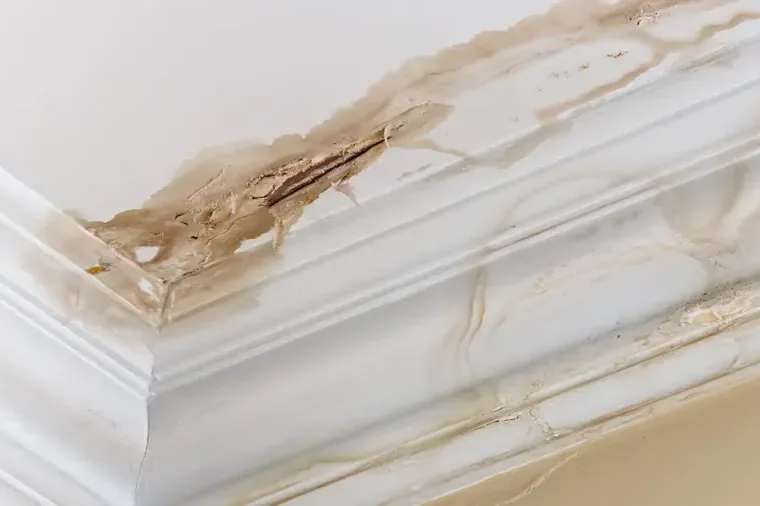
Move furniture, lift rugs and set buckets under drips, then cover large items with plastic sheeting.
Keep clear of bulging ceilings, and let a crew relieve a heavy sag at its lowest point.
Ask a roofer for a tarp or temporary patch, since the restoration crew works inside the building.
Record the stains, the attic if it is safe to reach, and any damaged shingles seen from the ground.
Roof leak interior cleanup usually runs from $1,000 to $16,000 or more. One ceiling with a small leak costs the least, while a storm leak through several rooms and the attic costs the most, and the written scope sets the number.
For a planning number on your own loss, try the water damage cost calculator. Ranges are typical, not a quote: the water category, the square footage, the material class and how fast drying started move the final figure, which comes from the walkthrough and the moisture map.
The crew looks for entry points from inside and notes where stains meet the roof, so the roofer has clear information.
Wet insulation is bagged and removed, and sheathing and rafters are metered so drying equipment targets the damp wood, with fans and dehumidifiers set up for the attic space.
Ceilings and walls are opened where they read wet, and air movers and dehumidifiers dry the cavities and trim.
Daily readings, photos and an equipment log are compiled for the adjuster before the crew removes any machines.
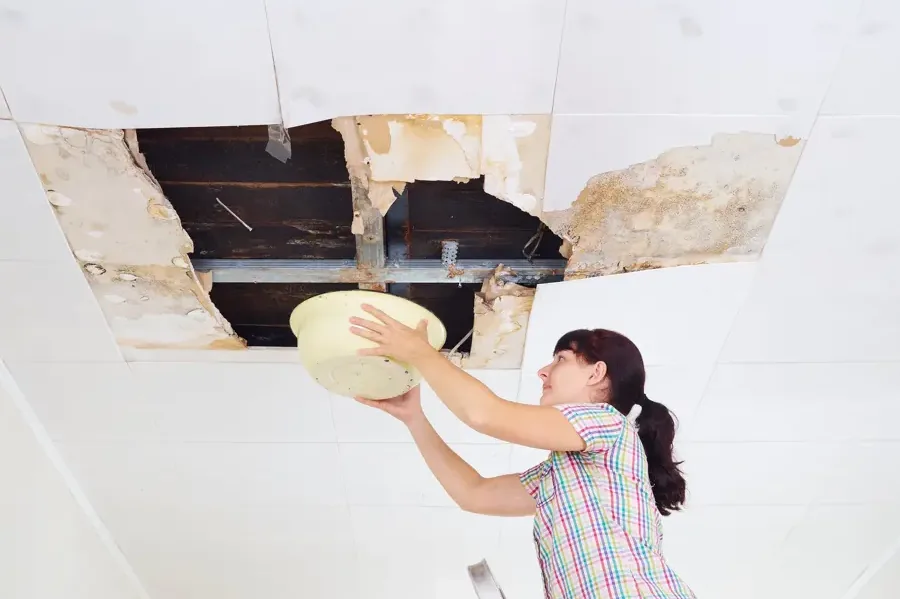
Heavy storms test every roof, and a small gap in flashing or shingles can let in a surprising amount of water. By the time a stain appears on a ceiling, insulation and framing above it may have been wet for days. Water also travels along rafters and down wall cavities, so the stain can sit far from the actual hole in the roof.
The township describes tree streets, brick houses and parkland on a built-out grid. Tree limbs, clogged gutters and aging shingles all add to the risk, and a leak in one corner of the roof can send water along a rafter to a distant ceiling, where it finally shows as a brown ring or a drip.
Insulation that stays wet loses its value, and it keeps pressing moisture into the ceiling below. Removing it and drying the framing stops the cycle and protects the new drywall and paint that follow. Attic readings are repeated during the job, since wood sheathing can look dry on the surface and still hold water inside.
The roof must be sealed so the drying holds, and the crew coordinates with the roofer so neither job undoes the other. For stains and sags, read about ceiling leak damage, and see structural drying for the equipment used in the attic and walls.
Interior roof leak work covers ZIP code 07110, including Avondale, Glendale and the brick houses near Booth Park, DeMuro Park and Franklin Avenue, at any hour after a storm, whether the leak is in an attic or a top floor.
The same service nearby: roof leak water damage in Orange, Bloomfield, Verona.
No. A roofer handles the roof. The crew dries the attic, insulation, ceilings and walls inside, and shares moisture findings with the roofer so repairs target the right spot.
Wet insulation and sheathing hide above the stain. If they stay wet, the ceiling below keeps absorbing moisture.
Yes. Trapped moisture can soften drywall and framing over time, stain finishes and spread to nearby rooms, so drying thoroughly now prevents larger repairs later.
Climbing a wet roof is dangerous, especially in rain or wind. A roofer can place a tarp safely, and the crew can dry the interior at the same time.
Most wet fiberglass is removed because it holds water and mats down. Foam and some blown in types can dry in place, and a meter reading decides which applies.
Storm related leaks are often covered, while wear and tear may not be. The adjuster reviews photos, the roofer's findings and the policy, so a clear record from day one helps.
Describe the stains and rooms reached, and the dispatcher sends a crew to dry the interior.