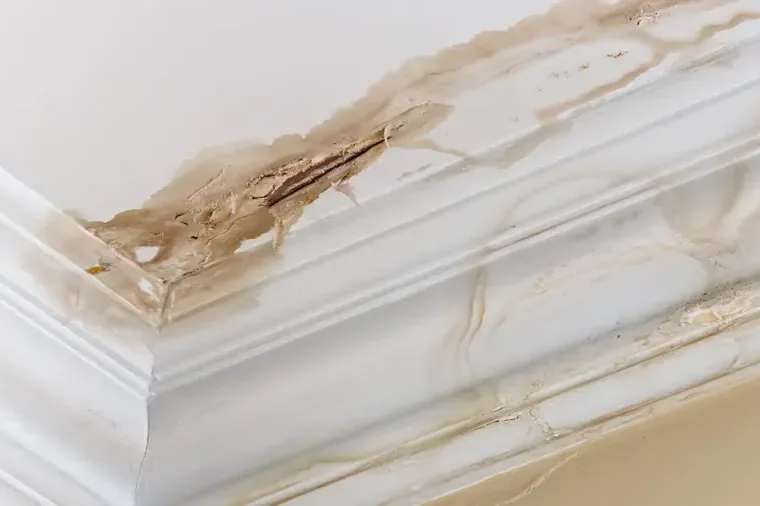


Can I just paint over a ceiling stain?
Not safely. Paint seals in moisture and hides a growing problem, so the ceiling should be checked with a meter first and dried if it reads wet, since the stain returns otherwise.
A wet ceiling can hide gallons above the drywall, so the crew finds the source, opens the ceiling safely and dries the insulation and framing before the stain turns into a collapse.
(888) 471-9821Dry the ceiling now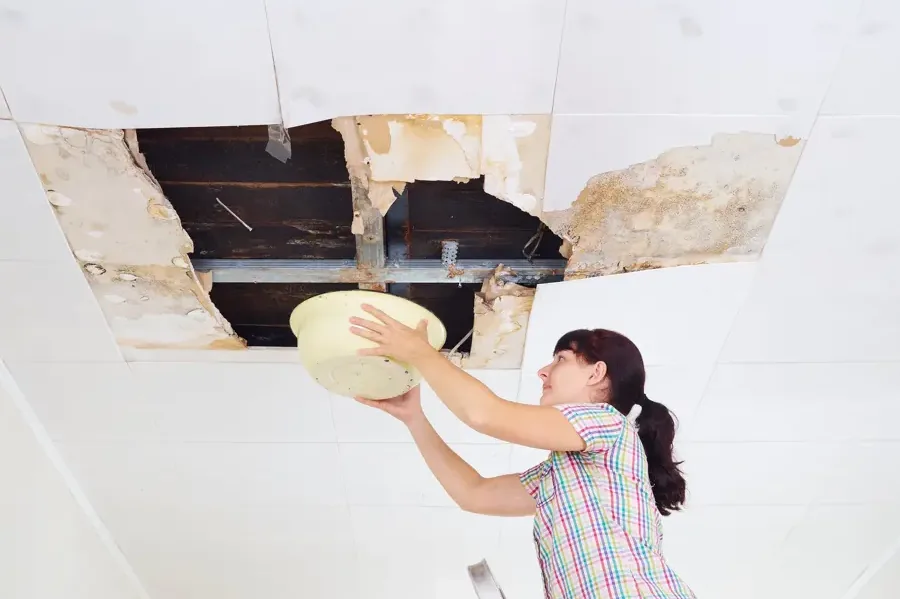
Keep people and pets out of any room with a bulging or dripping ceiling, because wet drywall can drop without warning.
Place buckets under active drips and move furniture away. Do not poke the sag unless a crew or professional tells you it is safe.
If water is dripping from a fixture, turn off the circuit at the panel, and keep away from switches and outlets on that ceiling.
Take pictures of the stain, then call the restoration crew, and also tell your landlord or building manager if the leak comes from above.
A ceiling leak that is caught early may only need drying in place, while a sagging section means removal, replacement and a larger crew. Cost grows with the size of the wet area and the number of units involved.
For a planning number on your own loss, try the water damage cost calculator. Ranges are typical, not a quote: the water category, the square footage, the material class and how fast drying started move the final figure, which comes from the walkthrough and the moisture map.
Meters and a thermal camera map the wet area, and the crew works out whether the water came from a roof, a pipe or the unit above.
A bowed ceiling is drained through a small controlled opening, then the wet drywall and insulation are cut back to a dry edge.
Air movers and dehumidifiers pull moisture out of joists and the remaining drywall, with air directed straight into the open cavity.
Readings are taken at the start and on each visit, and the photos and logs are kept for the insurer and, where relevant, other owners.
Snow is common from December to March, and the Bloomfield Avenue corridor includes condos and townhomes where one unit's plumbing sits above another's ceiling. Either situation can send water through a ceiling with little warning, so the first step is always to keep the room clear.
Drywall soaks water like a sponge, and insulation holds it against the joists. The ceiling may look only slightly stained while pounds of water sit above it, and the weight can bring the whole section down onto furniture or people. Water pooled above a ceiling can be heavy enough to bring down the drywall without any warning drip.
A ceiling stain is rarely directly under the leak. Water travels along joists before it appears, which is why the crew checks above and beside the stain. Thermal images show cold wet patches that a flashlight misses. When the cause is the roof, see roof leak water damage; when it is a pipe, burst pipe water damage applies.
In multi-unit buildings, documentation helps owners and managers agree on the cause. Written readings and photos taken early give everyone the same starting point, which avoids long arguments later. Local services are listed on the town overview.
Ceiling leak service covers ZIP 07044, including Hillcrest, Verona Lake and the Verona Park area, with condos and townhomes along the Bloomfield Avenue corridor a regular part of the work across the township.
The same service nearby: ceiling leak water damage in Orange, Bloomfield, Nutley.
Not safely. Paint seals in moisture and hides a growing problem, so the ceiling should be checked with a meter first and dried if it reads wet, since the stain returns otherwise.
Yes. A bulge means trapped water and a risk of collapse, so keep the room clear and call a crew who can release the water in a controlled way.
That depends on your lease, deed and building rules. The crew documents the water path and source, and owners, managers and insurers decide responsibility.
Wet insulation is usually removed and replaced after the cavity is dry, because it holds water and loses its insulating value once soaked.
Drywall and framing often dry in several days with equipment, though thick plaster or repeated leaks may need longer. Readings decide when to stop.
The crew traces moisture to the likely entry point and reports it. The roofer or plumber repairs it, and the two trades usually work in parallel.
Debris is cleared and sealed, the opening is dried and the cause is documented. Do not stand under any remaining sag while you wait.
Call now, say where the stain is and whether it is sagging, and a coordinator will send a crew to the property.