

Is basement flood water safe to touch?
Not if it came up a floor drain, in from outside or from a sewer. That water is Category 3. Clean water from a supply pipe is safer at first but degrades as it sits.
The restoration team pumps out flooded Orange cellars and finished basements, sorts out whether the water is clean, gray or black, removes what cannot be saved and dries the walls and slab to verified readings.
(888) 471-9821Pump the flooded basement out
If water covers outlets, the furnace or the panel area, keep out of the basement until the power to it is off.
Note whether water is seeping through walls, rising at the floor drain or coming from a pipe, since that sets the category.
Carry photos, papers and electronics upstairs, and lift boxes off the floor if it is safe to reach them.
Photograph the depth on the walls, the furnace and water heater, and every damaged item before it is moved.
Basement flooding cleanup here typically costs $1,500 to $25,000 or more. An unfinished cellar with a little clean water sits at the low end; a finished basement with carpet, drywall and Category 3 water sits at the high end.
For a planning number on your own loss, try the water damage cost calculator. Ranges are typical, not a quote: the water category, the square footage, the material class and how fast drying started move the final figure, which comes from the walkthrough and the moisture map.
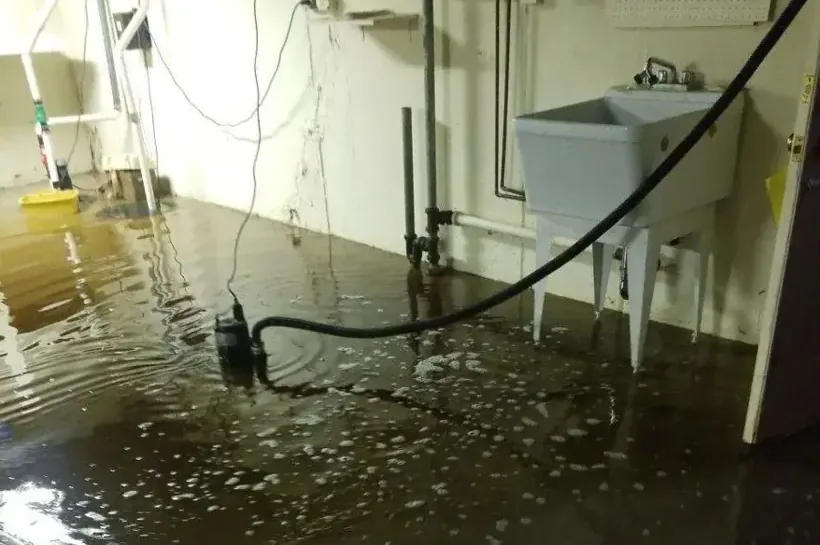
The response team checks power and gas around the water, then submersible pumps take the level down before anyone works in it.
The tech who does the walkthrough identifies the source, because seepage, drain backflow and a burst pipe each change what can be saved.
Saturated carpet, pad and soaked drywall come out where they cannot be dried, and the slab and walls are cleaned and treated.
LGR dehumidifiers and air movers run against the block walls and slab, with daily readings until the drying goal is met.
Basements in Orange take water from more directions than any other part of the house: through foundation walls after heavy rain, up the floor drain when the sewer is full, from a sump pump that stopped, or from a pipe or water heater inside the room.
A finished room below grade turns the same water into a bigger loss. Carpet, pad, drywall, insulation and furniture all soak it up. The restoration team removes what cannot be dried, usually the lower drywall and any carpet touched by contaminated water, and dries the framing and slab behind it. A basement apartment gets its own moisture map and photo set, which keeps the claim straight for an owner and a tenant.
The National Weather Service page on New Jersey flooding covers the flood types common across the state, and the FEMA flood map program shows whether a property sits in a mapped flood zone. When the basement relies on a pump, see sump pump failure cleanup; when water came up a drain, see sewage backup cleanup.
The restoration team covers ZIP 07050 and 07051, from Main Street and the Orange station area out along Central Avenue, Scotland Road and Highland Avenue to the blocks near the East Branch of the Rahway River.
Nearby coverage reaches East Orange, West Orange, South Orange, Glen Ridge, Montclair.
Not if it came up a floor drain, in from outside or from a sewer. That water is Category 3. Clean water from a supply pipe is safer at first but degrades as it sits.
Often the framing, the slab and some wall material can be dried. Carpet, pad and drywall touched by contaminated water are removed, and the rest is dried and verified with readings.
Usually four to seven days for an unfinished cellar and longer for a finished basement, because block walls and the slab hold water. The equipment leaves on readings, not a date.
Heavy rain raises the water around the foundation and can fill the sewer, so water seeps through the walls or rises up the floor drain. A sump that cannot keep up adds to it.
It depends on the source. A burst pipe is commonly covered, drain and sump backups often need an endorsement, and surface water needs flood insurance. Check your own policy.
Yes. Any gas appliance or electrical equipment that sat in water should be checked by a qualified technician before it is used again.
Timestamped photos before removal, the water category and class, a moisture map of the walls and slab, daily drying logs and a line-item list of removed materials.
Water below grade keeps soaking into block, slab and framing. Getting the pumps in tonight shortens the drying.