

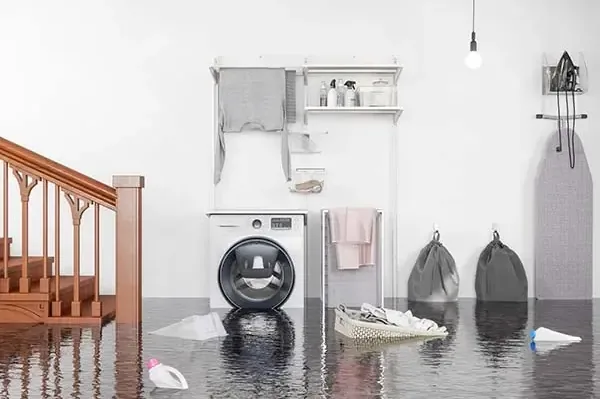
What should I do first when my water heater leaks?
Shut the cold-water supply valve on top of the tank, turn off the gas or the breaker, stay clear of hot water, move stored items and photograph the damage.
When a water heater lets go in an Orange cellar or closet, the extraction crew pulls the water before stored boxes and finished walls soak, then dries the floor, walls and anything around the tank to verified readings.
(888) 471-9821Tank burst in the cellar? Call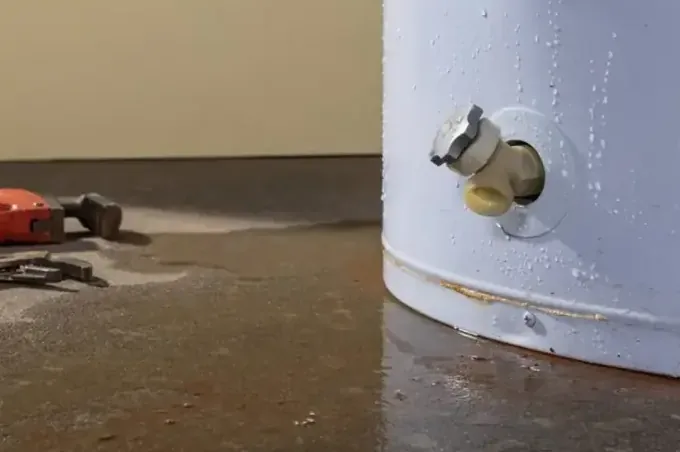
Close the cold-water valve on top of the tank, or the main if you cannot reach it, to stop the refill.
Set a gas heater to off or pilot, or switch off the breaker for an electric unit, before touching anything.
A failed tank can release scalding water; let it cool and stay clear of the relief valve outlet.
Lift stored items off the wet floor and take timestamped photos of the tank, the floor and the damaged contents.
Water heater leak cleanup here typically costs $800 to $12,000 or more, not counting the new heater. A leak on a bare cellar floor sits at the low end; a burst tank in a finished basement or a first-floor closet over a finished space sits at the high end.
For a planning number on your own loss, try the water damage cost calculator. Ranges are typical, not a quote: the water category, the square footage, the material class and how fast drying started move the final figure, which comes from the walkthrough and the moisture map.
The tech who does the walkthrough confirms the water, gas or power is off at the heater and that the area is safe to work in.
Standing water is pulled from the floor, the drain area and any carpet, and wet boxes and stored items are moved and listed.
Meters show how far water wicked into drywall, paneling, framing and the slab around the tank.
Air movers and dehumidifiers dry the space while the plumber replaces the heater, and readings confirm the room is dry.
A standard tank holds 40 to 80 gallons and keeps refilling from the supply until someone shuts it off. A slow drip from the relief valve can go unnoticed for weeks; a tank that splits empties all at once.
The plumber swaps the heater; the drying team dries the room. On a bare cellar floor that may take two or three days. Finished walls and carpet take longer. The Department of Energy's Energy Saver site covers water heater upkeep, and EPA WaterSense covers household leaks. When the leak flooded a finished basement, see basement flooding cleanup.
If the heater sits on a finished floor rather than a cellar slab, water can travel under the flooring into the next room, so meters check every adjoining wall and floor, not just the closet.
The restoration team covers ZIP 07050 and 07051, from Main Street and the Orange station area out along Central Avenue, Scotland Road and Highland Avenue to the blocks near the East Branch of the Rahway River.
Nearby coverage reaches East Orange, West Orange, South Orange, Glen Ridge, Montclair.
Shut the cold-water supply valve on top of the tank, turn off the gas or the breaker, stay clear of hot water, move stored items and photograph the damage.
Most home tanks hold 40 to 80 gallons, and a tank keeps refilling until the supply is shut off, so a burst tank can release far more than its size.
Sudden water damage from a burst tank is often covered, while the tank itself and slow leaks from wear often are not. Coverage depends on your policy, so check with your insurer.
Plastic bins and hard items usually clean up fine. Cardboard boxes, papers and fabric that soaked are often lost, so photograph and list them for the claim.
Usually two to three days for a bare cellar floor and longer for finished walls, carpet or a ceiling below. Readings decide when the equipment leaves.
A plumber replaces the heater and its connections. The restoration team handles the water damage, the drying and the documentation.
A failed tank keeps refilling until the supply is shut. Close the valve, then get the water out tonight.