
What should I do when the roof starts leaking in my Orange home?
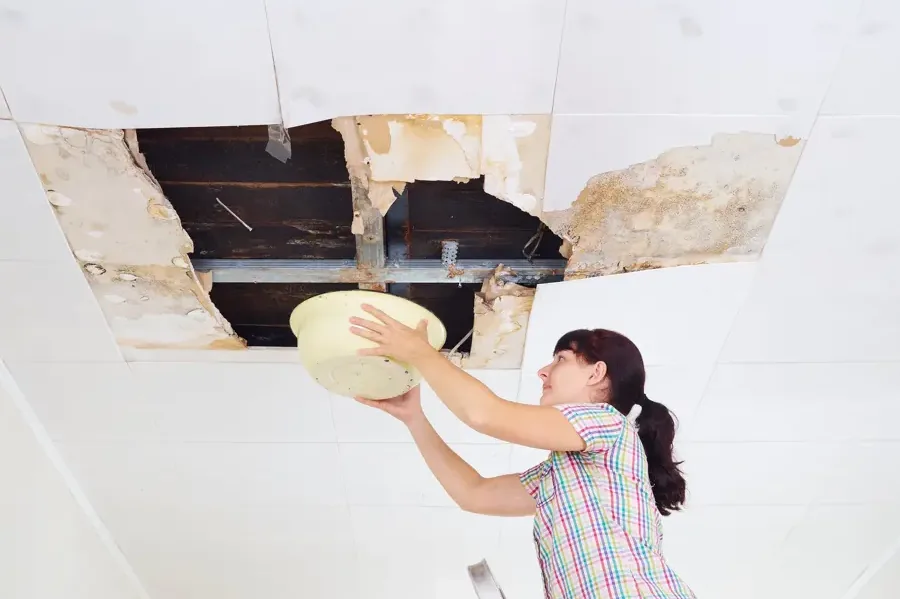
Move belongings out from under the drip, protect the floor, check the attic only if it is safe, get a roofer to tarp the roof and photograph the damage inside and out.
When rain or snowmelt gets past the roof of an Orange house or building, the restoration team pulls wet attic insulation, dries the roof deck, rafters and top-floor ceilings, and documents the damage while the roofer handles the roof.
(888) 471-9821Roof letting water in? Call now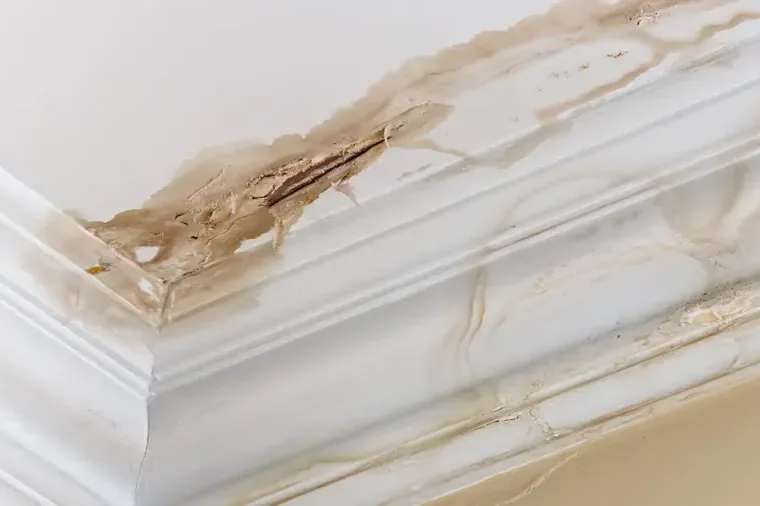
Clear furniture and electronics from under the leak and protect the floor with tarps and buckets.
Look for wet insulation and drips from the deck, but step only on framing, never between joists.
A roofer or tarp crew stops new water at the roof; drying cannot finish while rain keeps getting in.
Take timestamped photos of the ceiling stain, the attic and any visible roof damage from the ground.
Roof leak water damage cleanup here typically costs $1,000 to $16,000 or more, not counting the roof repair. A small leak that wet one ceiling sits at the low end; a storm leak that soaked the attic and several top-floor rooms sits at the high end.
For a planning number on your own loss, try the water damage cost calculator. Ranges are typical, not a quote: the water category, the square footage, the material class and how fast drying started move the final figure, which comes from the walkthrough and the moisture map.
The tech who does the walkthrough confirms a tarp or temporary repair is in place, since drying cannot finish while rain still gets in.
Thermal imaging and meters trace the water from the roof deck through the attic, the top-floor ceiling and any wall it ran down.
Soaked attic insulation is bagged and removed so the deck, rafters and ceiling joists can dry; new insulation goes in only once they test dry.
Air movers and dehumidifiers run in the attic and the rooms below, with daily readings until the framing and ceilings are dry.
A roof leak starts outside the living space: at worn flashing, a flat roof seam, a chimney, a vent or an ice dam at the eaves. The water then crosses the attic before it shows on a ceiling, so by the time a stain appears, the insulation above it is often soaked.
Wet fiberglass or cellulose insulation loses its value and holds water against the ceiling and the deck. The restoration team bags it, dries the roof deck, rafters and joists, and leaves new insulation for when the readings say dry. On the top floor, plaster and drywall ceilings are metered and dried in place where they are sound.
The National Weather Service winter safety page covers the snow and ice that lead to ice dams, and Ready.gov's severe weather page covers storm prep. For leaks that start inside the building instead, see ceiling leak water damage.
Drying cannot finish while water keeps getting in, so the roof repair and the drying run side by side. Once the roofer has tarped or patched the leak, the equipment stays until the deck, rafters and ceilings test dry.
The restoration team covers ZIP 07050 and 07051, from Main Street and the Orange station area out along Central Avenue, Scotland Road and Highland Avenue to the blocks near the East Branch of the Rahway River.
Nearby coverage reaches East Orange, West Orange, South Orange, Glen Ridge, Montclair.
Move belongings out from under the drip, protect the floor, check the attic only if it is safe, get a roofer to tarp the roof and photograph the damage inside and out.
Usually yes. Soaked insulation loses its value and holds water against the deck and ceiling, so it is removed and replaced after the framing tests dry.
A ridge of ice at the eaves that forms when snow melts on a warm roof and refreezes at the cold edge. Meltwater backs up behind it and gets under the shingles.
A roofer repairs the roof. The restoration team dries the attic, the ceilings and the rooms below and documents the water damage for the claim.
Sudden storm damage is often covered, while leaks from wear and old age often are not. Coverage depends on your policy, so check with your insurer.
Usually two to five days once the roof is tarped, depending on how much insulation, deck and ceiling got wet. Readings decide when the equipment leaves.
Once a tarp stops new water, drying the attic and ceilings quickly keeps the damage from growing.