
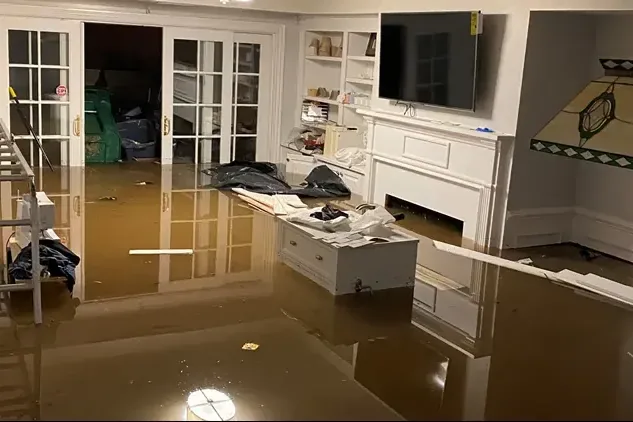

Is a sewage backup in an Orange basement dangerous?
Yes. It is Category 3 water and carries bacteria and viruses. Keep people and pets out, do not touch it without protective gear, and leave the cleanup to crews equipped for contaminated water.
The cleanup crew treats every sewage backup as Category 3 from the start: containment and protective gear first, contaminated porous materials removed, surfaces cleaned with an EPA-registered antimicrobial, then the structure dried to readings.
(888) 471-9821Get the backup contained now
Keep children, pets and anyone with a weak immune system away from the area and off the stairs.
Stop running sinks, showers, toilets and the washer, since every drain in the house feeds the same backup.
Skip the mop and the fan; stirring sewage spreads bacteria and pushes it into walls and the air.
Take photos of the water and the drain it came from, and open a window only if you can do it without walking through it.
Sewage backup cleanup here typically costs $2,000 to $30,000 or more. A small backup on a bare concrete floor sits at the low end; a finished basement with carpet, drywall and furniture soaked in sewage sits at the high end.
For a planning number on your own loss, try the water damage cost calculator. Ranges are typical, not a quote: the water category, the square footage, the material class and how fast drying started move the final figure, which comes from the walkthrough and the moisture map.
The cleanup crew sets plastic containment and HEPA air scrubbers, and every worker wears a respirator, gloves, boots and a protective suit.
Sewage is extracted, and carpet, pad, drywall and insulation touched by it are cut out above the waterline and bagged for disposal.
Remaining surfaces are washed and treated with an EPA-registered antimicrobial, left on for the dwell time on its label.
Air movers and dehumidifiers dry the framing and slab, and readings confirm the structure is dry before rebuilding starts.
In Orange, as everywhere, a sewage backup is the one water loss where nothing is dried in place first. Water that comes up a floor drain, a basement toilet or a cleanout carries bacteria and viruses, and the cleanup has to remove contamination before any drying begins.
Under the IICRC S500 standard, sewage is Category 3. Carpet, pad, drywall, insulation and upholstered furniture that it touches cannot be reliably disinfected, so they are removed, not dried. Hard surfaces such as concrete, tile and sealed wood are cleaned and treated. The EPA page on sanitary sewer overflows explains why this water is treated as a health hazard.
The crew works behind containment so contamination does not travel upstairs, and OSHA's flood cleanup guidance covers the protective gear this work calls for. Once the area is clean and dry, a plumber can clear the line and talk about a backwater valve. Backups after storms often come with basement flooding too.
Backups often arrive with big storms. During Hurricane Irene in August 2011, more than 10 inches of rain fell across the Passaic and Raritan basins, the kind of total that fills sewers across the region. In any apartment building on a shared building sewer, from Central Avenue to Main Street, a backup reaches the lowest unit first.
The restoration team covers ZIP 07050 and 07051, from Main Street and the Orange station area out along Central Avenue, Scotland Road and Highland Avenue to the blocks near the East Branch of the Rahway River.
Nearby coverage reaches East Orange, West Orange, South Orange, Glen Ridge, Montclair.
Yes. It is Category 3 water and carries bacteria and viruses. Keep people and pets out, do not touch it without protective gear, and leave the cleanup to crews equipped for contaminated water.
No. Carpet and pad touched by sewage are removed and discarded under the IICRC S500 standard, because they cannot be reliably disinfected.
Usually a flood cut above the highest wicking line, often 2 to 4 feet up, depending on how far moisture readings show the water climbed.
It depends on where the blockage is. The line from the house to the main is usually the owner's. Documenting the backup with photos helps whoever is responsible.
Many policies need a separate sewer or drain backup endorsement. Without it, the cleanup may not be covered. Check your own policy and talk with your insurer.
Removal and disinfection usually take one to two days, and drying the structure takes several more. The equipment leaves when readings confirm the materials are dry.
Upstairs rooms often stay usable when the backup is contained in the basement and the work area is sealed off. Anyone at higher health risk is better off staying elsewhere.
Backflow is Category 3 from the start. Keep everyone out and get the containment and removal going tonight.