
Is water from a leaking heater clean?
It starts as clean supply water but can pick up rust and sediment from the tank. It stays Category 1 only if the area is dried promptly.
A leaking or burst water heater can put a full tank across a floor in a short time. Crews pump the water, dry the floor and walls around the tank, and document the loss for the claim.
(888) 471-9821Dry out the tank leak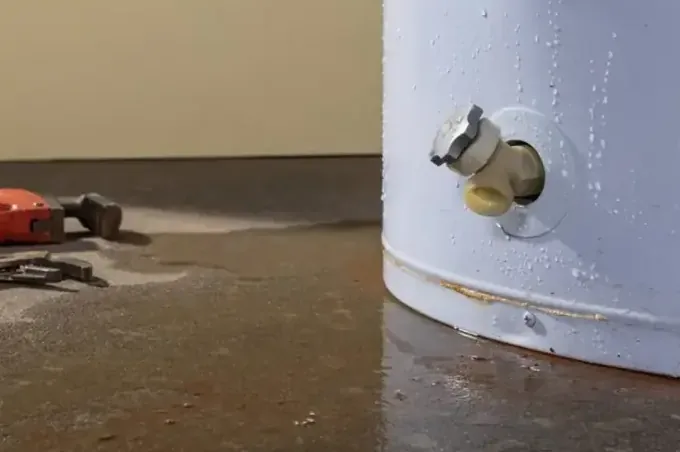
Close the cold water valve above the tank so no more water refills it, and turn the gas or power control to the off setting.
A pooled floor around a tank near a panel or outlets is a shock risk. Stay out until power to the area is confirmed off.
Move boxes and laundry away from the spreading puddle, and let hot water cool before anyone drains the tank.
Photograph the tank, the label and the wet floor, then phone a crew to remove the water before it wicks into walls and trim.
A water heater leak is often small, but a burst tank can release the whole volume at once. Cost follows the area wetted, the finish on the floor and whether the unit sits in a closet or an open cellar. The cards show the printed ranges.
For a planning number on your own loss, try the water damage cost calculator. Ranges are typical, not a quote: the water category, the square footage, the material class and how fast drying started move the final figure, which comes from the walkthrough and the moisture map.
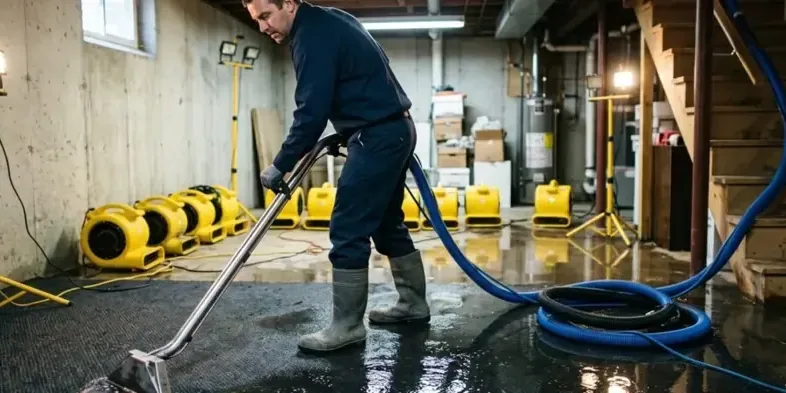
Wet vacuums and pumps remove the tank water from the floor, and nearby cardboard, rugs and stored items are lifted out of the puddle.
Meters follow moisture into the wall base, adjoining rooms and flooring seams, since tank water spreads in every direction from the unit.
Soaked baseboard, lower drywall and flooring that cannot dry are removed, leaving the wall cavity open to moving air.
Air movers and a dehumidifier run until the slab, trim and drywall read dry, then the equipment is removed and the numbers are saved.
A water heater sits on the floor of a closet, utility room or cellar, so a leak spreads across everything around it. In Irvington homes and shops the water often runs into nearby rooms before anyone notices the puddle.
A small drip at a fitting can run for weeks and weaken the floor beneath, while a corroded tank can fail and release dozens of gallons at once. Both leave water in the same place, and both need the area dried before repairs.
Bare concrete dries with dehumidifiers and airflow, while vinyl, laminate and carpet over a subfloor may need to be lifted. The crew explains which finishes can stay and which must be removed before drying begins. Leaks from washers continue on the appliance leak page.
The old unit, the label and the wet floor are photographed before the plumber removes anything. Those photos and the moisture readings give an adjuster a clear picture, and the written scope shows the dry out was complete.
Water heater crews serve ZIP 07111, including Upper Irvington, Irving Place the Civic Square area and the Chancellor Avenue corridor, bringing pumps, wet vacuums and dehumidifiers for closets, utility rooms and cellars.
The same service nearby: water heater leak cleanup in Orange, Millburn, Bloomfield.
It starts as clean supply water but can pick up rust and sediment from the tank. It stays Category 1 only if the area is dried promptly.
Yes. Close the cold water valve above the tank and switch the gas or electric control off before approaching any standing water. A pooled floor near the unit can be a shock hazard.
Concrete holds moisture for a long time. Without dehumidifiers and airflow, a slab can stay damp for weeks and keep wall bases and stored items wet.
A sudden failure that floods the area is often covered, but the tank itself usually is not. Gradual leaks can be excluded, so report quickly.
Small leaks on bare concrete may need only a couple of days. Finished rooms with flooring and wall damage usually need three to five days, and readings decide when the equipment can go.
Yes, it wicks up drywall and into baseboards. Opening the wall base lets air reach the studs and insulation, so moisture does not stay trapped behind paint.
It is better removed, because the unit blocks airflow and may be what caused the leak. A plumber can replace it once the crew has extracted the water.
Tell the crew where the unit sits and how far the water has spread, and the extraction and drying plan follows from that.