

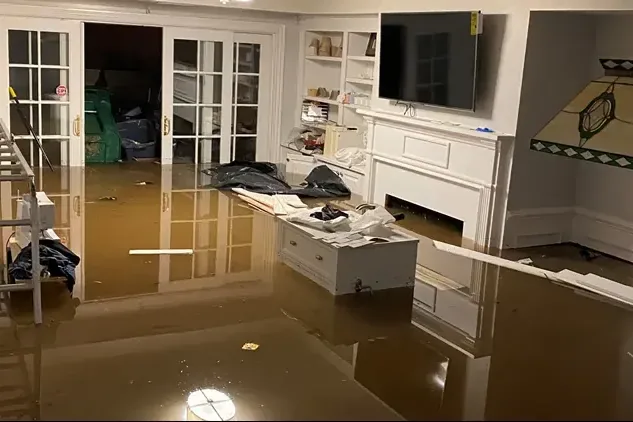
Does water have to come out right away?
Materials keep absorbing water the longer it sits, so extraction should begin before surface water soaks into drywall, insulation and framing. Early removal usually means fewer materials need to be torn out.
Standing water in a closely built township soaks floors, walls and neighboring spaces quickly. Pumps and extraction wands pull it out first, then moisture mapping shows where drying must follow.
(888) 471-9821Send a crew to pump it out
Shut the water at the nearest valve or main. If rain is the cause, wait for it to stop rising before moving.
Wet floors, stairs and cellars are slippery and may hide electrical hazards, so wear boots and keep power off in flooded areas.
Lift furniture legs onto blocks, pull rugs off wet floors and raise boxes, shoes and electronics onto counters or shelves.
Describe the depth and the rooms involved so the right pumps and drying equipment are loaded before the visit.
Depth, room count and whether the water is clean or contaminated drive the price of extraction work most. The three cards below show typical ranges for common situations in homes and small buildings. Final quotes follow an on site check.
For a planning number on your own loss, try the water damage cost calculator. Ranges are typical, not a quote: the water category, the square footage, the material class and how fast drying started move the final figure, which comes from the walkthrough and the moisture map.
The crew checks depth, source and category, spots hazards, and decides which rooms need pumps and which can be cleared with wands or weighted extractors.
Bulk water goes first, then carpet and pad are worked section by section until the surface stops releasing water into the wand.
Soaked padding, toe kicks and saturated drywall at the base of walls come out so air can reach the wet cavity behind it.
Moisture readings are logged, and air movers and dehumidifiers are set so the structure keeps drying after the water is gone, with a record for the claim.
Extraction is the first stage of every flood response in Irvington. In a closely built township, getting the water out quickly keeps it from traveling into neighboring spaces, and crews treat it as the step that decides how big the whole job becomes.
Truck mounted units and portable pumps move large volumes, while wands and weighted extractors lift water out of carpet fibers and padding. Hard floors are squeegeed toward floor drains or pumped sumps. The method follows the depth, not a fixed routine.
Water wicks from a wet floor up into baseboards and wall cavities, and into the ceiling of the room below. Drywall, insulation and wood start to deteriorate after the first day or two, so the sooner extraction ends, the less material needs to be torn out. Adjoining areas benefit too, since less water means less seepage into them.
Extraction ends with a moisture reading, because a floor that looks dry can still hold water in the subfloor and wall base. From there the job moves into structural drying, where dehumidifiers and air movers finish what pumps cannot. Larger basement events continue on the basement flooding page. A short list of readings is kept so the record is ready for the insurance file.
Crews serve ZIP 07111 across Irving Place, the Civic Square area, the Chancellor Avenue corridor and the Springfield Avenue commercial district, with pumps sized to the depth of the water.
The same service nearby: water extraction and removal in Orange, Millburn, Bloomfield.
Materials keep absorbing water the longer it sits, so extraction should begin before surface water soaks into drywall, insulation and framing. Early removal usually means fewer materials need to be torn out.
Truck mounted units and portable pumps handle volume, while wands and weighted extractors work carpet and pad. Hard floors are squeegeed and pumped. The choice depends on how deep the water stands.
Often yes when the water was clean and extraction began early. The pad underneath is usually removed because it holds water, and the carpet is lifted and dried separately.
No. Extraction removes liquid water, while drying removes the moisture left in the structure. Air movers and dehumidifiers handle drying afterward, and readings show when the building is actually dry.
Gray or black water changes the method. Crews wear protective gear, contain the area, remove porous materials and disinfect surfaces, because contaminated water cannot be treated like a spill from a clean supply pipe.
Yes. Portable units fit stairwells and tight spaces, and crews can protect neighboring areas with barriers. Commercial spaces can be handled around business hours when that is practical.
Clear a path to the wet area, note where the water came from and put away valuables. Photographs taken before any work begins help support the insurance record.
A short call covers depth, rooms and the source, and the crew then plans pumps, removal and drying for the property.