
Is water heater water clean?
It starts as clean supply water, but it picks up dirt and rust from the tank and floor. Prompt extraction keeps the loss in a lower category.
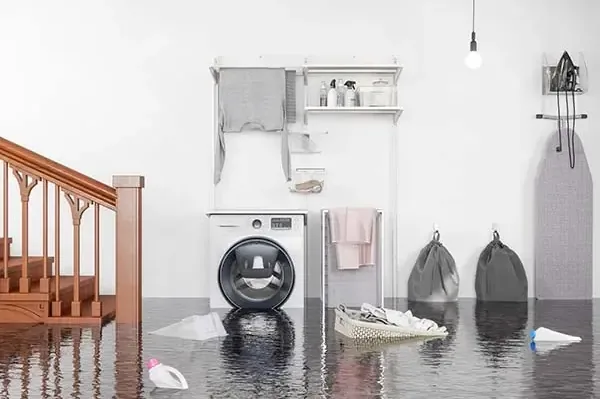
A tank that fails can release dozens of gallons across a utility room, closet or finished space. The crew extracts the water, dries the floor and walls and checks what spread beyond the room.
(888) 471-9821Drain and dry the heater leak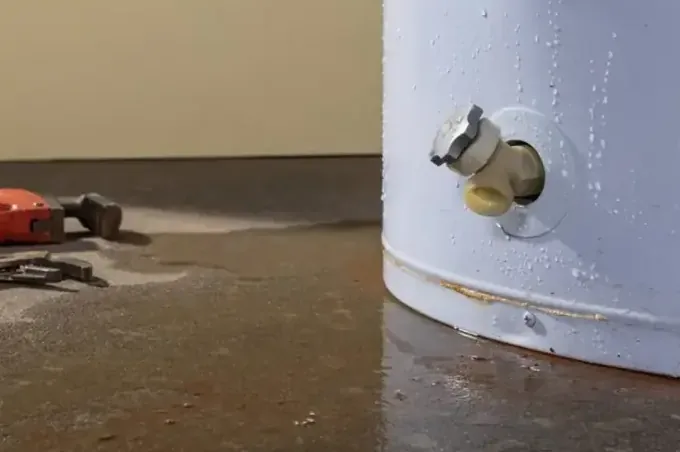
Turn off the cold water valve above the tank, then switch the power or gas control to off.
Attach a hose to the drain valve if it is safe, and route the water outside or to a drain.
Record the tank, the pooled water, nearby walls and anything that got wet. Note the date and the age of the heater if known.
Tell the crew the room, the finish and whether water ran into a neighboring space, so they can bring the right pumps and drying gear.
Water heater leak cleanup runs $800 to $2,500 for a bare floor and $2,500 to $6,000 when water reaches a finished room or closet. A burst tank in a finished space reaches $6,000 to $12,000 or more with longer drying. Tank age and floor type shift the figure.
For a planning number on your own loss, try the water damage cost calculator. Ranges are typical, not a quote: the water category, the square footage, the material class and how fast drying started move the final figure, which comes from the walkthrough and the moisture map.
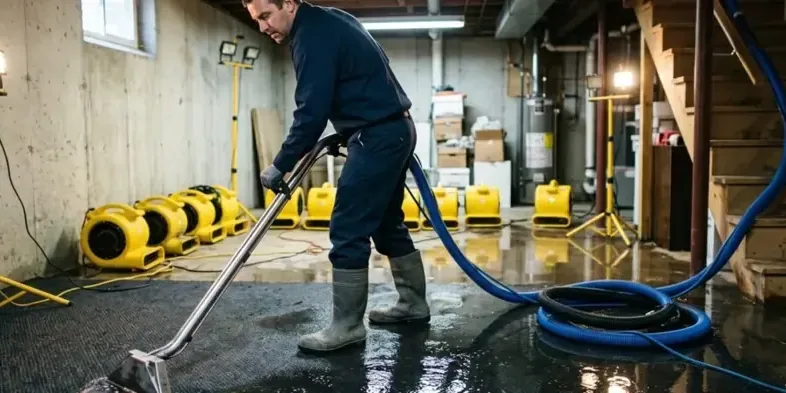
Wet vacs and small extractors remove the pooled water, starting at the drain end and working to the walls and doorways.
Meters scan baseboards, walls and neighboring rooms for water that left the utility space, and the crew marks the wet zones.
Wet carpet, padding and low drywall come out when they will not recover, while hard floors and framing stay in place.
Air movers and dehumidifiers run until the readings are normal, then photos and logs are provided for the insurance file.
Water heaters fail in two ways: a slow drip that goes unnoticed for months and a sudden split that empties the tank. Either way, the water drains toward the lowest point and soaks whatever sits beside the unit. Because the tank sits in a utility space, the leak is often found late, after the water has crossed the floor.
A tank holds many gallons, and a split releases them in one event. The warm water runs under walls, into closets and across floors, and it carries sediment that can stain flooring and cabinets.
Most failures give a warning: damp insulation on the tank, a puddle that returns after mopping or rust on the base. Acting on those signs keeps the loss small and the cleanup short.
Concrete and tile often need only extraction and drying. Carpet, laminate and wood trim absorb water and are removed more often. The crew separates what can recover from what cannot, and logs each decision for the adjuster. Cabinets, laundry baskets and stored boxes sit low and wick water quickly, so they are lifted and sorted first.
Warm, damp air lingers in small utility rooms, so dehumidifiers matter as much as fans. If the leak ran under a wall, see structural drying, and for leaks from appliances see washer and appliance leaks. Because a heater is often beside a furnace or electrical panel, the crew keeps equipment away from outlets until the area reads dry.
Crews handle heater leaks across ZIP 07003, including Brookdale, Watsessing, Ampere North and Silver Lake, the Bloomfield Green Historic District and homes near Brookdale Park, in single homes, two-family houses and downtown apartments.
The same service nearby: water heater leak cleanup in Orange, Nutley, Verona.
It starts as clean supply water, but it picks up dirt and rust from the tank and floor. Prompt extraction keeps the loss in a lower category.
A full tank can release dozens of gallons in a single failure, enough to flood a utility room and reach the rooms next to it.
The leaking unit should be shut off right away. A plumber replaces it, and the crew dries the space either before or after, depending on access.
No. Slow drips soak flooring, framing and baseboards over months, and the cost of the hidden damage can exceed the cost of a new tank.
Sudden failures are often covered, while long-term rust leaks may not be. Photos, receipts and the drying logs help the adjuster.
Closet floors and walls are opened where the meters show moisture, and the rest is dried in place with small air movers and a dehumidifier.
A leaking heater keeps soaking the floor until it is dealt with. One call brings extraction, drying and a record for the claim.