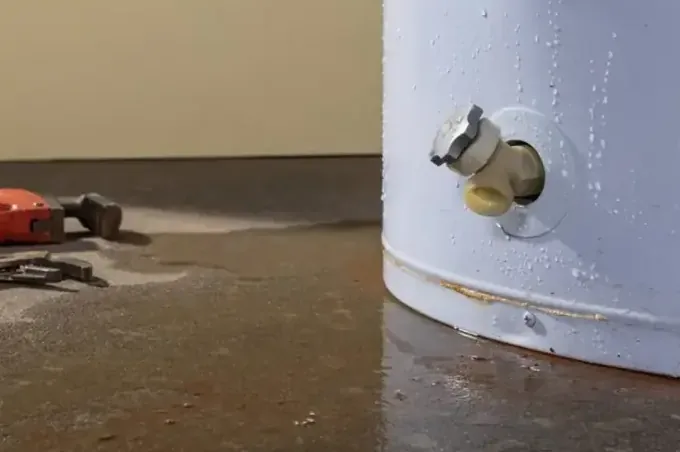


Where do appliance leaks usually start?
Most start at supply hoses, valves, drain connections and door seals. These parts wear quietly, so a leak can run for days before a damp floor or a stained ceiling gives it away.
A failed washer hose, dishwasher connection or refrigerator supply tube can quietly wet floors, cabinets and the ceiling below. Crews extract the water, dry what it reached and record the readings for the claim.
(888) 471-9821Get the leaked water out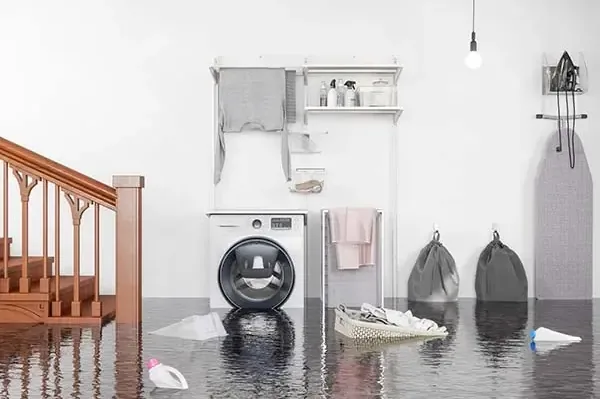
Close the shutoff valve behind the washer, dishwasher or refrigerator, or the main supply if the valve is hidden or stuck.
Pull the appliance plug only if the outlet and floor are dry, otherwise switch off the breaker for that circuit from a safe spot.
Towels and a wet vacuum can lift the first layer, and the appliance can be pulled forward to check for water behind and under it.
Check the ceiling or cellar below for stains, photograph the area and call for extraction while the cabinets and flooring can still be saved.
Appliance leaks are often caught quickly, which keeps the cost low, but a slow leak under a dishwasher can soak cabinets and flooring for weeks. Price follows the area wetted and the finishes involved. The cards show the printed ranges.
For a planning number on your own loss, try the water damage cost calculator. Ranges are typical, not a quote: the water category, the square footage, the material class and how fast drying started move the final figure, which comes from the walkthrough and the moisture map.
The supply is confirmed off, then wet vacuums and extractors remove the spill from the floor, cabinet bases and the gap behind the appliance.
Moisture meters check under cabinets, behind kick plates and in the subfloor, where water from a hose can sit unseen.
Toe kicks come off, small holes are made in cabinet bases or drywall where readings are high, and air movers push dry air into the cavities.
Any ceiling or cellar underneath is checked, readings are repeated until all surfaces are dry, and the log is saved for the adjuster.
Washing machines, dishwashers and refrigerators all depend on small hoses and valves, and when one lets go in Irvington the water goes under the appliance first. By the time a stain shows, the subfloor is already wet.
Water from a failed hose spreads under cabinets, behind kick plates and along the subfloor. A dishwasher leak can soak the cabinet base for weeks without a visible puddle, which is why a moisture check matters even when the surface looks dry.
Solid wood cabinets can often be dried in place, while particle board swells and rarely recovers. The crew sorts what can stay from what must come out, and explains the choice in plain terms. Washer floods that reach the ceiling continue on the ceiling leak page.
Photograph the hose, the valve and the wet floor before anything is replaced, and keep the failed part if a plumber removes it. That evidence helps an adjuster separate a sudden failure from long term seepage. For larger spreads, see water extraction.
Appliance leak crews serve ZIP 07111, including the Civic Square area, the Chancellor Avenue corridor and Irving Place, arriving with wet vacuums, extractors and moisture meters for laundry and kitchen floors.
The same service nearby: washer and appliance leaks in Orange, Millburn, Bloomfield.
Most start at supply hoses, valves, drain connections and door seals. These parts wear quietly, so a leak can run for days before a damp floor or a stained ceiling gives it away.
Only if it is safe and the power is off. Pulling a washer forward lets crews reach the floor behind and under it, but wet floors and heavy units can cause falls and strains.
Solid wood and plywood cabinets can often be dried in place when the leak is caught early. Particle board swells, loses strength and usually has to be replaced.
Supply hose water is clean, but dishwasher and washer drain water is gray and carries soap and food residue. Gray water calls for more careful removal of porous materials it touched.
A sudden failure is often covered for the water damage, while repair of the appliance itself is not. Slow leaks over many months can be excluded, so report promptly and keep the failed part.
Small laundry or kitchen leaks usually dry in two to three days. Leaks that reached cabinets, subfloor or a ceiling below take longer, and readings decide when equipment leaves.
Yes. An ice maker supply tube or a clogged drain can wet the floor behind and beneath the unit for weeks, often with no visible puddle until the flooring begins to lift.
Say which appliance failed and which rooms are wet, and the crew plans extraction and drying for floors, cabinets and any ceiling below.