
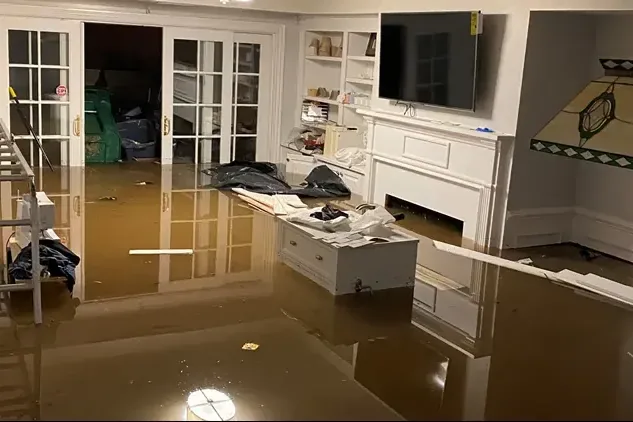

Why is sewage handled differently from other water?
Sewage carries bacteria and viruses, so it is Category 3 water. Crews wear protective gear, seal the work area, remove porous materials and disinfect, steps that clean water jobs do not need.
A sewage backup is a contaminated water loss, not an ordinary spill. Crews seal off the area, remove what the water touched, disinfect every surface and only then start drying the structure.
(888) 471-9821Seal off the contamination
Keep children, pets and everyone else out of the room, and wash hands after any contact with the water.
Do not flush toilets or run sinks, showers or washers, because every use sends more water to the same blocked spot.
Mops, wet vacuums and bleach spray spread contamination and rarely reach into porous materials. Leave removal to trained crews with proper gear.
Document the affected rooms from the doorway, then phone a crew and mention how far the water has spread and what flooring is involved.
Sewage jobs cost more than clean water jobs because of protective gear, containment, disposal and disinfection. Cost rises with the area touched, the finish level and how many porous materials must be removed. The cards below show printed ranges.
For a planning number on your own loss, try the water damage cost calculator. Ranges are typical, not a quote: the water category, the square footage, the material class and how fast drying started move the final figure, which comes from the walkthrough and the moisture map.
Plastic barriers, sealed vents and negative air limit the spread while the crew suits up in gloves, boots and respirators before touching anything.
Contaminated water is pumped out, and affected carpet, pad, insulation and drywall are bagged and carried out for disposal, never dragged through clean rooms.
Floors, framing and fixtures are washed, treated with an antimicrobial and rinsed, with extra attention to cracks and seams.
Once surfaces are cleaned, dehumidifiers and air movers dry the structure, and final readings confirm the area is ready to rebuild.
Sewage that comes up through a floor drain, tub or toilet carries bacteria, so the loss is never treated like a clean water spill. The first job in Irvington is to keep the contamination from spreading to rooms that were not touched, and then to remove everything it reached.
Although the township bills a flat annual sewer charge, a backup inside a building is a cleanup matter handled under the IICRC S500 sanitary loss rules. Crews classify the water, set up containment and keep a written record of what was removed and why.
Expect protective suits, plastic barriers and some noise from air filtration. Belongings in the work zone are sorted into those that can be cleaned and those that must be discarded, and photos record each item. Anyone with health concerns should stay away until the clearance readings are complete, and the crew explains when it is safe to return. The basement flooding page covers cases where sewage mixes with rain water.
Drying starts only after surfaces are clean, using the same structural drying methods as any water loss. Moisture meters decide when the equipment leaves, and the final readings are written into the claim record so the adjuster can see the full sequence.
Sewage crews work ZIP 07111, including the Springfield Avenue commercial district and residential streets around Irving Place and Civic Square, arriving with protective gear, containment supplies, air filtration and disinfectant.
The same service nearby: sewage backup cleanup in Orange, Millburn, Bloomfield.
Sewage carries bacteria and viruses, so it is Category 3 water. Crews wear protective gear, seal the work area, remove porous materials and disinfect, steps that clean water jobs do not need.
It is not advised. Household mops and cleaners spread contamination, and porous materials stay contaminated underneath. Trained crews use containment, extraction and antimicrobial treatment to make the space safe again.
Carpet, pad, insulation, low drywall and upholstered items that touched sewage are normally discarded. Hard surfaces and solid framing can usually be cleaned and kept after proper treatment.
Containment barriers and air filtration protect the rest of the property while crews work. Anyone with health concerns should stay out of the work zone until clearance readings are complete.
Small jobs finish in a day or two of cleanup followed by drying. Larger losses in finished spaces need several days of removal, disinfection and equipment time before the area can be rebuilt.
Many policies exclude backups unless a sewer or drain backup endorsement was added. The policy wording matters, so photos and a written scope of work should be ready before the adjuster calls.
Not until the blockage is cleared by a plumber. Using fixtures too soon can send more sewage into the space just cleaned, so wait for the all clear on the drain.
Describe the room and how far the water has spread, and a crew plans containment, removal and disinfection before drying begins.