
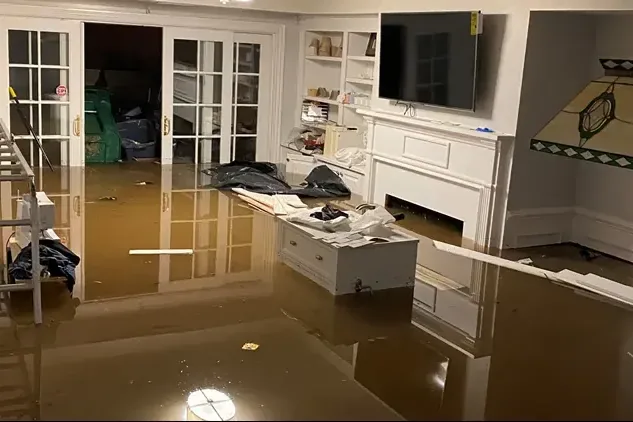

Is sewage water dangerous to touch?
Yes. It can carry bacteria, viruses and parasites. Skin contact and splashes call for gloves, boots and a respirator, which is why crews work in sealed protective suits. Wash hands thoroughly after any contact.
Aging storm drains and clogged pipes can send sewage into floor drains, tubs and lower levels during heavy rain. Category 3 water needs protective gear, careful disposal and full sanitizing.
(888) 471-9821Contain the backup today
Keep children, pets and anyone unwell out of the affected rooms. Do not wade through the water or touch it without gloves and boots.
Hold off on toilets, sinks and washing machines so more waste does not enter the house. Running water makes a backup larger.
Open a window if that is safe, but leave cleanup tools alone. Bleach and a mop spread contamination into porous surfaces.
Say where the water is rising and how far it has spread. The crew arrives with protective suits, pumps and containment sheeting.
Sewage backup cleanup runs $2,000 to $5,000 for a bare floor and $5,000 to $12,000 for a partly finished space. A finished basement or apartment reaches $12,000 to $30,000 or more, with disposal and sanitizing included.
For a planning number on your own loss, try the water damage cost calculator. Ranges are typical, not a quote: the water category, the square footage, the material class and how fast drying started move the final figure, which comes from the walkthrough and the moisture map.
Plastic sheeting and negative air isolate the area so contamination stays out of clean rooms, and the crew suits up in protective gear.
Sewage-soaked carpet, padding, drywall and insulation are cut out, bagged and hauled, because porous materials cannot be made safe.
Remaining surfaces are scrubbed, then treated with hospital grade disinfectants and sealed against odor.
Dehumidifiers and air movers dry the structure, and readings plus photos are kept so the insurer can see each step.
Sewage in a house is a health matter first and a property matter second. The water carries bacteria and viruses, so the work starts with containment, protective gear and a plan for what must be thrown away. Cleanup follows IICRC S500 rules for Category 3 loss, and every removal is logged for the file.
The township's stormwater system dates to the late 19th and early 20th centuries, and clogged drains are reported in heavy rain. When pipes and drains fill, water and waste can push back into the lowest openings in a home.
Heavy rain is the usual trigger. When the public drains fill faster than they empty, the water has nowhere to go but back up the lowest pipe, and the first sign is often a gurgling drain or a dark pool around the floor drain.
Carpet, padding, insulation and drywall touched by sewage are discarded, since they absorb contaminants deeply. Hard floors, concrete and framing are scrubbed and disinfected. See basement flooding cleanup for the matching water work. Each load is photographed, labeled by room and listed so the adjuster can match the claim to what left the house. HEPA air scrubbers clean the air while demolition runs.
Sewer costs in the township move to a user fee billed with water from 2026, but a private backup inside a home is usually a separate insurance matter. Ask the carrier about backup coverage early, and keep every photo, bag count and invoice. Landlords and tenants in apartments should both be told, since shared drains affect more than one unit.
Cleanup covers ZIP 07003, including Brookdale, Watsessing, Silver Lake and the neighborhoods near Brookdale Park, with crews also reaching Ampere North, downtown Bloomfield and the Bloomfield Green Historic District for backups of every size.
The same service nearby: sewage backup cleanup in Orange, Nutley, Verona.
Yes. It can carry bacteria, viruses and parasites. Skin contact and splashes call for gloves, boots and a respirator, which is why crews work in sealed protective suits. Wash hands thoroughly after any contact.
Not safely. Carpet and padding absorb contamination and are removed and discarded. Hard surfaces and framing can be disinfected and kept.
The source material is removed first, then surfaces are disinfected and dried. Odor that remains usually means something porous stayed behind. Air scrubbers help with airborne odor during removal.
No. Bleach does not penetrate porous materials, and mixing cleaners can produce harmful fumes. Leave the cleanup to trained crews.
Yes. Rainwater flooding may be Category 2 or 3, but a sewage backup is always Category 3 and needs full containment and disposal steps.
A plumber or the proper utility handles the sewer pipe. The restoration crew handles the water damage inside the home. The restoration crew documents the damage for both.
Many standard policies exclude it unless a backup endorsement is added. Review the policy, and document the damage thoroughly either way. Ask about water backup limits and deductibles.
Category 3 water needs protective gear and careful disposal. One call brings a trained crew and a written cleanup plan.