
Who fixes the roof, the roofer or the restoration crew?
A roofer repairs or covers the opening. The restoration crew dries the attic, insulation and ceilings and keeps records, and the two trades work together.
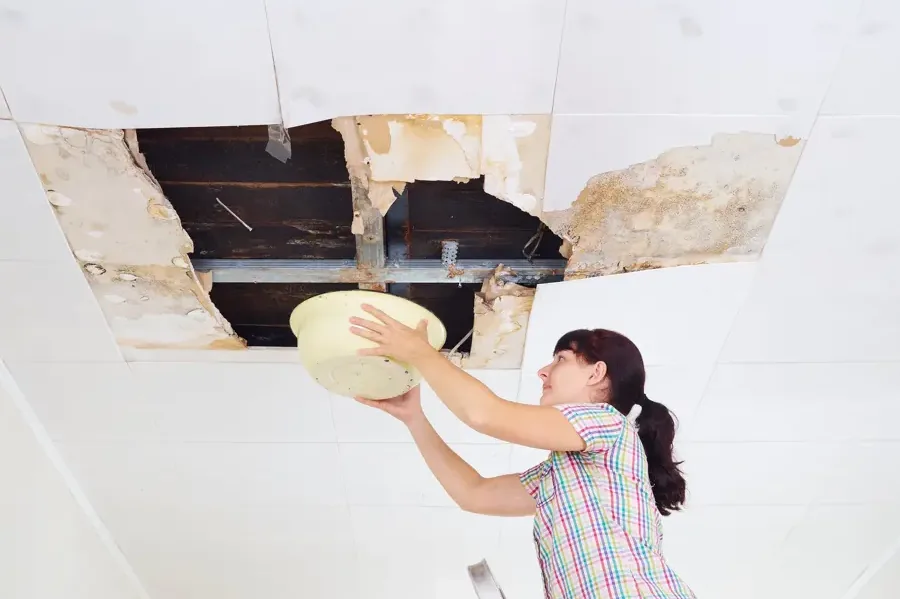
Summer thunderstorms and heavy rain in northern New Jersey can find weak spots on a roof. Crews dry the attic, insulation and ceilings the water reached while a roofer handles the opening, and every wet surface gets documented.
(888) 471-9821Dry the storm leak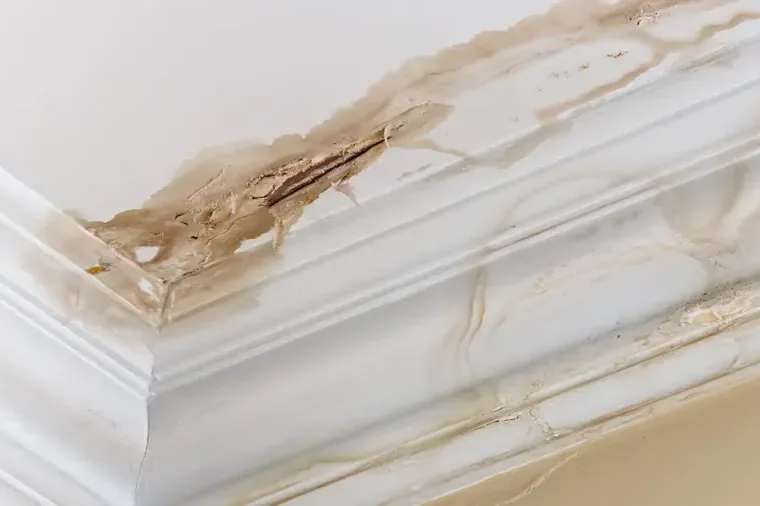
Move furniture and electronics away from drips, cover what cannot move with plastic and set buckets under active leaks.
Do not go onto a wet roof. A roofer can add a temporary cover, and the interior drying can begin without waiting for permanent repairs.
Look for stains, sagging drywall and wet insulation, and photograph each one with the date so the storm link is clear.
Request moisture checks soon, because another round of rain can put more water into an attic that is still wet.
Roof leak costs depend on how much water reached the attic and how many ceilings were soaked. A single stain near the leak sits at the low end, while a storm that opened several rooms sits at the top. The cards show the printed ranges, and a roofer's repair is separate.
For a planning number on your own loss, try the water damage cost calculator. Ranges are typical, not a quote: the water category, the square footage, the material class and how fast drying started move the final figure, which comes from the walkthrough and the moisture map.
Meters and thermal imaging check the ceilings, walls and attic to find every wet area, which is often wider than the visible stain on the ceiling.
Wet insulation and drywall that will not dry are cut out in clean sections, and any ceiling holding water is relieved safely before it can fall.
Air movers push dry air through the attic and ceiling cavities while dehumidifiers pull moisture out of the rooms below, with readings taken at every visit.
Readings, photos and a note of what the roofer found go into one record that supports the claim and the roof repair.
Roof leaks rarely stay at the roof. Water follows rafters into the attic, soaks insulation and finally shows as a stain on a ceiling in Irvington homes and shops, often long after the storm that caused it.
Summer thunderstorms and heavy rain in northern New Jersey can find damaged shingles, flashing and seams. Rain pushed by wind gets into places a light shower never would, so a roof that held for years can suddenly leak.
Interior drying should not wait for a permanent roof repair. Once a temporary cover is on, air movers and dehumidifiers can start work. Ceilings that are already wet continue on the ceiling leak page.
Dated photos of the stain, the attic and the storm help an adjuster tie the loss to a specific weather event. Related flooding at ground level is covered on the storm and flash flood page. Keeping the same photos and dates for the roofer and the adjuster avoids disputes about when the damage began and how far it spread.
Roof leak crews cover ZIP 07111, including the Chancellor Avenue corridor, Irving Place and the Springfield Avenue commercial district, with moisture meters and thermal imaging for attics, ceilings and the wall tops beneath them.
The same service nearby: roof leak water damage in Orange, Millburn, Bloomfield.
A roofer repairs or covers the opening. The restoration crew dries the attic, insulation and ceilings and keeps records, and the two trades work together.
Moisture meters and thermal imaging reveal wet insulation and rafters that cannot be seen from below.
Usually. Wet insulation loses value and stays damp for a long time, so it is removed to let the rafters and sheathing dry. Dry sections beside it may be kept.
Roof water usually counts as Category 1 or 2 when it enters, but it picks up dirt and debris from the roof. Fast drying keeps it from becoming a bigger problem.
Many policies cover interior damage from a storm opening, though worn or neglected roofs may be treated differently. Photos of the weather event and the leak path help the claim.
Yes, once a temporary cover is on. Drying while rain can still get in is wasted effort, but a tarp or patch lets the equipment work without being undone.
Most take three to five days. Thick insulation, plaster ceilings and several affected rooms add time, and readings from the attic decide when the equipment can come out.
Describe the stains and when the rain came, and a crew plans attic and ceiling drying while a roofer handles the opening.