
Does restoration include fixing the roof?
No. A roofer repairs the roof. The restoration crew dries and documents the interior damage that the leak caused.
Severe thunderstorms in 2025 and 2026 affected the township, and roof leaks follow heavy storms like those. The crew handles the interior water damage: attic insulation, ceilings, walls and anything wet beneath the opening or the attic.
(888) 471-9821Dry the storm leak damage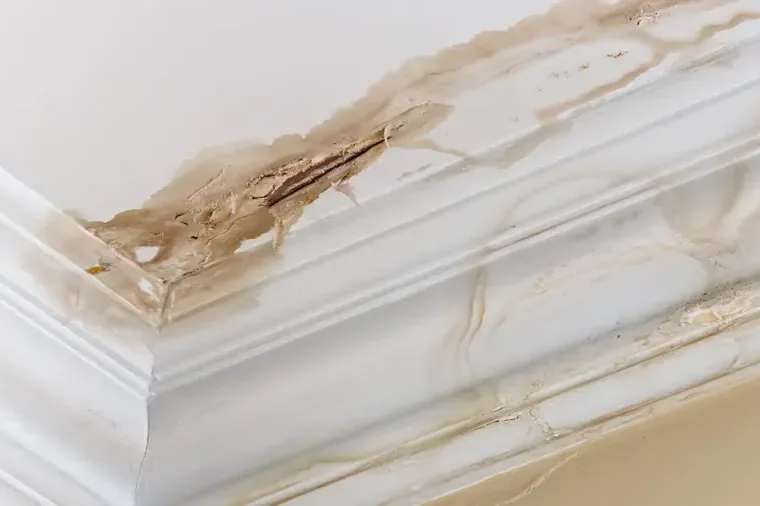
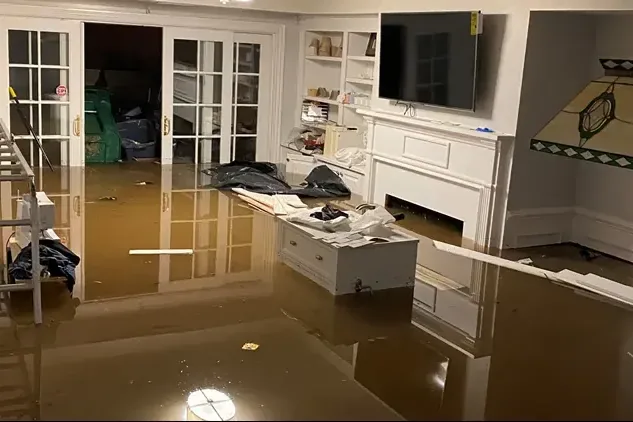
Place buckets under the leak, move furniture and electronics, and lift rugs. Water that finds a floor lasts longer than water caught early.
A roofer can tarp or patch the opening. The restoration crew works on the interior, and the two trades work in whichever order the weather allows.
Capture the ceiling, attic access and any wet insulation, and note the date of the storm. These records support the insurance claim.
Describe the stain, the rooms below and whether the ceiling is sagging, and the crew will bring meters and drying equipment.
Roof leak interior damage runs $1,000 to $3,000 for one ceiling with a small leak and $3,000 to $7,500 when the attic and a room are wet. A storm leak that reaches several rooms runs $7,500 to $16,000 or more. Roof repair itself is billed separately.
For a planning number on your own loss, try the water damage cost calculator. Ranges are typical, not a quote: the water category, the square footage, the material class and how fast drying started move the final figure, which comes from the walkthrough and the moisture map.
The crew checks the attic, ceilings and walls with meters and a thermal camera to see where roof water has traveled.
Soaked insulation, ceiling drywall and any sagging boards are cut out and bagged to open the cavity for drying.
Air movers, ducting and dehumidifiers dry the attic floor, ceiling joists and wall tops, with readings logged each day.
Final readings and photos go to the adjuster, so the roof repair and the interior rebuild are tied to one storm record.
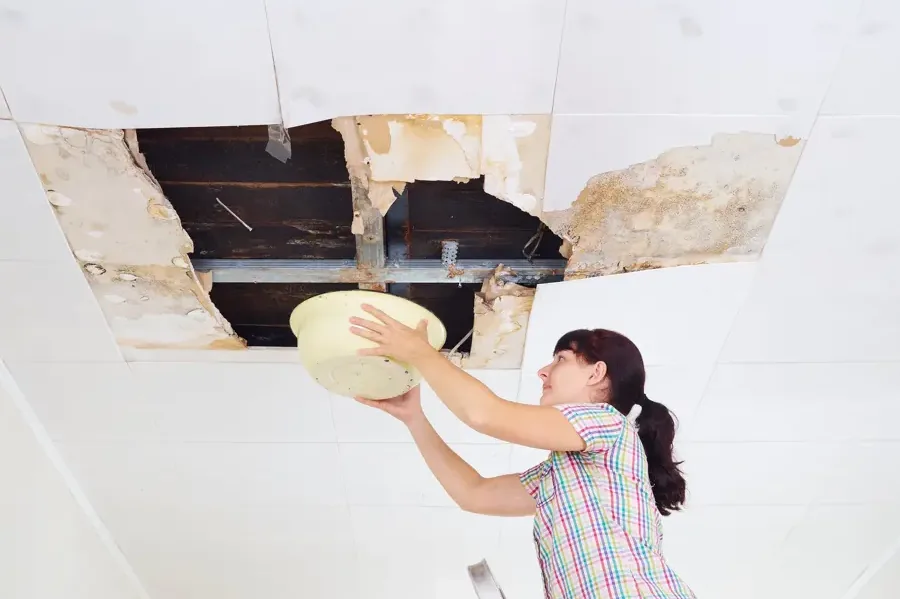
A roof leak does damage far from where the rain gets in. Water runs along rafters, soaks attic insulation and stains the ceiling below, sometimes well away from the actual opening in the shingles. Roof openings are small, but the interior bill is not, because every layer beneath the roof deck can hold water.
New Jersey declared a state of emergency for storms on July 31, 2025, and severe thunderstorms struck again in July 2026. Roof openings that survive ordinary rain often fail when wind pushes water sideways.
The pattern is consistent: the storm passes, the sky clears and the stain appears a day later. Water that soaked insulation overnight keeps spreading, so the ceiling often looks worse on the second day than the first.
Attic insulation that gets wet becomes heavy, compresses and holds water against the ceiling. It usually comes out. Drywall below is dried in place where it is sound and replaced where it sags. Ceiling-specific steps appear under ceiling leak water damage. Attic framing, wall tops and the plaster or drywall on the top floor are checked together, since water follows the lowest route rather than the shortest.
A temporary tarp keeps more rain out. The crew then dries the interior while the roofer schedules the permanent repair. For large storm losses see storm and flash flood cleanup. Insurance paperwork is easier when the roof repair, the drying logs and the weather date line up, which is why the crew keeps one record for the whole event.
Crews handle roof leak aftermath across ZIP 07003, including Brookdale, Watsessing, Ampere North and Silver Lake, in single homes, two-family houses and mixed-use buildings near downtown Bloomfield, the Bloomfield Green Historic District and Bloomfield Avenue.
The same service nearby: roof leak water damage in Orange, Nutley, Verona.
No. A roofer repairs the roof. The restoration crew dries and documents the interior damage that the leak caused.
Wet insulation holds water against framing and usually has to be replaced. Dry sections beside it are often kept.
If rain is still coming, yes. A tarp stops new water while the crew dries the interior, and the roofer follows with the permanent fix.
Along rafters and joists, well away from the opening. That is why a stain can appear in a room that sits well away from the damaged area.
Storm damage is commonly covered, but wear and tear is not. Photos, dates and drying logs help the adjuster separate the two.
Sound drywall with a light stain often dries in place. Soft, sagging or crumbling board is removed and replaced after the cavity dries.
After any storm that leaves a stain or damp smell below. Water can sit in insulation for days before it shows on a ceiling.
Rain that gets in keeps soaking insulation and ceilings. One call brings drying, removal and documentation.