
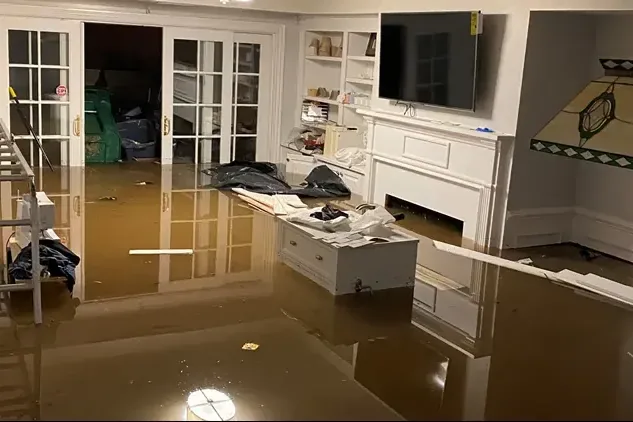

How can a roof leak be spotted early?
Look for brown ceiling stains, damp attic insulation, peeling paint near exterior walls and drips during or after heavy rain. Photograph anything found.
Heavy storms such as Ida can drive rain through roofs, and a roof leak soaks insulation and ceilings before it shows. Drying the attic and the rooms below limits how much has to be torn out.
(888) 471-9821Dry the roof leak damage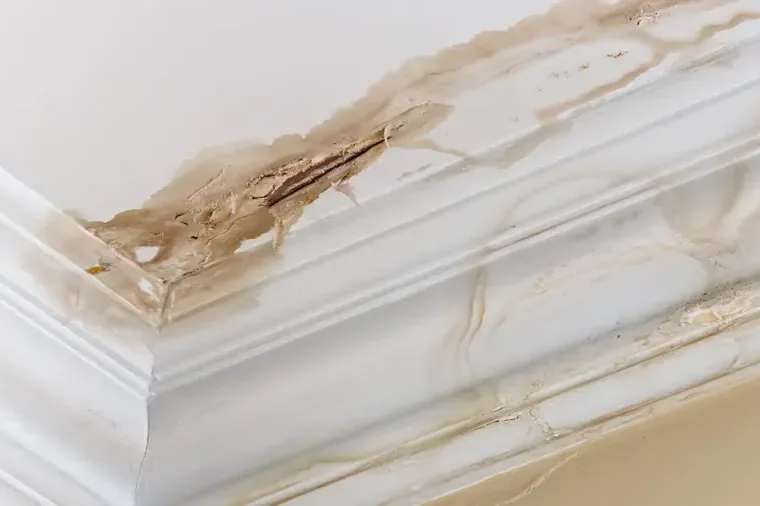
Move furniture and valuables away from the stain, and set buckets and plastic sheeting under active drips.
Do not climb onto a wet roof after a storm, and leave temporary covers to a roofer with proper equipment.
If it is safe, look for wet insulation, dark stains on the decking and daylight at the roof edge, and photograph each.
Report where the stain is and how much rain came in, so the crew can plan the attic and ceiling drying.
Roof leak cleanup ranges from $1,000 to $3,000 for one ceiling with a small leak up to $7,500 to $16,000 or more for a storm leak across several rooms. How much rain got in drives the total.
For a planning number on your own loss, try the water damage cost calculator. Ranges are typical, not a quote: the water category, the square footage, the material class and how fast drying started move the final figure, which comes from the walkthrough and the moisture map.
Meters and thermal cameras follow moisture from the stain up through the ceiling and into the attic to the point where rain entered.
Wet insulation and any ceiling drywall that is saturated are removed, because they hold water long after the rain ends.
Air movers and dehumidifiers dry the attic framing, the cavity and the rooms below, with readings logged at each visit.
Photos, readings and a note on the weather event go to the insurer, while the roofer repairs the opening above.
Wind-driven rain finds weak spots in shingles, flashing and vents, and the water often travels along rafters before it drips. A leak after a storm like Ida can wet far more than the visible spot.
Insulation soaks up rain like a sponge and passes it to the drywall below, which is why a stain can appear days after the storm. By then the attic has been wet for a while, and the dry-out is bigger than the stain suggests.
The crew dries the inside, and a roofer repairs the shingles or flashing that let the rain in. Wet ceilings below the leak are described under ceiling leak water damage, and large storm losses fall under storm and flash flood cleanup.
Attic insulation traps rain the way a sponge traps water, and it can stay wet for weeks if nobody opens the attic. Wet insulation loses its value, presses on the ceiling drywall below and encourages microbial growth on the framing. Removing it quickly is often cheaper than letting it dry in place.
Decking, rafters and the top plates of walls are checked with meters before the attic is closed again. If the roof was only temporarily covered, the crew notes that in the file. Photos of the underside of the roof, taken from a safe spot in the attic, show the adjuster where the water entered.
Roof leak crews cover ZIP codes 07041 and 07078, from Short Hills and Old Short Hills Estates to Wyoming and the Millburn center, with attic-ready meters and drying equipment.
The same service nearby: roof leak water damage in Orange, Irvington, Verona.
Look for brown ceiling stains, damp attic insulation, peeling paint near exterior walls and drips during or after heavy rain. Photograph anything found.
Not always. Small leaks can be dried in place, while saturated or sagging drywall and wet insulation are removed. Meter readings decide the extent.
A roofer repairs the opening. The crew extracts water, removes wet material and dries the structure, then provides records for the insurer.
Heavy storms such as Ida can drive rain through roofs, and the township saw almost eight inches of rain in less than 24 hours on September 1, 2021.
A roofer should cover the opening as soon as it is safe, because more rain means more water inside. Drying equipment cannot keep up with an open roof.
Printed ranges run from $1,000 to $3,000 for one ceiling to $7,500 to $16,000 or more for a storm leak across several rooms.
One call sets the plan for attic and ceiling drying, and the crew explains what is likely to be removed.