
Why do pipes leak only after the thaw?
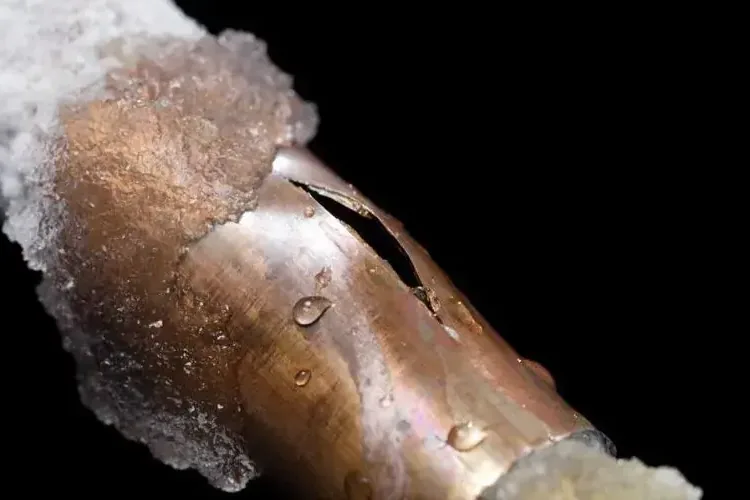
Ice can seal a cracked pipe until it melts. Once the temperature rises, pressure returns and water pours through the split, so the leak often shows hours after the cold has passed.
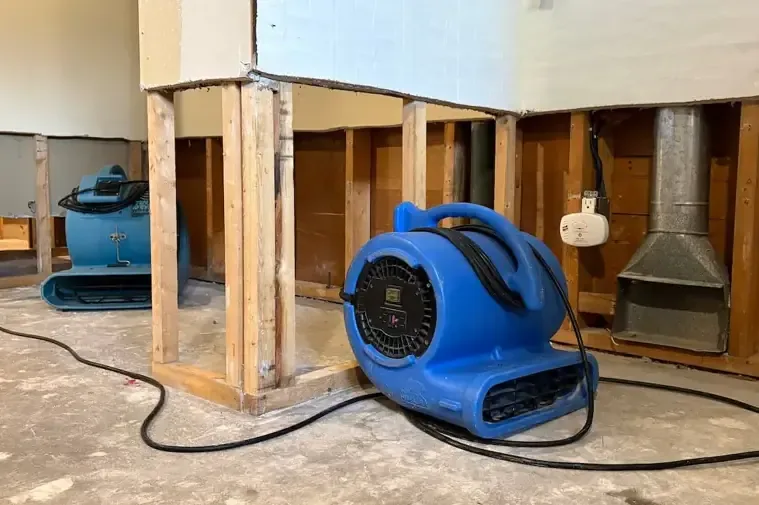
Northern New Jersey winters can freeze exposed pipes, and the real damage often starts at the thaw when the split lets water loose. Crews dry the walls and floors it soaked before the damage spreads further.
(888) 471-9821Report the thaw leak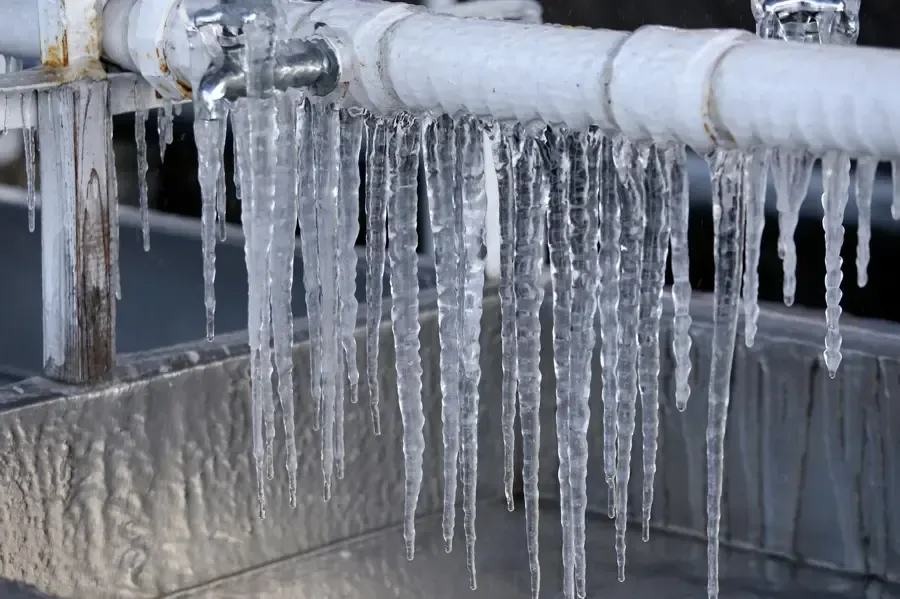
Close the interior shutoff valve before the thaw begins, because ice can hold a split closed until it melts and the water runs.
Never use a torch or open flame on a frozen pipe. A hair dryer is safer if the pipe has not split.
Let warm air reach pipes behind sinks and in outside walls, and keep a faucet dripping slightly while the cold lasts.
After the thaw, look for stains, bulges or sounds of running water in ceilings below, photograph them and call for a moisture check.
Frozen pipe losses grow with the time between the thaw and the shutoff. A break caught at once may stay inside one wall, while one that ran overnight can reach ceilings and floors below. The cards below list the printed ranges for each stage.
For a planning number on your own loss, try the water damage cost calculator. Ranges are typical, not a quote: the water category, the square footage, the material class and how fast drying started move the final figure, which comes from the walkthrough and the moisture map.
Thermal imaging and moisture meters find the freeze damaged section and map how far the thaw water traveled through walls and floors, so the repair plan is accurate.
Loose water is pumped and vacuumed, and ceilings holding water are relieved in a controlled way so they do not fail without warning.
Drywall along exterior walls and under sinks is opened where readings are high, since frozen pipes usually sit near the coldest framing.
Air movers and dehumidifiers run for several days, and readings are repeated until framing, insulation and floors match the dry reference, then a closing record is prepared.
Northern New Jersey sees winter freeze events, and exposed pipes in unheated spaces are the usual victims. Homes and storefronts in Irvington can have pipes along outside walls, attics or basements where cold air collects.
Ice can plug a split pipe so completely that nothing leaks until the temperature rises. Then the water pours into walls and ceilings, sometimes while nobody is home. That is why a pipe that was frozen on Monday can flood a ceiling on Wednesday.
Once drying is complete, a plumber can repair the split and add insulation or heat to the exposed run. The restoration side stays focused on moisture, so readings and equipment logs are the main record. Heating system leaks that follow a cold snap are covered on the radiator and boiler page.
When a frozen pipe upstairs leaks through a ceiling, both levels need drying at once. The burst pipe page explains how crews drain, open and dry the wet path from the break down to the floor.
Frozen pipe crews serve ZIP 07111, including homes and storefronts in the Springfield Avenue commercial district, the Chancellor Avenue corridor and the streets around Civic Square, with thermal imaging for hidden leaks.
The same service nearby: frozen pipe water damage in Orange, Millburn, Bloomfield.
Ice can seal a cracked pipe until it melts. Once the temperature rises, pressure returns and water pours through the split, so the leak often shows hours after the cold has passed.
Only with gentle heat such as a hair dryer, and only while the pipe is intact. Skip torches and open flame. If water is already leaking, shut the main and call for help.
Water follows framing and plumbing chases from the break to rooms below, so a leak in one wall can reach a ceiling, a floor and the wall next door. Moisture mapping shows the true path.
Many policies cover sudden freeze damage, though some require the heat to have been left on. Read the policy, keep dated photos and receipts, and report the loss promptly.
Wet insulation, soaked ceiling drywall and saturated carpet pad are most often removed. Framing, subfloor and solid wood are normally dried in place and kept, once readings confirm it.
Most take several days of equipment time, depending on how many rooms were wet. Plaster and masonry walls hold moisture longer, so the readings decide when the equipment is removed.
Pipe repair belongs to a plumber. The restoration crew handles extraction, wall opening, drying and documentation, and coordinates timing so the repair and the drying do not slow each other down.
Share where the stains appear and which floors are wet, and a crew plans the dry out.