


Is flood water from a storm contaminated?
Yes. It carries soil, bacteria and chemicals from streets and drains, so it is handled as Category 3 with protective gear and full sanitizing.
Remnants of Tropical Storm Ida in 2021 and the August 2013 flash flood warning show how quickly water can arrive. Storm cleanup here starts with pumps, sorting and a drying plan.
(888) 471-9821Report the storm damage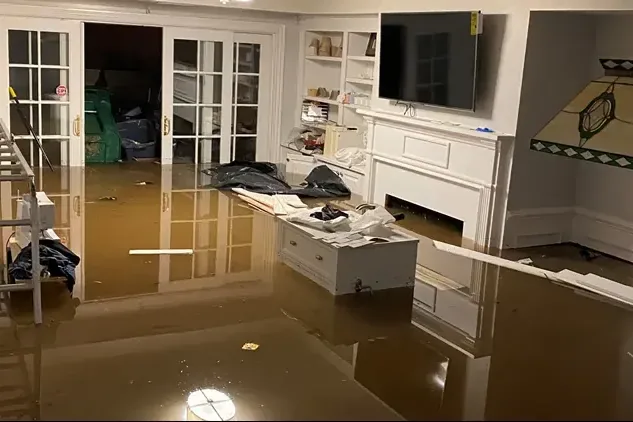
Move to higher ground inside the building and stay off flooded floors until the power is confirmed off. Moving water is stronger than it looks.
Floodwater can carry sewage, chemicals and sharp debris. Skip wading, and keep children and pets out of the affected rooms.
Photograph the waterline, damaged belongings and the rooms before moving anything. Note the date and time the storm hit.
Describe how deep the water is and how many rooms are wet, so the right pumps and gear arrive ready to work.
Storm and flash flood cleanup runs $2,000 to $6,000 for a shallow cellar or garage and $6,000 to $15,000 for a finished lower level. When the ground floor is also involved, costs reach $15,000 to $40,000 or more.
For a planning number on your own loss, try the water damage cost calculator. Ranges are typical, not a quote: the water category, the square footage, the material class and how fast drying started move the final figure, which comes from the walkthrough and the moisture map.
The crew checks the power, slip hazards and the depth of the water, then sets up protective gear before entering the flooded area.
Pumps clear standing water, and shovels and wet vacs take mud and debris. Porous materials soaked by floodwater are bagged and hauled.
Surfaces that touched floodwater are cleaned and disinfected, because storm water carries bacteria from drains and soil.
Dehumidifiers and air movers run with readings taken each day, and the logs go to the adjuster with the photos.
Storm flooding arrives fast and leaves mud, debris and contamination behind. Remnants of Tropical Storm Ida passed through in September 2021, and a National Weather Service flash flood warning flooded Watsessing Park on August 28, 2013.
Recent events show it is not a rare problem. New Jersey declared a state of emergency for storms on July 31, 2025, and severe thunderstorms on July 28, 2026 flooded a lane of the Garden State Parkway near Exit 149. Township officials say heavier storms and aging infrastructure strain the drainage system.
Flood events seldom stop at one room. Water enters at the lowest point, then climbs along wall bases, soaks stairs and slides under doors into the next space, so the survey covers every connected area.
Storm water travels over streets, yards and drains before it enters a home. That makes it Category 3 under IICRC S500, so wet carpet, padding and drywall are removed instead of dried in place. Mud adds another job. Silt left on floors and in wall bases dries into a crust that traps moisture, so it is removed while still wet.
Large storm losses often involve two levels and several trades. The crew builds one drying plan with daily readings, which helps the insurer and the rebuild contractor work from the same record. Flood-prone streets can be hard to reach, so the crew plans access and pump placement before work begins.
Storm crews respond across ZIP 07003, from Watsessing and Ampere North to Brookdale, Silver Lake and the streets near the Garden State Parkway interchanges. Crews also reach the Halcyon area, where pond restoration work is advancing.
The same service nearby: storm and flash flood cleanup in Orange, Nutley, Verona.
Yes. It carries soil, bacteria and chemicals from streets and drains, so it is handled as Category 3 with protective gear and full sanitizing.
Hard furniture can often be cleaned and dried. Upholstered pieces and particleboard that sat in floodwater are frequently beyond saving.
No. Water and live electricity are a serious shock risk. Keep power off in flooded areas until a qualified electrician says it is safe.
The crew starts pumping and drying as early as possible. The IICRC S500 window of 24 to 48 hours is the target before secondary damage sets in.
Standard homeowner policies often exclude rising surface flooding, which needs separate flood coverage. Photos and logs help whichever policy applies. Review the policy before the claim is filed.
The crew assesses access and safety first. Standing water outside can limit work, so pumping inside may need to wait until conditions improve.
Yes. Debris removal, pump-out, sanitizing and drying are done by one team under one plan, which keeps the record consistent.
Yes. Attached garages, sheds and utility rooms are cleaned and dried under the same plan, since stored items there wick up water.
Storm water brings mud and contamination that worsen by the hour. One call starts the pump-out, the cleanup and the paperwork for the claim.