


Is storm water considered contaminated?
Usually yes. It carries soil, chemicals and sometimes sewage, so crews wear protective gear and disinfect surfaces that stay in the structure.
Heavy rain and nor'easters can push water into low rooms, garages and floors, and the crew pumps it out, removes mud and debris and dries what is left.
(888) 471-9821Start the storm water removal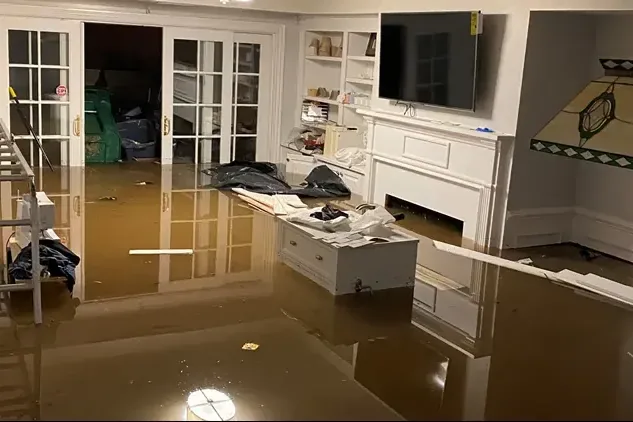
Floodwater can hide debris and electrical hazards, so keep out of it until the power is confirmed off and the flow has stopped.
Storm water mixes with soil and drains, so wear boots and gloves, and keep children and pets from touching the affected area.
Photograph the water line, damaged belongings and any visible silt, because adjusters want to see the loss as it was.
Mud dries into floors and walls, and soaked drywall begins to deteriorate, so an early call keeps cleanup smaller.
Storm cleanup is priced by how far the water spread and how dirty it was. Silt and debris add labor, and contaminated water means more materials are removed and more surfaces disinfected, as the cards below indicate.
For a planning number on your own loss, try the water damage cost calculator. Ranges are typical, not a quote: the water category, the square footage, the material class and how fast drying started move the final figure, which comes from the walkthrough and the moisture map.
Submersible pumps and extractors remove the floodwater first, working from the deepest point toward the doors.
Silt is shoveled and vacuumed out, and ruined materials are carried off so cleaning can reach the floor and wall bases.
Because storm water carries soil and sewage, surfaces that stay are washed and treated before drying equipment goes in.
Dehumidifiers and air movers run until moisture meters read dry, and photos and logs are saved for the insurer.
The township sits in a valley with the Peckman River running along its bottom and a lake in Verona Park, and heavy rain and nor'easters are part of the local climate. When storm water reaches a home, speed and care both matter, because it moves quickly and leaves silt behind.
Floodwater is rarely clean. It picks up soil, fertilizer and drain overflow on its way in, so the crew treats it as contaminated until proven otherwise and chooses materials to keep or remove with that in mind.
Mud left behind keeps wood wet and traps odor. Removing it early shortens drying and protects the framing, which is also why water extraction usually begins before the rest of the cleanup. Silt packs into carpet backing and wall bases, so hand tools and wet vacuums come before drying equipment.
Snow is common from December to March, and a fast thaw can send melt toward foundations. Wet snow packed against a wall can melt into the structure over several days, so moisture readings are repeated before the job closes. For a wider look at services, visit the local overview.
Storm cleanup serves ZIP 07044, covering Hillcrest, Verona Lake, the Verona Park area and the Bloomfield Avenue corridor, plus homes reached by Route 23 and County Route 577, throughout the township.
The same service nearby: storm and flash flood cleanup in Orange, Bloomfield, Nutley.
Usually yes. It carries soil, chemicals and sometimes sewage, so crews wear protective gear and disinfect surfaces that stay in the structure.
Drying still matters. Walls, subfloors and insulation hold moisture long after the surface looks dry, and meters will show what remains.
Solid wood, metal and plastic can usually be cleaned. Upholstered and particleboard pieces that sat in storm water often cannot be restored.
Where water wicked upward or the water was dirty, the lower section is normally cut out so the cavity can dry. Clean, shallow water may be dried in place.
Many standard policies exclude surface flooding and require separate flood coverage. Check the policy, and the crew will supply photos, logs and a written scope for any claim.
A lot. Silt adds labor to remove, dulls equipment and traps moisture, so jobs with heavy silt cost more than the same area with clean water.
Yes. Pumping and debris removal can begin as soon as it is safe, and drying equipment goes in once the water stops coming in, with readings logged each visit.
Call now, describe where the water came in, and a coordinator will route a crew to the property.