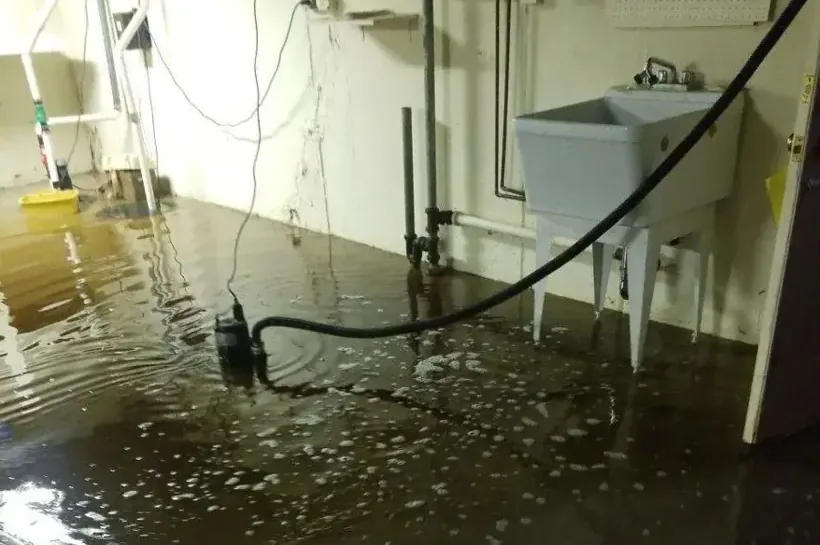


Can a flooded basement be dried without tearing things out?
Often, if the water was clean and caught quickly. Floodwater contact usually means carpet, padding and low drywall must be removed before drying works.
Township officials say heavier storms and an aging drainage system strain local streets. When that water reaches a basement or cellar, pumping, sorting and drying should start as early as possible.
(888) 471-9821Dry out the lower level
Keep out of a flooded lower level until the power is confirmed off. Water and live outlets are a shock risk, and the stairs can hide depth.
Carry valuables, files and electronics to upper floors, and note the waterline on the walls before it recedes or dries.
Photograph the water, the stored items and any appliances that stood in it. Keep receipts for anything thrown away.
Say how deep the water is and whether a sump pump or a drain is involved. The crew arrives with the right pump and a plan for drying.
Basement flooding cleanup runs $1,500 to $4,000 for a shallow, unfinished cellar and $4,000 to $9,000 for a partly finished one. A finished space with black water reaches $9,000 to $25,000 or more. Depth, finishes and contamination drive the final figure.
For a planning number on your own loss, try the water damage cost calculator. Ranges are typical, not a quote: the water category, the square footage, the material class and how fast drying started move the final figure, which comes from the walkthrough and the moisture map.
Submersible pumps lower the water gradually so saturated walls and floors are not stressed, and the crew checks for sewage in the mix.
Ruined boxes, carpet and drywall are separated from items that can be cleaned or dried, with photos of anything discarded.
Floors and block walls are cleaned, and anything that touched floodwater is sanitized before drying equipment goes in.
Dehumidifiers and air movers run with daily readings until masonry and framing reach the dry standard for the claim file.
A flooded basement is never only a puddle problem. The water soaks block walls, stored boxes and framing, and the damp air spreads upward. Township officials describe a stormwater system that dates to the late 19th and early 20th centuries, with heavier storms adding strain.
Rain, rising creeks and overloaded drains each leave a different mark on a lower level. Residents report repeated flooding near Watsessing Park and along the Second and Third rivers, as well as Thomas Street, Windsor Place and Beardsley Avenue.
Block, concrete and framing usually dry in place. Carpet, padding, insulation and wet drywall seldom do, and floodwater contact turns a salvage question into a disposal decision. The crew documents each item for the adjuster. Stored items cause a second wave of loss: cardboard wicks water upward, and stacked boxes trap moisture against the wall.
Basements dry slowly because the air is cool and still. Dehumidifiers matter more than fans here, and readings are taken daily until walls reach a dry reference. See structural drying for the full method. Slow, cool air is the reason a cellar can stay damp for weeks after the pool is gone. Dehumidifiers pull moisture out of the air and the block, and a closed room holds that dry air in place. Once the readings level off, rebuild work can start.
Crews serve ZIP 07003 for flooded lower levels, including homes near Watsessing Park, Brookdale, Ampere North and the Silver Lake community, and blocks that report repeated flooding near the Second and Third rivers.
The same service nearby: basement flooding cleanup in Orange, Nutley, Verona.
Often, if the water was clean and caught quickly. Floodwater contact usually means carpet, padding and low drywall must be removed before drying works.
Storm and drain water is treated as Category 2 or 3 because it carries soil, bacteria and debris. Protective gear and disinfecting are part of the cleanup.
The IICRC S500 window is 24 to 48 hours for the early steps, and the full dry-out depends on how much block, framing and contents took on water.
No. Water is lowered in stages so saturated walls and floors are not stressed. A crew sets the pace based on the outside ground conditions.
Paper, cardboard and cloth soak up floodwater quickly. The crew sorts what can be cleaned, dried or photographed for the claim and what must be discarded.
Coverage varies. Water from a sudden pipe break is often covered, while rising groundwater or sewer water may need separate endorsements. The policy text decides.
After power is confirmed off or safely isolated and the water is out. Wet floors stay slippery, and contaminated water needs gear and sanitizing first.
Water that sits in block and framing keeps spreading. One call starts the pump-out and a written drying plan.