


Why is flood water called contaminated?
It crosses yards, roads and drains before it reaches a floor, so it carries bacteria, oil and soil. That puts it in Category 3, and porous materials it soaked are removed.
With Yanticaw Brook and the Third River running through the street grid and the Passaic River on the eastern edge, heavy storm water is a local concern. Runoff is extracted and the structure dried.
(888) 471-9821Call about the storm water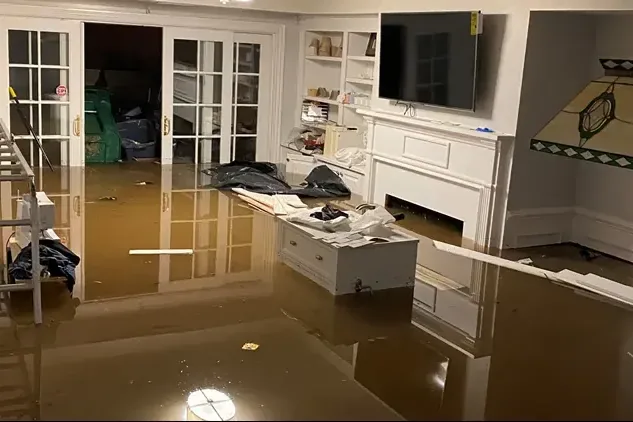
Do not wade into moving or rising water outdoors, because currents and hidden debris make a flooded yard dangerous.
If the water reached outlets or the furnace, turn off the affected circuits from a dry spot and leave gas alone.
Flood water mixes in soil, oil and sewage, so wear boots and gloves and keep children and pets away.
Reach out as the water drops, so pumps and drying gear are ready before silt hardens on the floor.
Storm and flash flood cleanup typically costs $2,000 to $40,000 or more. Depth, the number of floors reached and the silt left behind drive the range, and contaminated water raises it, so the written scope after a walkthrough sets the final number.
For a planning number on your own loss, try the water damage cost calculator. Ranges are typical, not a quote: the water category, the square footage, the material class and how fast drying started move the final figure, which comes from the walkthrough and the moisture map.
The crew checks for electrical hazards, unstable floors and debris before any pump or hose enters the space.
Pumps lower the water while shovels and squeegees clear silt and mud from floors, stairs and corners.
Wet drywall, insulation and flooring are cut away, then surfaces are washed and treated against bacteria.
Air movers, dehumidifiers and daily meter logs bring the structure to normal and feed the claim file.
After a hard rain, the first sign is often a damp garage or a wet cellar floor. By the time the water recedes, it has soaked into drywall, carpet and stored belongings, so a prompt response limits how much has to be thrown away. Garages and cellars are usually the first spaces to take on water, and finished rooms above them can wick moisture up through walls for days.
The township describes parkland along its creeks, and Yanticaw Brook and the Third River cut through the street grid. The Passaic River bounds Nutley on the east and feeds its parks. When a storm stalls, that chain of waterways is where runoff gathers, and the nearby streets, yards and parking areas take the overflow before it reaches doors, drains and low windows.
Storm water travels across yards, roads and drains before it reaches a floor, which means it carries soil, oil and bacteria. Porous materials that soaked it up are removed, while concrete and tile are washed and treated so they can be reused. The crew separates salvage from waste on the spot, which speeds the dry out and trims the bill.
Once the structure is dry and the readings are logged, rebuilding can begin. Learn how the process works in water extraction and basement flooding cleanup.
Storm crews cover ZIP code 07110, from Yanticaw and Memorial Park near the Third River to Booth Park and the Passaic River edge of the township, including garages, cellars and ground floors.
The same service nearby: storm and flash flood cleanup in Orange, Bloomfield, Verona.
It crosses yards, roads and drains before it reaches a floor, so it carries bacteria, oil and soil. That puts it in Category 3, and porous materials it soaked are removed.
Light mud on a hard floor can be rinsed with gloves and boots on. Mud in carpet, walls or under cabinets needs a crew.
Crews shovel and squeegee the bulk, pump the slurry, then wash the surface before drying equipment is set, which keeps silt out of the air movers.
Solid wood and metal often can be cleaned, dried and returned to use. Upholstered pieces and particleboard that soaked up flood water are usually discarded.
Yes. Photograph the waterline on walls, appliances and boxes before cleanup, since adjusters use it to judge depth and how long the water stayed.
Standard homeowners policies often exclude surface flood water, while other policies cover it. The adjuster decides after checking the cause, the photos and the policy wording.
A garage can finish in several days once the silt is gone. A flooded lower level with finished walls often takes longer, and readings set the end date.
Describe the depth and the rooms reached, and the dispatcher sends pumps and drying gear.