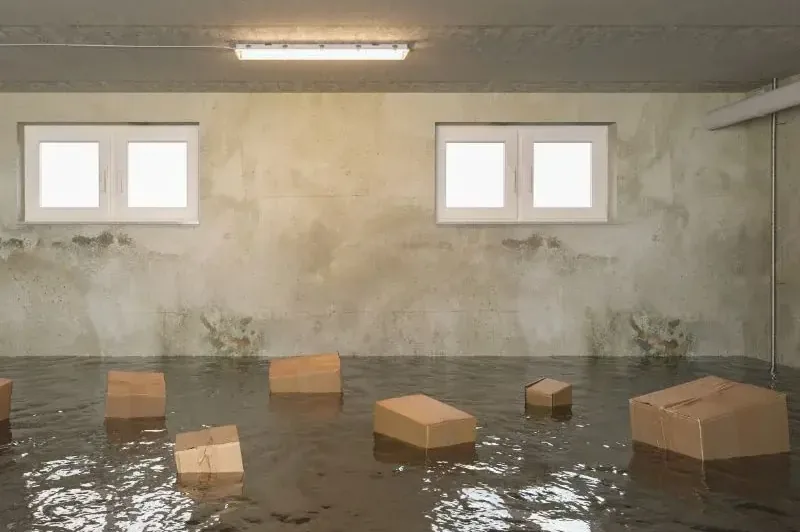

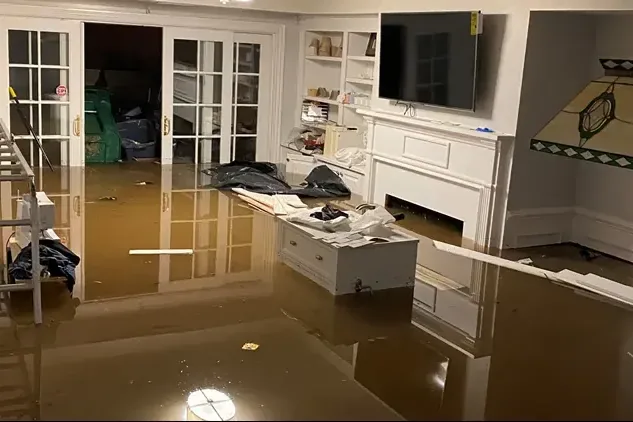
How long does extraction take?
It depends on depth and area. A shallow room goes quickly, deeper water needs pumps first, and drying afterward continues for several days until readings are normal.
Water left on a floor keeps soaking downward, so pumps and extraction wands remove it first, and the drying plan is built from moisture readings across the whole structure.
(888) 471-9821Get the water pumped out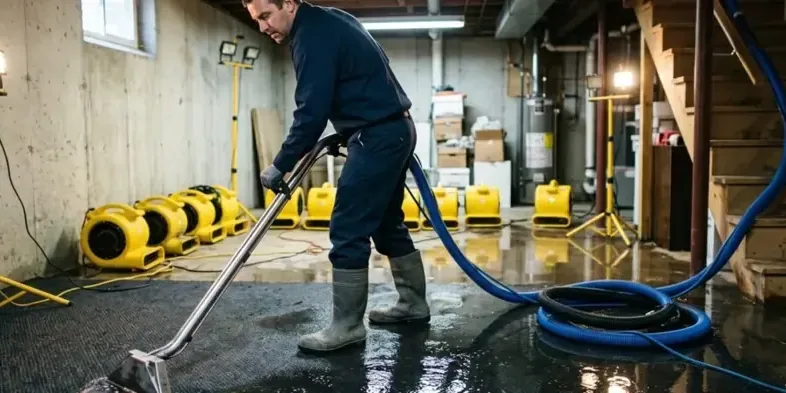
Keep out of standing water until the power to that area is off, because outlets, cords and appliances can energize it.
Raise furniture legs onto blocks, pull up loose rugs and move papers and electronics to a dry upper shelf.
Take photos with a tape measure or a familiar object beside the water so the depth is clear in the claim file.
Bulk water is better removed by pump than by towels, and a crew can tell you what is safe to touch.
Cost climbs with the number of rooms, the depth of the water and whether it is clean, gray or black water. These three cards show the typical jobs and what each range includes, so you can place your own loss.
For a planning number on your own loss, try the water damage cost calculator. Ranges are typical, not a quote: the water category, the square footage, the material class and how fast drying started move the final figure, which comes from the walkthrough and the moisture map.
The crew checks the power situation, identifies the water category and decides where to stage pumps and hoses before any water is moved.
Submersible pumps clear deep water, then wands and vacuums lift what remains from carpet, pad and hard floors until the surface reads damp rather than wet.
Saturated pad and baseboards are removed when needed, and moisture meters check the subfloor and wall bases for water that moved sideways.
Air movers and dehumidifiers follow, with readings repeated on each visit until structural drying is complete and nothing is left behind.
Verona sits in a valley between the First and Second Watchung Mountains, with the Peckman River running along the bottom, and the area gets about 44 inches of rain a year. When water reaches a floor, fast removal keeps it from wicking up walls and into the subfloor. Delay lets moisture spread further than the visible stain.
Crews begin by finding where the water has gone, because it rarely stays where it landed. Submersible pumps handle depth, while wands and vacuums pull moisture from carpet fibers, grout lines and floor seams that a mop would miss.
Clean water from a supply pipe is the simplest case, but water that has touched a drain, a toilet or the ground outside needs extra protective steps and often removal of porous materials. In older homes with several layers of flooring, water can sit between layers, which is why readings matter more than appearance.
Extraction is only the first stage. Once the pumps stop, structural drying takes over, and the local water services page lists every other service available in the township. Keeping the sequence in one visit plan means the water does not have time to settle into framing while equipment is being arranged.
Extraction crews serve ZIP 07044, including Hillcrest, the Verona Lake area and the streets around Verona Park, plus the Bloomfield Avenue corridor, the Route 23 side of town and neighboring blocks.
The same service nearby: water extraction and removal in Orange, Bloomfield, Nutley.
It depends on depth and area. A shallow room goes quickly, deeper water needs pumps first, and drying afterward continues for several days until readings are normal.
No. Household vacuums are not built for water and add a shock risk. Leave the water to pumps and commercial extractors, and focus on moving belongings.
Often, if the water was clean and extraction began early. Pad usually has to go, and carpet is lifted so it can dry on both sides, which also helps prevent odor.
Extraction removes bulk water. Drying is the next stage, using air movers and dehumidifiers, and both are normally planned together in one visit sequence.
Water that came up from a drain is treated as contaminated, which changes the protective gear, the cleaning steps and which materials can stay.
No. Move small valuables if you can, but the crew works around furniture and relocates heavy pieces safely, so you can stay out of the way.
Yes. Depth, source and damaged areas are photographed, and moisture readings are written down, which gives the adjuster a clear starting record, and updated readings follow each visit.
Call now, describe how deep the water is and where it came from, and a coordinator will route a crew to you.