How long does structural drying take?
Several days is common, and dense materials such as plaster and hardwood can take longer. The readings, not a set number of days, decide when it is done.
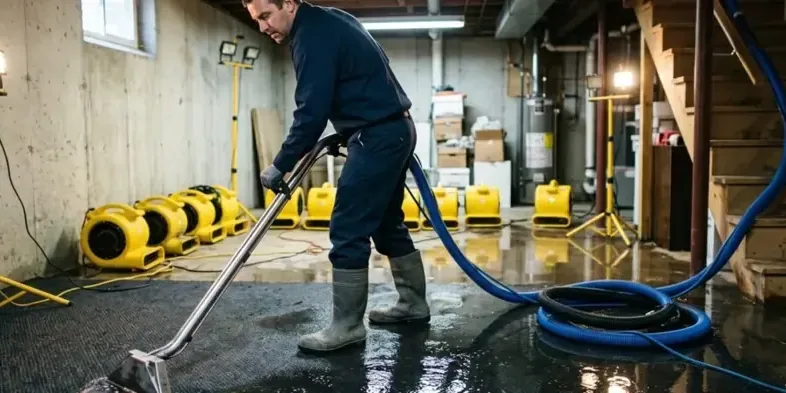
After the standing water is gone, moisture stays inside framing, subfloors and plaster, so the crew sets air movers and dehumidifiers and tracks readings until every material is dry and the readings prove it.
(888) 471-9821Start drying the structure
Keep wet walls and floors open to the air, and never cover a damp surface with paint, new flooring or plastic.
Open doors and cabinets, and use household fans only to help move air until the crew sets proper equipment.
Write down when the leak was found, which rooms are damp and what has been moved, since it helps the claim file.
Moisture left inside walls leads to swelling, odor and decay, so call as soon as readings or stains show a problem.
Drying costs follow the size of the wet area, the type of material and how long it was wet. Plaster, hardwood and masonry dry slowly, so they run more equipment days than carpet and drywall.
For a planning number on your own loss, try the water damage cost calculator. Ranges are typical, not a quote: the water category, the square footage, the material class and how fast drying started move the final figure, which comes from the walkthrough and the moisture map.
Moisture meters and a thermal camera show which materials are wet, and the readings set the drying goals and equipment needs.
Air movers push air across wet surfaces, and dehumidifiers pull water vapor out of the room, with ducting used for wall cavities.
The crew returns to read the meters, moves air movers and changes settings so moisture keeps leaving the structure steadily.
When every material reaches its dry standard, equipment is removed and the readings are saved as proof of a complete dry-out.
The township has a humid continental climate with about 44 inches of rain a year, so structures that get wet need to be dried fully, not merely until they feel dry. Hidden moisture in framing and plaster is what causes the damage that appears later. A structure that looks dry can still hold water in its core.
Drying is a measured process. Evaporation needs warm, moving air, and the moisture that leaves the material has to be removed from the room, which is the job of the dehumidifier. Without that, the water simply moves around the house as humidity. Heat from the machines also helps release water from framing.
Drywall and carpet release water quickly, while hardwood, plaster and masonry hold it for much longer. A good drying plan sets a different goal for each, which is why readings are taken at multiple points. Subfloors and joists often lag behind the surface layers, so equipment stays until they catch up.
Drying follows water extraction and comes before rebuilding. The local services page lists the other work the crew does. Rebuilding too early traps moisture inside new finishes.
Structural drying covers ZIP 07044, including Hillcrest, Verona Lake and the Verona Park area, and also the Bloomfield Avenue corridor and homes near Route 23 and neighboring streets throughout the township.
The same service nearby: structural drying and dehumidification in Orange, Bloomfield, Nutley.
Several days is common, and dense materials such as plaster and hardwood can take longer. The readings, not a set number of days, decide when it is done.
Air movers and dehumidifiers run for long hours, and the warmth helps evaporation. The noise is temporary and a sign that moisture is leaving the structure.
Please do not. Drying works best when it runs continuously, and stopping lets moisture settle back into the materials. Call the crew with any concerns.
Yes, a little, since the machines run continuously for several days. Keep a note of the dates for the claim file in case your insurer asks.
The crew compares meter readings in the wet areas with readings from dry areas of the same material, and records the final numbers.
Fast, complete drying is the main protection, since moisture left in a structure for days can lead to growth. Readings confirm that conditions are safe.
Sometimes. Saturated insulation and soft drywall are cut out, while many floors and walls can be dried in place if the process starts early.
Call now, say what was wet and how long ago, and a coordinator will schedule a crew to set the equipment.