How do dehumidifiers and air movers work together?
Air movers push dry air across wet surfaces to lift moisture, and dehumidifiers remove that moisture from the air. Running one without the other leaves the room damp.
After Ida, a local basement was taken down to the studs, and framing like that has to dry fully before it is closed up. Air movers, dehumidifiers and daily readings steer the dry-out.
(888) 471-9821Dry the structure
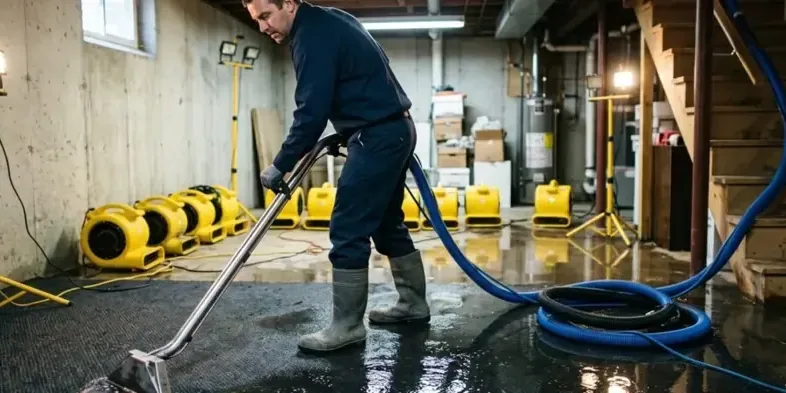
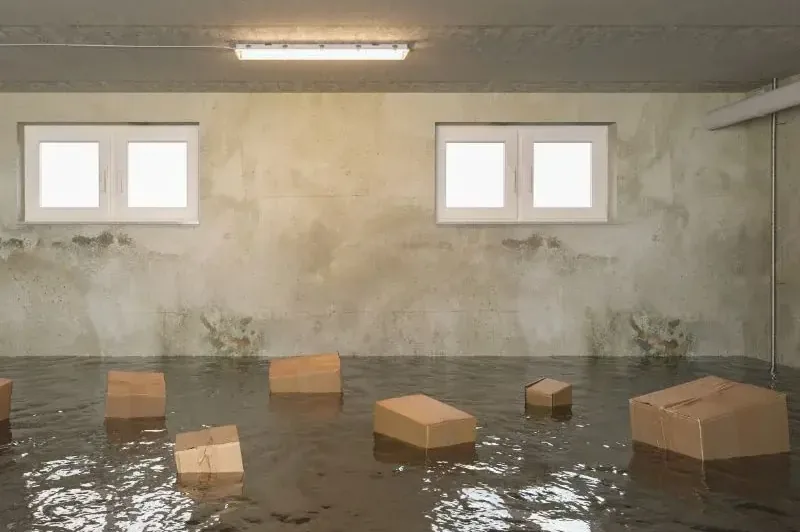
Extraction comes before drying, since equipment cannot dry a space that still has standing water on the floor.
Keep air movers and dehumidifiers running and plugged in, and do not move or switch them off without asking the crew.
Close doors and windows to the drying area so the dehumidifiers work on the moist air inside.
The crew returns to read moisture meters, adjust equipment and record progress toward the dry goal.
Structural drying runs from $1,000 to $3,000 for one or two rooms up to $8,000 to $20,000 or more for plaster, hardwood or masonry. The depth of moisture and the materials involved set the total.
For a planning number on your own loss, try the water damage cost calculator. Ranges are typical, not a quote: the water category, the square footage, the material class and how fast drying started move the final figure, which comes from the walkthrough and the moisture map.
The crew uses meters and thermal cameras to find every wet material and sets a dry goal for each, based on unaffected samples.
Air movers and dehumidifiers are sized and placed to the volume and layout, with openings cut where cavities need airflow.
Readings are taken at set points every visit, and equipment is moved or added until the numbers fall.
Equipment comes off only when every material reaches its goal, and the final readings are filed with the report.
Drying is a measured process. The crew sets a target for every wet material, runs equipment and takes readings until each one is reached, which is why the job ends with documentation and not a guess.
Air movers push dry air across wet surfaces so moisture leaves the material, and dehumidifiers pull that moisture out of the air. Without both, water just moves from the wall into the room and back again.
Drying follows extraction in every flood, as described on the water extraction page, and it is the last stage of a basement flooding cleanup. The timeline depends on the materials and how deep the water went.
Not every wet material behaves the same way. Thin drywall releases moisture quickly, while plaster, hardwood and masonry hold it and let it go slowly. The crew sets a different dry goal for each, using readings from unaffected areas of the same house as the reference.
That is why two jobs with the same amount of water can run for different lengths of time. A closed wall cavity, a subfloor under tile or a plaster ceiling needs more equipment time than an open stud wall, and the schedule changes as the readings change.
Turning equipment off too early is the most common mistake. A wall can feel dry on the surface while its framing is still wet, and trapped moisture invites microbial growth and warping. Readings at every visit prevent that, and the final record shows each material at its goal before the equipment is removed.
Structural drying covers ZIP codes 07041 and 07078, including Short Hills, Wyoming, Mountaintop and the Millburn center, with air movers, dehumidifiers and ducted hoses sized for homes and small buildings.
The same service nearby: structural drying and dehumidification in Orange, Irvington, Verona.
Air movers push dry air across wet surfaces to lift moisture, and dehumidifiers remove that moisture from the air. Running one without the other leaves the room damp.
It is the industry standard for water damage restoration. It covers water categories, drying goals and documentation, and it is the benchmark crews work from.
Moisture meters compare readings in wet materials with readings in unaffected ones. The job ends when wet materials match their dry goal.
Water travels deep into framing, subfloors and masonry, and moisture leaves slowly. The 24 to 48 hour window matters because the damage gets worse the longer it stays wet.
Often, with specialty systems and patience, though they dry slowly and may cup or crack. Readings and condition decide whether they stay.
The framing is dried until it reads at its goal before walls are closed. Closing up wet studs traps moisture and invites later damage.
Printed ranges run from $1,000 to $3,000 for one or two rooms to $8,000 to $20,000 or more for plaster, hardwood or masonry.
One call starts the plan for equipment, monitoring and documentation, and the crew explains the timeline.