


Is storm flood water treated as sewage?
It is handled as Category 3 because river and runoff water can carry sewage, silt and chemicals. Porous materials it touched are removed, and surfaces are cleaned and sanitized.
Hurricane Floyd in 1999, Hurricane Irene in 2011 and Ida in 2021 each hit the township with heavy water. Storm flood cleanup starts with pumping, then moves to stripping and drying.
(888) 471-9821Clear the storm water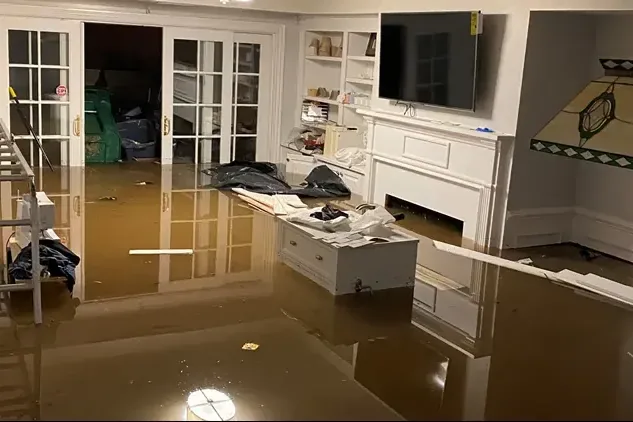
Do not wade into rising water or flooded streets, because depth, current and live wiring cannot be judged from outside.
Switch off breakers to flooded rooms and the garage if it is safe to reach the panel, and avoid wet cords.
Photograph the waterline, damaged items and any vehicle or driveway flooding for the insurance file.
Describe what is flooded and how deep, and ask for a pump-out plan before the next round of rain arrives.
Storm and flash flood cleanup runs from $2,000 to $6,000 for a shallow cellar or garage up to $15,000 to $40,000 or more when the ground floor and basement both flood. Depth, silt and sewage mixing decide the range.
For a planning number on your own loss, try the water damage cost calculator. Ranges are typical, not a quote: the water category, the square footage, the material class and how fast drying started move the final figure, which comes from the walkthrough and the moisture map.
Crews check water depth, power and access, then stage pumps and containment before entering a flooded lower level.
Pumps drain the water, and shovels and wet vacuums clear the silt and debris that river flooding leaves on the floor.
Carpet, padding, insulation and wet drywall are cut out, and storm water is treated as contaminated until proven otherwise.
Air movers and dehumidifiers run until readings reach target, and photos and logs go into the claim file.
Millburn has had three major storm events in about 20 years. In 1999 Hurricane Floyd caused nearly $25 million in damage to about 90 downtown businesses and 500 homes, and in 2021 Ida sent the Rahway River over its flood walls.
Storm flooding picks up silt, fuel, yard chemicals and sewage on its way in. For that reason, floodwater from rivers and runoff is handled as Category 3, which means protective gear, removal of porous materials and sanitizing, not just drying.
Almost eight inches of rain fell in less than 24 hours on September 1, 2021, and a flash flood watch covered Essex County from 2 p.m. that day. After the rain, the Rahway River overflowed its flood walls and ran into Millburn Avenue and nearby streets. Township pump stations work in 20-year and 50-year storms but cannot keep up in a 100-year storm once the river overflows.
Some driveways flood in storms, and cars parked on the street were lost in Ida. Lower levels and garages are the first places water collects, and the basement flooding cleanup and water extraction pages cover those jobs in detail.
Storm flood crews cover ZIP codes 07041 and 07078, including Short Hills, Wyoming, Brantwood and the streets near the Rahway River, with pumps ready for garages, cellars and ground floors.
The same service nearby: storm and flash flood cleanup in Orange, Irvington, Verona.
It is handled as Category 3 because river and runoff water can carry sewage, silt and chemicals. Porous materials it touched are removed, and surfaces are cleaned and sanitized.
A pipe leak is usually clean water from one source. A storm flood brings in dirty water from outside, often at depth, and affects more rooms, so the response is larger and the safety rules stricter.
They can. A township official has said flood mitigation reduces how often flooding happens but does not eliminate it, and one restaurant owner on Millburn Avenue said Ida was his third flood in 20 years.
Photograph the waterline on walls, the depth in each room, damaged belongings and any flooded driveway or garage. Do it before pumping or cleanup so the insurer sees the original condition.
That depends on whether water is still entering. Pumping into a space that keeps refilling wastes effort, so the crew checks the source and the forecast before setting the sequence.
Most lower levels need several days of drying after the water is out. Deeper water, plaster or hardwood and a second flooded level all lengthen the schedule.
Printed ranges run from $2,000 to $6,000 for a shallow cellar or garage to $15,000 to $40,000 or more when the ground floor and basement both flood.
One call brings pumps, wet vacuums and drying equipment into the plan, and the crew sets the order of work.