
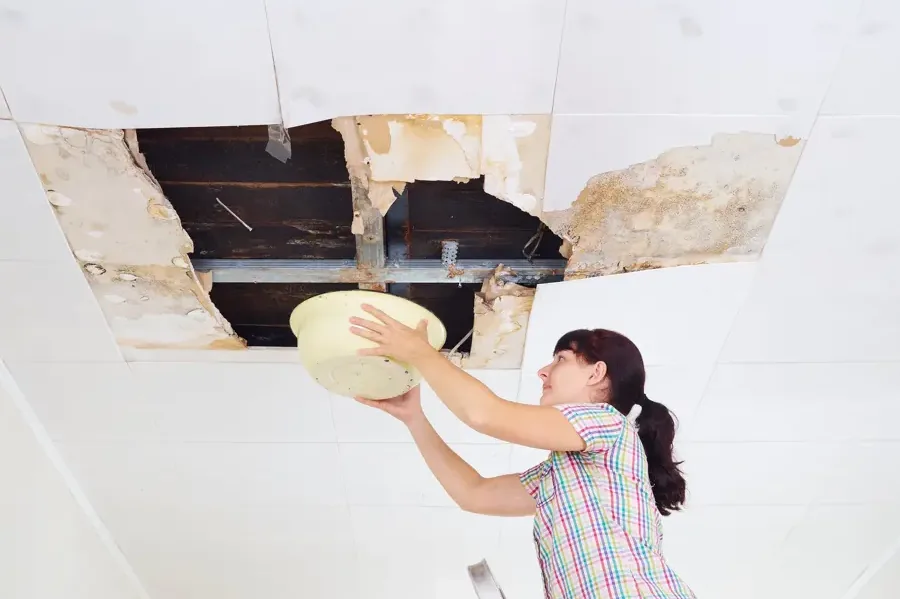

How can an appliance leak be caught early?
Look for damp flooring, a soft cabinet base, musty smells and peeling paint near the machine. Checking hoses for bulges, cracks and rust at the fittings helps.
A leaking appliance can soak floors and lower levels in any home before the leak is noticed. Washers, dishwashers and refrigerators release water into cabinets, subfloors and the ceilings under them. The damage usually grows quietly for days.
(888) 471-9821Dry the laundry leak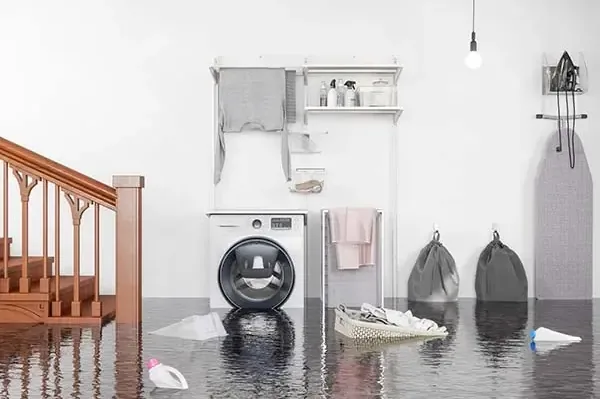
Close the valves behind the washer or dishwasher, or the main valve if they cannot be reached, and unplug the appliance if the floor is dry.
Soak up pooled water, lift rugs and baskets, and pull the appliance forward only if the floor is safe to stand on.
Look at the ceiling beneath the room for stains or drips, since the water often travels through the floor.
Report the appliance, how long it leaked and which rooms are wet, and photograph the hose or fitting that failed.
Appliance leak cleanup ranges from $700 to $2,500 for a laundry area caught quickly up to $6,000 to $12,000 or more when the water reaches the ceiling below. How long the leak ran and where it spread decide the cost.
For a planning number on your own loss, try the water damage cost calculator. Ranges are typical, not a quote: the water category, the square footage, the material class and how fast drying started move the final figure, which comes from the walkthrough and the moisture map.
The crew checks which appliance leaked, whether the supply is shut off and which surfaces the water reached.
Standing water is removed, and toe kicks, cabinet bases or flooring are opened so trapped moisture can escape from behind them.
Air movers and a dehumidifier dry the floor system and cabinet area, and readings show when the materials are dry.
Ceilings under upstairs laundry rooms and kitchens are tested, and opened if the drywall or insulation is wet.
A hose that loosens or a drain that overflows may leak a little at a time. The water seeps beneath flooring and into the cabinet base, so the surface looks fine while the layers under it stay wet.
A small leak behind a machine can run for days without a visible puddle. The longer it goes, the more subfloor, cabinet base and drywall it reaches, and the more of each has to be opened and dried.
Overflow from a drain pipe can be gray water and calls for more care, while a supply break behaves like a burst pipe. Wet ceilings below an upstairs laundry are covered under ceiling leak water damage.
Warped flooring, a soft cabinet floor, a musty smell near the machine or a higher water bill than usual can all point to a slow leak. A small stain on the ceiling below is often the first visible sign, and by then the subfloor has been damp for some time.
Checking washer hoses for bulges and replacing them before they fail is cheap prevention. Once water is on the floor, the priorities are the same every time: stop the supply, extract the water and dry the layers underneath before they swell, split or stain. Photographs of the failed hose or fitting, taken before it is replaced, give the adjuster a clear cause.
Appliance leak crews cover ZIP codes 07041 and 07078, including Short Hills, Wyoming, Brookhaven and the Millburn center, with extraction tools sized for laundry rooms, kitchens, condo units and townhome utility rooms.
The same service nearby: washer and appliance leaks in Orange, Irvington, Verona.
Look for damp flooring, a soft cabinet base, musty smells and peeling paint near the machine. Checking hoses for bulges, cracks and rust at the fittings helps.
Supply water is clean, but drain overflow is gray and can carry detergent, lint and bacteria. The category decides how materials are handled.
Not always. Cabinet bases made of particleboard swell and fail when wet, while solid wood can often be dried. Readings settle the question.
It can be if the leak reached the floor system. The ceiling is tested with a meter and opened only if it is wet. Meters show the answer without cutting.
That is a decision for the owner and a technician. The crew deals with the water and records what failed for the insurer.
Printed ranges run from $700 to $2,500 for a laundry area caught quickly to $6,000 to $12,000 or more when the ceiling below is also wet.
One call lines up extraction and drying, and the crew explains what may need opening.