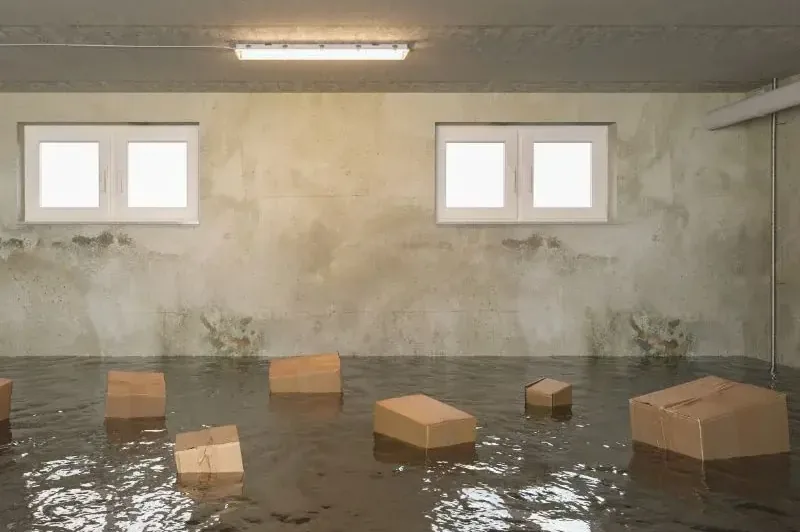
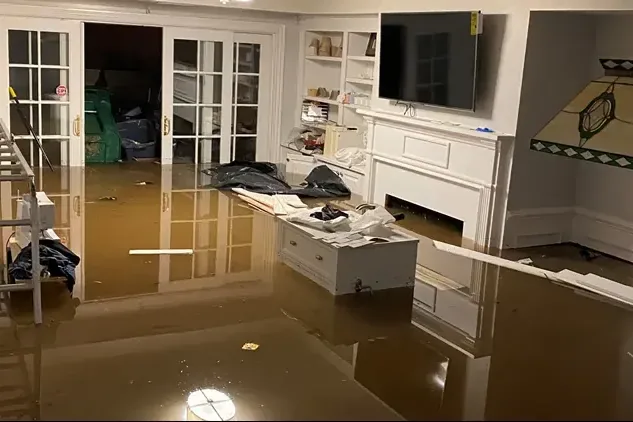

Why do sump pumps fail during storms?
Storms often cut power, and a pump without a battery backup stops when the power does. Floats can also stick, and pits clog with silt, so even a working pump can be overwhelmed.
When a sump pump fails during heavy rain, groundwater can rise through the pit and flood a basement. Crews remove the water, clean the slab and walls, and dry the space to a measured goal.
(888) 471-9821Pump out the flooded basement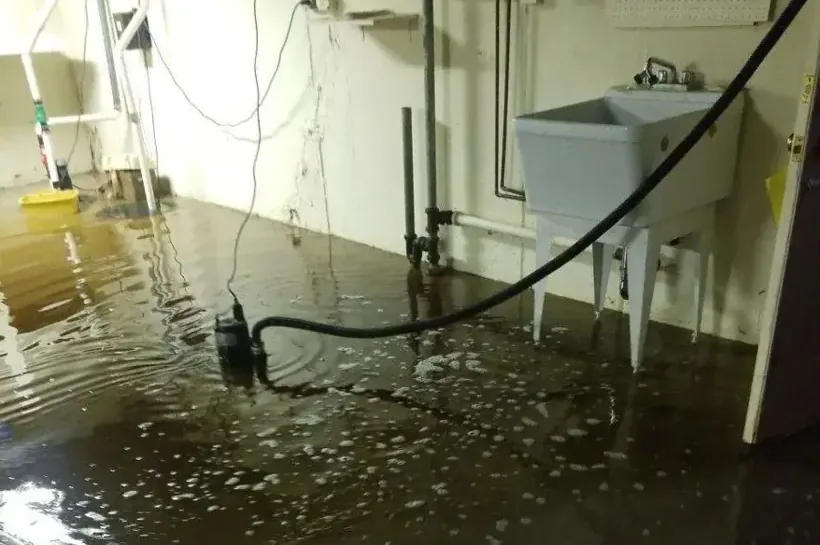
Do not enter a basement where water touches outlets, the panel or appliances, and never run extension cords through the flood.
Note whether the power was out, the float stuck, the pit clogged or the pump simply overwhelmed, since the cause affects the repair.
Carry dry boxes, tools and electronics up from low shelves, and photograph the water level before anything is moved.
Describe the water depth and whether more rain is expected so the crew can bring enough pumps and plan the removal in stages.
Sump pump flooding is priced by depth, finish level and water type. A shallow event in a bare basement sits at the low end, while deep water in a finished space sits at the top. The cards show the printed ranges, and a replacement pump is separate.
For a planning number on your own loss, try the water damage cost calculator. Ranges are typical, not a quote: the water category, the square footage, the material class and how fast drying started move the final figure, which comes from the walkthrough and the moisture map.
Pumps lower the water gradually so the slab and walls are not stressed, and the pit is cleared so a replacement pump can sit properly.
Mud and silt are shoveled out, and ruined carpet, cardboard and stored items are removed after being photographed one by one.
Because groundwater is not clean, the slab, block walls and framing are washed and treated with an antimicrobial before the dry out begins.
Dehumidifiers and air movers run until readings in the slab, walls and framing match dry reference points, and the record is closed out.
A sump pump does its work quietly until the night it stops. When heavy rain fills the pit and the pump cannot keep up, water rises through the floor of the basement in Irvington and spreads across everything stored there.
Power outages during storms, stuck floats, clogged pits and worn motors are the usual causes. A pump can also be fine and still be overwhelmed when rain arrives faster than it can discharge. The cause matters for the repair and for the claim, so it is noted at the first visit.
A new pump, a battery backup or a second pump can be installed by a plumber once the area is dry. Drying comes first, because moisture left in the slab can undermine any repair. Wider basement events continue on the basement flooding page.
Heavy rain is the trigger, so storm dates, photos of the pit and the failed pump, and moisture readings are kept together. Surface flooding that comes in from outside is covered on the storm cleanup page.
Sump pump crews serve ZIP 07111, including Irving Place, the Chancellor Avenue corridor and the streets around Civic Square, with enough pumps to lower the water in stages and the tools to clear the pit.
The same service nearby: sump pump failure cleanup in Orange, Millburn, Bloomfield.
Storms often cut power, and a pump without a battery backup stops when the power does. Floats can also stick, and pits clog with silt, so even a working pump can be overwhelmed.
No. Groundwater carries soil, bacteria and chemicals, so it is treated as Category 3. Contact should be avoided, and porous materials it soaked are usually removed.
It is better to wait until the water outside stops rising. Pumping while groundwater is still high can put walls and slab under pressure, so crews lower the water in stages.
Standard policies often exclude groundwater and sump overflow unless a water backup endorsement was added. The policy wording decides, so check it early and keep photos of the pit.
Several days is typical. Concrete slabs and block walls release water slowly, so dehumidifiers run until readings match dry reference points in the masonry as well as the framing.
Yes, until the adjuster has seen it. Photograph the pump, the float and the pit, and keep the failed part, because it shows what went wrong and supports the claim.
A plumber can add a battery backup, a second pump or a high water alarm. Testing the pump before storm season and clearing the pit of silt also lowers the risk.
Give the water depth and say whether rain is still falling, and the crew plans a staged pump out and the drying that follows.