Is sump pump water contaminated?
Yes, usually. Groundwater carries soil, bacteria and chemicals, so the crew wears protective gear and sanitizes surfaces after the pump-out.
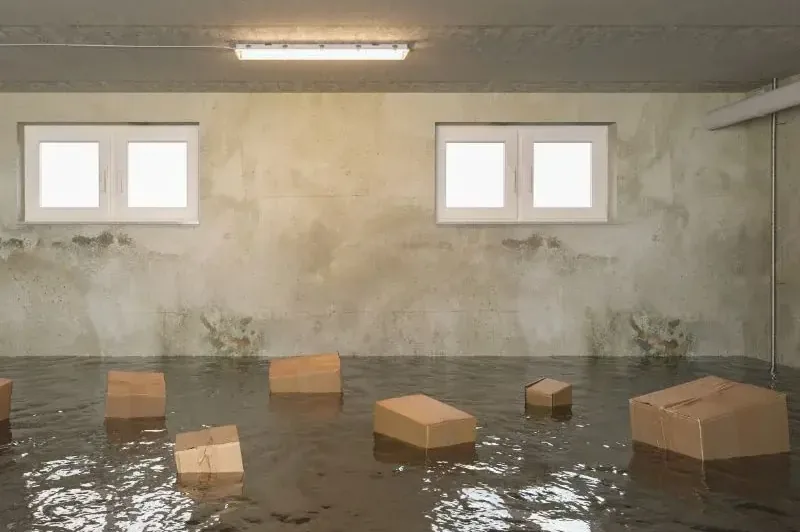
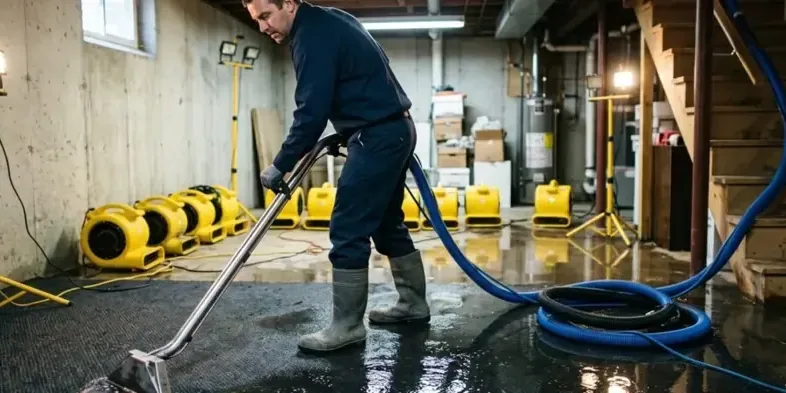
When storms strain the drainage system, a sump pump has to run without a break. If it fails, a pit overflows quickly and water spreads across a lower level. The crew pumps out, cleans and dries it.
(888) 471-9821Clear the failed pit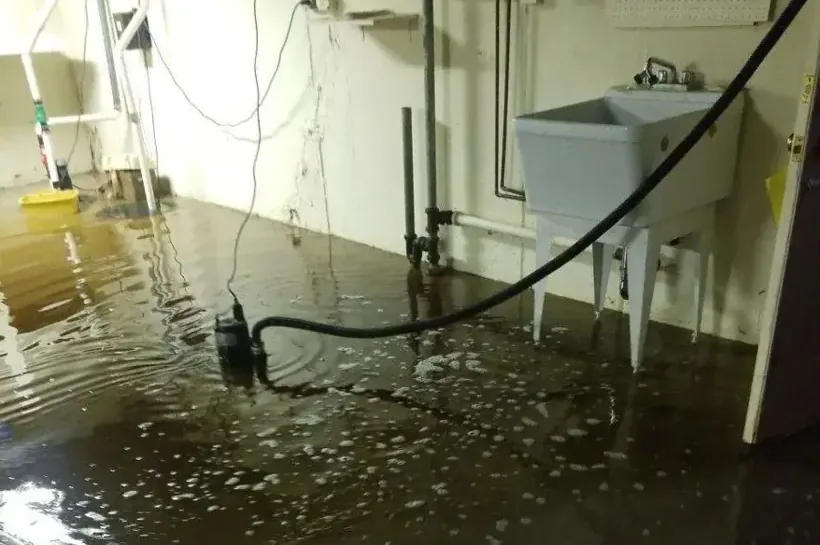
A tripped breaker or a power outage is the most common cause. If outlets near the water are wet, stay away and leave the electrical to a professional.
Groundwater carries soil and bacteria. Keep out of deep water, and never touch the pump or cord while standing in it.
Carry boxes, electronics and papers to higher shelves or upper floors before the water spreads farther along the floor.
Say how deep the water is and whether rain is still falling, so the crew brings the right pumps and a backup.
Sump pump failure cleanup runs $1,500 to $4,500 for an unfinished basement and $4,500 to $10,000 for a partly finished one. A finished basement with deep water reaches $10,000 to $22,000 or more, depending on contents. Water depth also matters.
For a planning number on your own loss, try the water damage cost calculator. Ranges are typical, not a quote: the water category, the square footage, the material class and how fast drying started move the final figure, which comes from the walkthrough and the moisture map.
Portable pumps remove the water, and the pit is cleared so the crew can see why the pump failed or stopped.
Groundwater carries soil and bacteria, so concrete, block and any remaining framing are scrubbed and treated.
Wet carpet, padding and low drywall that cannot dry are cut out and hauled, which opens the walls to airflow.
Air movers and dehumidifiers run until readings reach the dry goal, with logs and photos kept for the claim.
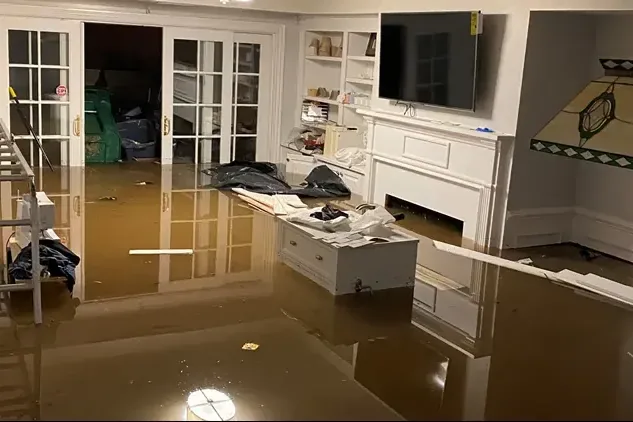
A sump pump is a quiet appliance that matters most during a storm, and it is the one most likely to fail then. When the pit overflows, groundwater spreads across the floor, and cleanup starts with the pump-out.
Township officials say heavier storms, aging infrastructure and decades of development strain the drainage system, which means pumps run longer and harder. A pump that handles an ordinary storm can fail under a long one.
A battery backup or a water-powered backup can keep a pit working when the power fails, and a plumber can advise which option suits the pit.
Residents report repeated flooding on Thomas Street, Windsor Place and Beardsley Avenue, and near Watsessing Park and the Second and Third rivers. Where a home has a sump pit, a failed pump in those conditions can mean fast flooding. Flooding of this type tends to arrive with the storm, not after it, so pumps that are installed should be tested before the season rather than during it.
The crew can leave a temporary pump in the pit while the storm continues. After the dry-out, a plumber or pump specialist replaces the failed unit. Related work appears under basement flooding cleanup and water extraction. Wet block walls dry slowly because they pull moisture from the ground, so the crew often keeps dehumidifiers running longer here than in a drywall room. Readings decide when the equipment can go.
Crews respond to failed sump pumps across ZIP 07003, including Brookdale, Watsessing, Ampere North and Silver Lake, and the areas that report repeated flooding near the Second River, plus the Halcyon area and the streets near Watsessing Park.
The same service nearby: sump pump failure cleanup in Orange, Nutley, Verona.
Yes, usually. Groundwater carries soil, bacteria and chemicals, so the crew wears protective gear and sanitizes surfaces after the pump-out.
Common causes are a power outage, a stuck float switch, a clogged discharge or a motor that wore out. The crew can often see the cause once the pit is clear.
Yes, before the next storm. A plumber or pump specialist replaces it, and a battery backup can keep it running when the power goes out.
Concrete and block need several days to dry, and finished spaces take longer. The IICRC S500 window of 24 to 48 hours is the target for starting the work.
Plastic and metal items can be cleaned. Cardboard, paper and fabric that sat in groundwater are usually discarded, with photos taken for the claim.
Many policies exclude groundwater unless a water backup endorsement is attached. Review the wording, and document the damage thoroughly either way.
The crew places pumps to hold back water while the storm continues, then returns to finish the cleanup and the drying once conditions ease.
Groundwater spreads quickly across a lower level and soaks everything stored on the floor. One call starts the pump-out and drying plan.