


Why did my sump pump fail?
Common causes are power loss, a stuck float, a clogged discharge or a worn motor. A plumber can test the unit after the cleanup and suggest a backup.
When a sump pump fails during heavy rain, the stored water rises into the space around it and spreads across the floor. The water is extracted, ruined materials are removed and the area is dried.
(888) 471-9821Report the failed pump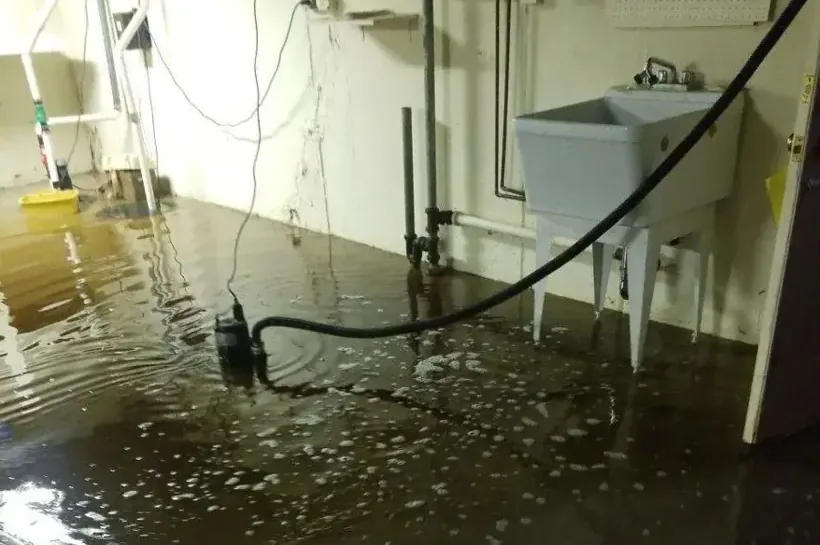
Do not wade in if water is near outlets or a panel, since a flooded pump circuit can be live.
A tripped breaker or unplugged cord is a common cause, but reset it only from a dry spot and with dry hands.
Carry boxes, papers and small items from the floor to shelves or an upper level before the water climbs further.
Describe the depth and the weather so a crew can bring pumps and extraction gear for the water level.
Sump pump failure cleanup usually costs $1,500 to $22,000 or more. A shallow flood in an unfinished space costs the least, while deep water in a finished basement means removal, treatment and longer drying, and a written scope sets the figure.
For a planning number on your own loss, try the water damage cost calculator. Ranges are typical, not a quote: the water category, the square footage, the material class and how fast drying started move the final figure, which comes from the walkthrough and the moisture map.
The crew checks the depth, the electrical risks and the cause of the failure, and treats groundwater as dirty from the start.
Pumps lower the water in stages, and the pit area and floor are cleared of silt and debris so nothing blocks the drain.
Wet drywall, carpet and ruined boxes are removed, while salvageable items are photographed and set aside.
Dehumidifiers and air movers run until block, wood and concrete read normal, and a log goes to the owner and the adjuster.
A sump pump works only when it has power, a healthy float and a clear discharge, so a storm that knocks out the grid or jams a float can leave the pit overflowing. When that happens, water collects at the lowest point of the structure and spreads outward.
Heavy rain raises groundwater, and Yanticaw Brook and the Third River add runoff to the street grid around them. Where a pump is installed, a failure during that kind of storm can turn a damp floor into a flooded one, and the water that rises through the pit is treated as dirty. Fast pumping limits how far it climbs the walls and how much stored property is lost.
Silt and mud settle around the pit, so the crew clears them before drying begins. Walls, floors and the area around the pump are washed and treated, and the pump is left for the plumber to test or replace.
Once the water is gone, drying begins. Read about basement flooding cleanup for lower level work and structural drying for the equipment, and ask a plumber about a battery backup for the next storm.
Pump failure cleanup covers ZIP code 07110, including Yanticaw, Avondale and Glendale, and the streets near the Third River, Memorial Park and Franklin Avenue, at any hour during a storm.
The same service nearby: sump pump failure cleanup in Orange, Bloomfield, Verona.
Common causes are power loss, a stuck float, a clogged discharge or a worn motor. A plumber can test the unit after the cleanup and suggest a backup.
No. It comes from groundwater and soil, so it is treated as dirty, and porous materials it soaked are removed.
No. A plumber installs or tests the pump. The restoration crew extracts, cleans and dries the affected space.
A household unit helps for light dampness, but a flooded space needs commercial machines and meters to reach a true dry.
Odors fade once wet materials are removed, surfaces are cleaned and the space is dried fully. A final check confirms it.
Many policies treat water from a failed pump as a separate coverage, so the policy language decides. Photos and logs help the adjuster.
Test the pump before storms, clear the discharge, and ask a plumber about a battery backup or a second pump for added protection.
Tell the dispatcher how deep it is and what is down there, and the right crew is sent.