
Should I keep using the heater until it is replaced?
No. A leaking tank should be switched off and the supply closed, since running it risks more water and, in gas units, other safety problems.
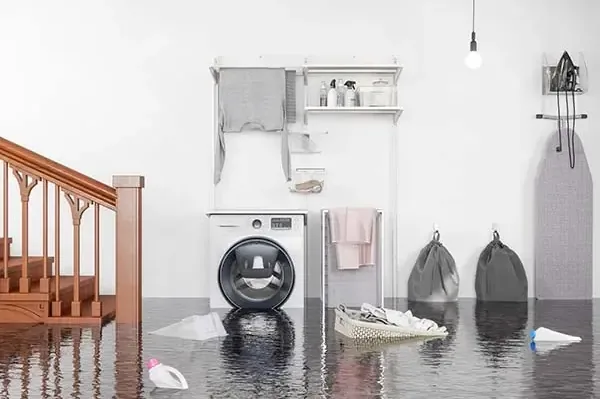
A leaking water heater can empty a full tank across the floor in a short time, then wick into walls and neighboring rooms. The tank is shut off, the spill extracted and the area dried.
(888) 471-9821Report the tank leak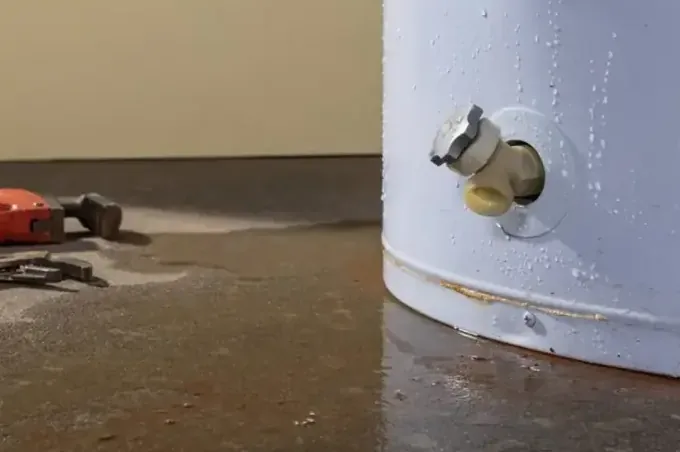
Switch off the electric breaker or the gas control on the heater, because a tank must never run while it leaks.
Turn the cold water valve above the tank to stop refilling, then open a hot tap to relieve pressure.
Lift boxes, rugs and stored items off the floor and away from the spill before they soak it up.
Record the tank, the wet floor and nearby walls, then call so a crew can extract water and check hidden spots.
Water heater leak cleanup usually costs $800 to $12,000 or more. A slow drip on a bare floor sits at the low end, while a burst tank over finished space needs removal, drying and repairs across several rooms, so a written scope comes first.
For a planning number on your own loss, try the water damage cost calculator. Ranges are typical, not a quote: the water category, the square footage, the material class and how fast drying started move the final figure, which comes from the walkthrough and the moisture map.
The crew checks that power and water to the tank are shut and notes how far the spill traveled across the floor and into walls.
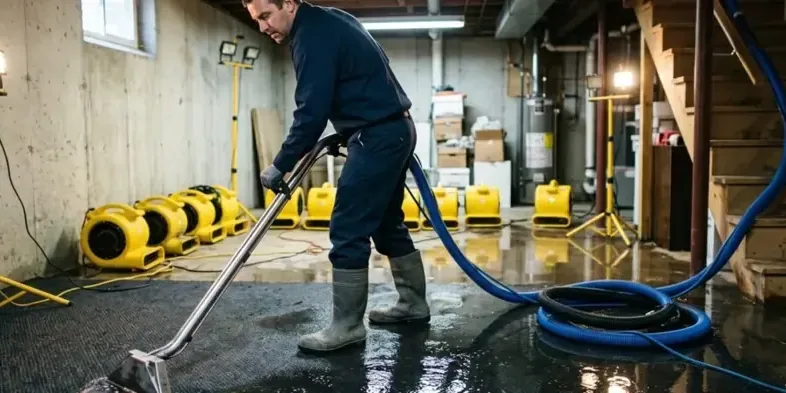
Wands and small pumps clear the pool, and wet cardboard, carpet or stored goods are lifted so they do not keep releasing moisture.
A meter and thermal camera check walls, door frames and adjoining rooms, since a spill creeps under partitions.
Air movers and a dehumidifier finish the job, and the log of readings goes to the owner and the adjuster for the claim.
A water heater is a tank full of warm water under steady pressure, and when its seams rust through, that water goes somewhere fast. A utility closet, a laundry corner or a cellar corner can look like a small mess one minute and a flooded floor the next. Acting early limits how far the water creeps under walls and into stored boxes and carpet.
Water from a tank starts clean, but it quickly soaks cardboard, carpet and drywall near the base. In a Nutley house with a finished room beside the heater, the spill can travel under a partition wall and wet the next room before anyone notices.
Heaters sit near panels, furnaces and laundry hookups, so the crew places equipment carefully and keeps cords off wet floors. Insulation and drywall that soaked up the spill are cut back, and the framing behind is dried until the meter reads normal for that material, with a final check before the machines leave.
A plumber replaces the heater while the restoration crew dries the area. If hot water ran for a long time, see appliance leak damage and structural drying for the same drying approach in other rooms.
Heater leak work covers ZIP code 07110, including Avondale, Glendale and the brick houses and apartments near Franklin Avenue, Kingsland Park and Memorial Park, at any hour of the day.
The same service nearby: water heater leak cleanup in Orange, Bloomfield, Verona.
No. A leaking tank should be switched off and the supply closed, since running it risks more water and, in gas units, other safety problems.
A typical residential tank holds many gallons, enough to soak a closet and run across a floor into nearby rooms.
It starts as clean supply water, but after it sits on dirty floors or in wet materials it can turn contaminated, so removal matters.
Tile and concrete usually can. Laminate and carpet that soaked up water are often removed, while solid wood may dry with careful work.
A plumber installs the new tank. The restoration crew only handles extraction, drying and documentation of the water damage.
Sudden tank failures are often covered, while slow leaks may not be. The adjuster checks photos, the readings and the repair invoice.
For a small spill, several days. Finished rooms with wet drywall may take longer, and the readings decide the end.
Say where the tank sits and which rooms are wet, and the dispatcher sends the right crew and gear.