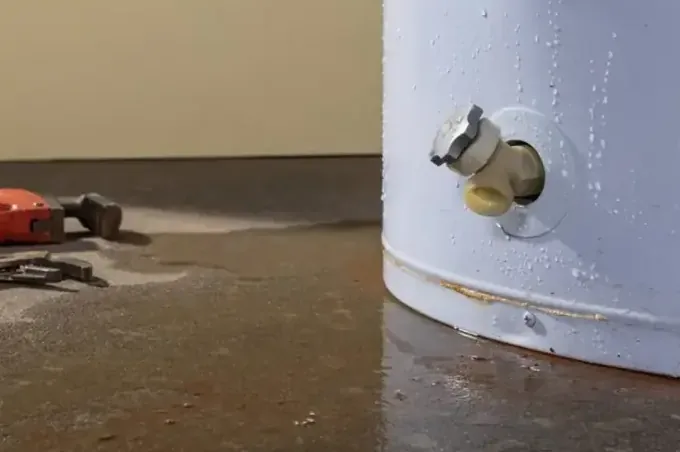


How can I tell where an appliance leak started?
Look at hoses, valves and seals first. A moisture meter and thermal camera can then show where the water traveled behind the unit and under the nearby floor.
Appliance leaks in a township with 11,789 housing units are usually small at first and then spread under floors and cabinets. The wet area is found, extracted and dried before it grows into a larger repair.
(888) 471-9821Call about the appliance leak
Pull the plug if it is safe and dry, then close the valves behind the appliance to stop the water.
Look at the supply hoses, the drain hose and the connections for cracks, bulges or loose fittings.
If you can do it safely, slide the appliance forward so the wet floor and wall base can be seen.
Record the leak, the floor and any stained cabinets, then call so a crew can find where the water went.
Appliance leak cleanup usually costs $700 to $12,000 or more. A quick catch in a laundry area costs the least, while a leak that soaked kitchen cabinets or reached the ceiling below costs more, and a written scope sets the figure.
For a planning number on your own loss, try the water damage cost calculator. Ranges are typical, not a quote: the water category, the square footage, the material class and how fast drying started move the final figure, which comes from the walkthrough and the moisture map.
A moisture meter and a thermal camera trace the water past the visible puddle, under the floor surface and behind cabinet bases.
Wands pull the water out of the floor, and loose pad, toe kicks or baseboards are lifted to open the wet cavity to airflow.
Only sections that read wet are cut, so cabinets and flooring that can dry stay in place, which keeps the repair smaller.
Air movers and dehumidifiers run until the meter shows normal readings, and the log goes to the owner and the adjuster.
Appliance leaks rarely announce themselves. A hose weeps for weeks, a seal gives way mid cycle or a drain backs up behind a unit, and the first sign is often a swollen floor or a musty smell. Finding where the water went matters more than mopping the puddle, because a dry looking floor can still hide a wet subfloor beneath it for weeks.
The 2010 census counted 11,789 housing units in Nutley, and in every kind of home appliances sit close to floors, cabinets and shared walls. Water follows gaps under flooring and behind baseboards, and it can travel to rooms and units well away from the machine, including the ceiling of the room below.
Kitchen leaks often soak the base of the cabinets and the floor under them. Solid wood cabinets can dry in place, while particleboard swells and breaks down. The crew opens toe kicks and checks the subfloor, then decides what can stay and what must be replaced. Dishwasher and refrigerator leaks are often found only after the floor begins to cup, so early meter checks save money.
If the water came from a tank, see water heater leak cleanup, and for water that reached walls read about structural drying.
Appliance leak crews work across ZIP code 07110, including Avondale, Glendale and the apartments and houses near Franklin Avenue, Booth Park and Memorial Park, at any hour of the day or night.
The same service nearby: washer and appliance leaks in Orange, Bloomfield, Verona.
Look at hoses, valves and seals first. A moisture meter and thermal camera can then show where the water traveled behind the unit and under the nearby floor.
Yes. Rubber hoses age and crack, and a burst hose can release a steady flow while no one is home.
Solid wood bases often dry in place. Particleboard cabinets that swell are typically replaced, and the crew explains which applies.
It can be. Water slips under flooring and into the subfloor, so the crew lifts a section and checks it with a meter.
An appliance technician or plumber repairs the unit. The restoration crew extracts the water and dries the building.
Sudden leaks are often covered, while slow ones may not be. Dated photos and moisture logs help the adjuster decide, and the receipts for emergency work should be kept.
Several days for most single area losses. Cabinets and subfloors can take longer, and moisture readings decide when it ends, not a fixed schedule.
Say which unit failed and where the water went, and the dispatcher sends a crew with the right tools.