
Can a business stay open during drying?
Often, yes. The crew isolates affected zones and keeps the rest of the space running, though noise and equipment may require some adjustments.
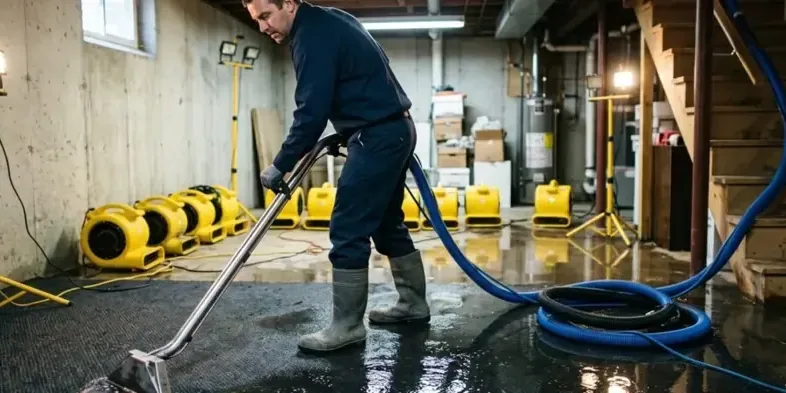
Storefronts, offices and institutional buildings cannot afford long closures. The crew extracts the water, dries the structure and records the loss, so owners and managers can reopen as soon as the readings allow.
(888) 471-9821Report the business water loss
Shut the water supply and power to wet areas, then keep staff and visitors out of affected rooms until the area is safe.
Cover or move stock, files and equipment that can be moved safely. Photograph them before they are touched.
Tell the property manager, the landlord and the insurance carrier, and keep a written record of who was contacted and when.
Describe the building type, the area affected and the source, so the crew brings the right pumps, meters and drying gear.
Commercial water damage runs $3,000 to $10,000 for one suite or storefront and $10,000 to $30,000 for several units or floors. A large loss or Category 3 event reaches $30,000 to $75,000 or more, depending on size.
For a planning number on your own loss, try the water damage cost calculator. Ranges are typical, not a quote: the water category, the square footage, the material class and how fast drying started move the final figure, which comes from the walkthrough and the moisture map.
The crew walks the affected areas, maps moisture and identifies the water source and category before work begins.
Pumps clear standing water while contents are moved or covered, and walkways are protected for tenants and staff.
Equipment is placed by zone so unaffected areas stay open, and readings are logged for each tenant space.
Final readings, photos and invoices go to the manager and insurer, and the spaces are cleared for repair and reopening.
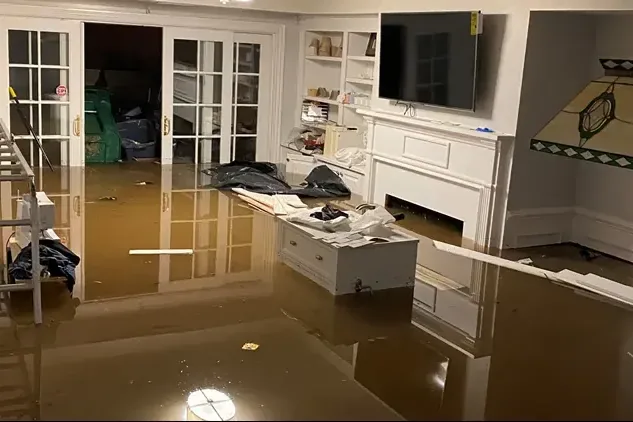
A water loss in a business affects more than floors and walls. Inventory, equipment, tenants and customers all depend on a quick, documented response, and the work is planned around keeping as much of the building open as possible.
Downtown Bloomfield Avenue and Broad Street businesses, Bloomfield College and school buildings such as Oak View are all commercial and institutional water-damage sites. A water main break closed Oak View in February 2026, which shows how a single failure disrupts a whole building.
Many of these buildings share walls, ceilings and mechanical rooms, so a leak in one suite can drip into the next. The survey follows the water through each shared space before work starts.
The crew works in zones, so affected suites are isolated while the rest of the building continues to operate. Equipment is placed to limit noise and foot traffic, and tenants are told what to expect each day. Customers and students notice odors and wet floors first. Keeping walkways dry, signed and clear reduces the risk of slips, and clear communication keeps tenants informed.
Commercial claims require detail. Moisture maps, equipment logs and invoices are organized by space. For residential losses see water extraction, and for ongoing drying see structural drying. The first call should include the policy holder and the manager, since commercial policies often carry their own steps and deadlines. The crew follows the carrier's reporting needs from the start.
Crews serve commercial buildings across ZIP 07003, including downtown Bloomfield Avenue and Broad Street, the Bloomfield Green Historic District, Brookdale, Watsessing and Ampere North, and the school and college buildings that need steady schedules.
The same service nearby: commercial water damage in Orange, Nutley, Verona.
Often, yes. The crew isolates affected zones and keeps the rest of the space running, though noise and equipment may require some adjustments.
The property manager and the insurance carrier. Photograph the damage and write down who was contacted, with times, before work begins.
Stock is moved to dry areas or covered, and anything that was wet is photographed and listed so the claim covers it properly.
Yes. Communication is coordinated through the property manager, and each tenant space gets its own readings and report.
Schools and colleges need clear schedules around classes. The crew works in phases and keeps the affected areas sealed from occupied rooms.
By area, material type, water category and drying time. Larger losses are estimated in phases, with written updates for the carrier.
Every day of downtime costs a business more. One call starts extraction, drying and the paperwork the insurer will ask for.