A flooded shop loses money every day it stays closed. The Rahway River can rise in heavy rain, go over its flood walls and run into the avenue and nearby streets, and downtown businesses have been through it before. This post gives a shop or restaurant owner a day one plan: what to protect, what to photograph and how the cleanup and drying are ordered.
Key takeaways
- River water in a business is contaminated, so stock, flooring and wall materials it touched are sorted and often removed.
- Photograph the water line and every damaged item before anything is moved, because records support the insurance claim.
- Extraction and drying start in the same visit so water does not wick into walls and counters.
- Flood work reduces how often flooding happens but does not eliminate it, so owners should keep a repeat plan.
- Reopening depends on dry readings and cleaned surfaces, not appearance alone.
Why this stretch floods
The West Branch of the Rahway River runs through downtown. In heavy rain it rises, goes over its flood walls and runs into the avenue and nearby streets.
Longtime residents have seen the avenue turn into a muddy river many times. For a storefront, that means water through the door and across the whole floor, not a small leak.
What Ida and Floyd showed downtown owners
Tropical Storm Ida brought almost eight inches of rain in less than 24 hours on September 1, 2021. A flash flood watch had been issued for Essex County from 2 p.m. that day, and the river overflowed its flood walls afterward.
Businesses on the avenue, including a fashion shop and a restaurant, flooded. One restaurant owner said it was his third flood in 20 years.
A pattern, not a surprise
Hurricane Floyd in 1999 caused nearly $25 million in damage to about 90 downtown businesses and 500 homes around the township. Hurricane Irene in 2011 dropped more total rain than Ida did.
Three major storm events in about 20 years is a pattern, and owners can plan around it.
What flood work can and cannot do
The township installed several pump stations, and its work has included raising the Vauxhall Road Bridge and widening the channel and flood walls upstream of it. The pump stations work in 20 year and 50 year storms but cannot keep up in a 100 year storm once the river overflows.
A township official says flood mitigation reduces how often flooding happens but does not eliminate it. A shop owner should treat that as a reason to keep a ready plan.
The first day plan
Day one is a sequence. The order protects people first, then evidence, then the building.
- Stay out until it is clear the power in wet areas is safe.
- Photograph the water line, shelving, equipment and stock before moving anything.
- Write down what is damaged, with approximate quantities and costs.
- Move cash, records and small electronics to a dry place.
- Contact the insurer and the landlord, if there is one, and ask what documents they need.
- Arrange extraction and a moisture survey of the entire floor, including behind counters.
How a commercial cleanup runs
The commercial water damage page covers how shops, restaurants and offices are handled. The structure is simple: take the water out, remove what cannot stay, clean, dry and verify.
River water is treated as contaminated. The storm and flash flood cleanup page explains why porous items such as carpet, ceiling tile and insulation are often removed, and why hard surfaces are cleaned and treated.
Drying follows once the space is stripped. The structural drying page lists the equipment and readings used, which matter in a business because plaster, masonry and flooring hold water longer than they appear to.
- Standing water extracted from the floor and from low shelving areas
- Wet ceiling tile, insulation and baseboards removed
- Surfaces cleaned and treated
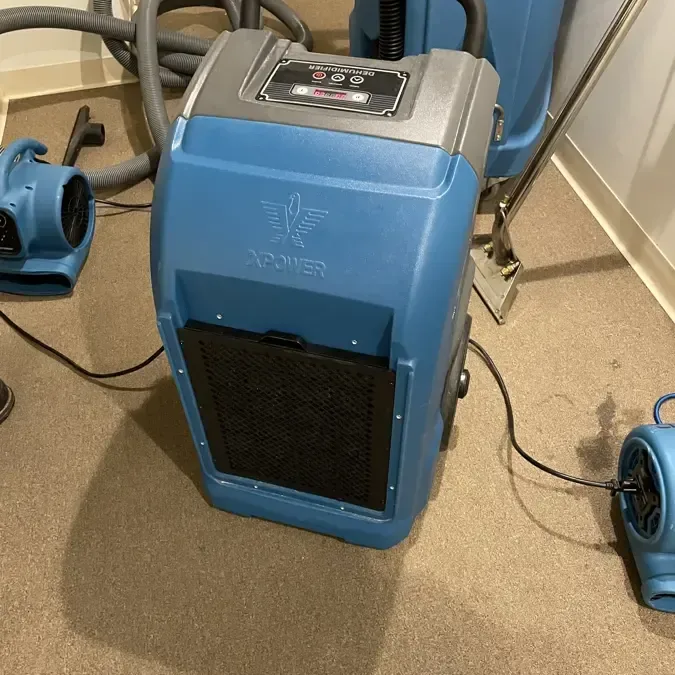
- Air movers and dehumidifiers placed with a logged moisture plan
- Readings repeated until the space meets dry standards
Protecting stock, equipment and records
Not everything has to be thrown out. Sorting by material and water exposure helps keep a restaurant or shop open sooner.
- Sealed packaged goods above the water line can often be kept after inspection.
- Porous items such as cardboard, paper stock and fabric that touched the water are usually discarded.
- Electronics that were submerged need a technician before powering on.
- Food that touched floodwater is discarded.
- Paper records can be separated and dried by a specialist, so do not stack them wet.
Staff, customers and the closed doors
A flood does not only close a shop. It also halts shifts, deliveries and bookings, so the owner has people to tell as well as a space to dry.
A short message to staff and regular customers on day one, saying the space is closed for cleaning and when an update will follow, saves calls and keeps goodwill. A sign on the door with the same message helps passersby who do not follow social media.
Deliveries need the same attention. Suppliers can hold orders until the space is ready, and perishable stock should not arrive at a wet building.
- Tell staff what is closed, who is paid and when the next update comes.
- Post a plain notice on the door.
- Pause deliveries and reroute perishable orders.
- Keep a log of lost days, since it supports a business interruption claim.
Older buildings and wet masonry
Downtown buildings are not all alike, and the materials matter. Plaster walls, masonry and wood floors hold water longer than painted drywall and take longer to dry.
A moisture survey identifies where the water went, including behind counters, under display cases and inside wall cavities. Skipping that survey is the most common reason a space looks dry but smells damp weeks later.
Reopening and the next storm
Reopening depends on three things: dry readings, cleaned surfaces and an inspector or insurer who agrees the space is ready. Appearance alone does not settle it.
Because the avenue floods again, a repeat plan is worth the time. The same list that guided this day one can become a standing checklist.
- Raise stock off the floor on the lowest shelves.
- Keep a dated photo set of the space when clean.
- Know where the main water valve and electrical panel are.
- Keep contact details for the insurer and landlord in a cloud folder.
- Agree on who handles pump out and drying before the next warning.
Questions
Is river water in a restaurant handled differently from a leak?
Yes. River water is contaminated, so materials it touched are sorted, cleaned or removed. A supply pipe leak is cleaner and often allows more to be kept.
Why do the same businesses flood more than once?
The river rises in heavy rain and goes over its flood walls. One restaurant owner described three floods in 20 years, and the township says flood work reduces flooding but does not eliminate it.
What should be photographed first?
The water line on walls, shelving, equipment and stock. Wide shots come first, then close photographs of each damaged item.
Can a shop reopen before drying is finished?
Only when moisture readings and surface cleaning meet standards and the insurer or inspector agrees. Opening early risks hidden damage in walls and floors.
Which storms hit downtown hardest?
Hurricane Floyd in 1999, Hurricane Irene in 2011 and Tropical Storm Ida in 2021 were the three major storm events in about 20 years.