
The Elizabeth River flows south through the center of Irvington in a concrete channel with masonry walls built in the 1920s and 1930s. It is part of the setting, passing Civic Square and Clinton Cemetery before going underground. In heavy rain, a river channel and a dense street grid both send water toward low ground. This post explains what an owner does when water reaches a lower level and how the pump out and drying are handled.
Key takeaways
- Water from heavy rain is contaminated, so finished materials it soaked in a lower level are usually removed.
- Do not enter standing water until power to that area is confirmed off, since cords, outlets and appliances may be live.
- Pump out in stages so the walls and floor are not stressed by a sudden change.
- Dry down is verified with moisture readings, not appearance.
- Basement share is not known for the township, so the steps apply to any cellar, finished or not.
A river in a channel
The Elizabeth River rises at the border of Irvington and the Vailsburg neighborhood of Newark. It flows through Essex and Union counties and drains into the Arthur Kill.
In the township, it runs in a concrete channel with masonry walls. It passes along the east side of Civic Square and the west boundary of Clinton Cemetery before going underground.
What Ida showed downstream
On September 1, 2021, heavy rain from Tropical Storm Ida made the Elizabeth River overflow its banks in the city of Elizabeth, downstream of Irvington.
That event was not in the township itself, but it shows what the river can do in a major storm. Northern New Jersey also has summer thunderstorms with flash flooding, according to the National Weather Service New York storm archive.
A river in a channel has a fixed capacity. Once rain fills it, the extra water spreads to the streets that slope toward it.
Why a dense street grid matters
Irvington has 2.91 square miles of land and a very dense, closely built street pattern. Roofs, driveways and sidewalks cover most of the ground, so rain has little place to soak in.
Runoff from those surfaces reaches storm drains and low doors within a short stretch of rain. When many properties send water to the same low point, a single street can fill quickly.
Owners at the bottom of a slope or next to a drain inlet should expect the water to come to them first, and a plan for those spots is worth making before a storm.
How heavy rain gets into a lower level
A dense street grid has little bare ground, so rain runs to drains and low points quickly. When the drains are full, water looks for another path.
- Through doors and thresholds at the lowest level
- Through window wells that fill with runoff
- Through floor drains that back up
- Through cracks and joints in foundation walls
- Through utility openings in the wall
The first steps after water arrives
Safety comes first. A flooded lower level can hide live cords, wet outlets and appliances.
- Do not walk into standing water until power to that area is confirmed off.
- Photograph the water line and the damaged contents from the stairs.
- Move valuables upstairs, but leave heavy items until the floor is checked.
- Do not run a household vacuum on water.
- Arrange pump out and a moisture survey of walls and floors.
Pump out, cleanup and drying
Pump out is done in stages. Removing water too quickly from a lower level can stress walls and slabs, so crews step down the level while checking conditions.
Once the water is out, wet materials are sorted. The basement flooding cleanup page describes how cellars and finished basements are pumped out, cleaned and dried from the slab up.
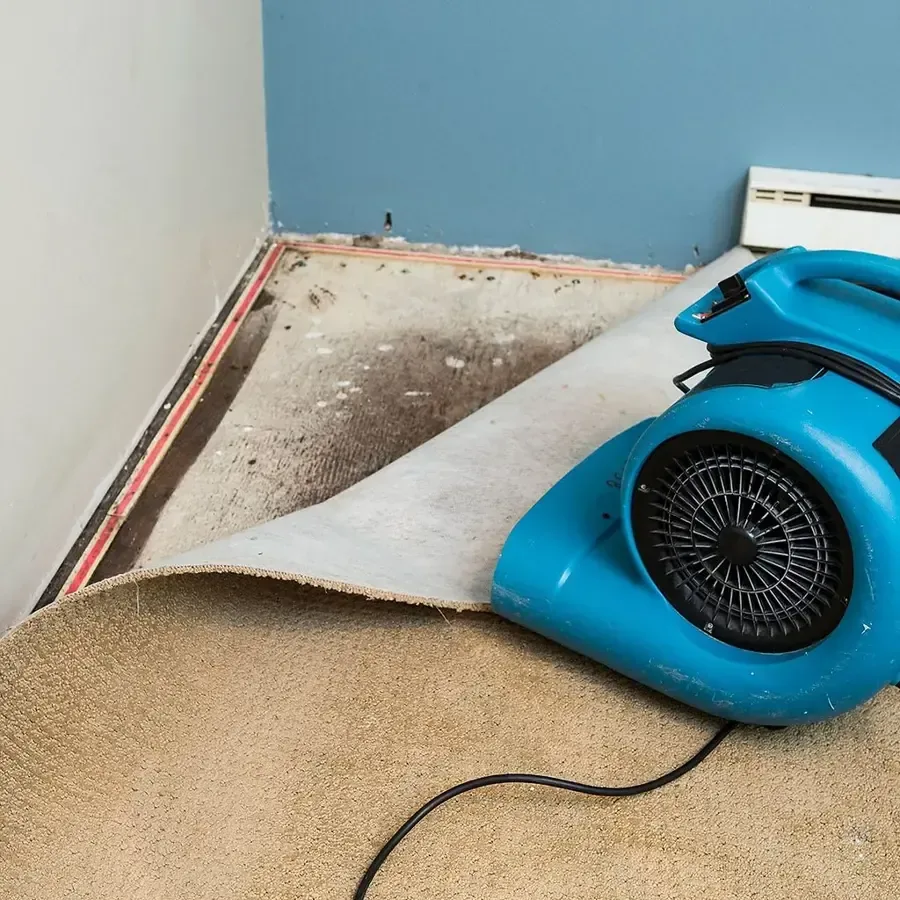
Carpet, padding and drywall that soaked in rain water are normally removed.
The storm and flash flood cleanup page covers why runoff is handled as contaminated, and how hard surfaces are cleaned and treated before drying begins.
What stays and what goes
- Finished drywall and insulation: cut back above the wet line
- Carpet and padding: removed
- Sealed concrete and many tile floors: cleaned and treated
- Stored cardboard, paper and fabric: usually discarded
- Sealed plastic bins and metal items: cleaned
Drying a lower level
Lower levels dry slowly because the air is cool and still. Dehumidifiers and air movers run with logged readings until walls and floors are dry.
Getting ready for the next heavy rain
Some steps cost little and help a lot.
- Clear leaves from the nearest drain and from downspouts.
- Move stored items off the floor onto shelves or pallets.
- Test a sump pump if the home has one, and keep a battery backup ready.
- Know where the main electrical panel is and how to cut power to a lower level.
- Keep photographs of each room and a list of valuables in a cloud folder.
Sewage and drain backup after heavy rain
Heavy rain can also push water back through floor drains. If the water coming up is dark, smells of sewage or has solids in it, it is treated as the most contaminated kind of water, and porous materials it touched are removed.
The sewage backup cleanup page explains how backflow is handled and which surfaces are treated. Until it is cleaned, children and pets should be kept out of the area.
- Do not wade through backed up water without gloves, boots and a mask.
- Do not run fans over contaminated water.
- Wash hands and tools after contact.
- Throw away food and medicine stored near the flood.
Records and next steps for the owner
A flooded lower level involves many decisions at once. A short record keeps them organized.
Photographs, a written timeline and receipts for pump out and drying make an insurance claim easier. Keep damaged samples until the insurer agrees they can be discarded.
How this connects across the area
Basement flooding happens across the whole area, not just near one river. The main city basement page explains how the same pump out and dry down apply elsewhere.
Neighbors can help each other here. A street where several owners clear the same drain inlet before a storm sees less water at its low doors than one where nobody does.
Questions
Where does the Elizabeth River flow?
It rises at the border of Irvington and the Vailsburg neighborhood of Newark, runs south through the center of the township in a concrete channel and drains into the Arthur Kill.
Did the river flood Irvington during Ida?
On September 1, 2021, Ida made the Elizabeth River overflow its banks in the city of Elizabeth, downstream of Irvington. That shows what the river can do in a major storm.
Is rain water in a lower level contaminated?
Yes. Runoff crosses streets and yards before entering, so soaked porous materials are normally removed.
Why pump out in stages?
A sudden drop in water level can stress foundation walls and floors, so crews lower the water gradually.
Do all homes here have basements?
That is not known for the township. The steps apply to any cellar or lower level, finished or not.