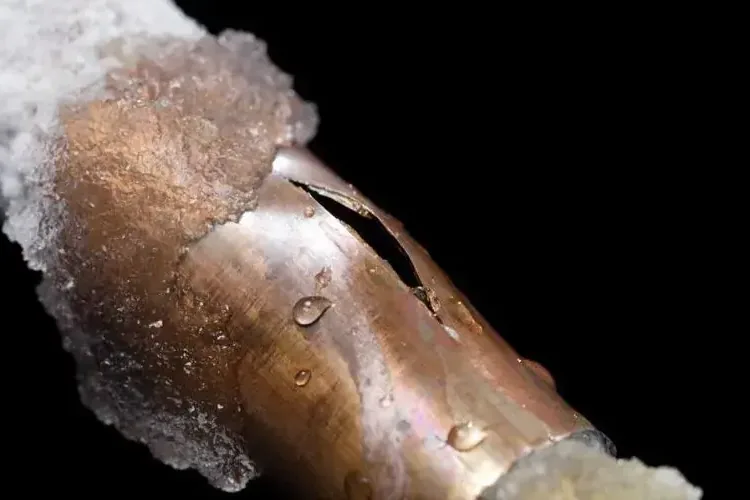
On December 26, 2024, a 12 inch water main broke near Brookside Terrace and Franklin Street. Taps ran dry for about 15,000 residents and a boil water advisory followed. The break happened in the cold, and the same cold is a threat to pipes inside houses. This post connects the two: what to check when pressure returns and what a winter pipe failure looks like indoors.
Key takeaways
- Town officials believed cold temperatures caused the December 2024 break, and cold also threatens pipes inside houses.
- When pressure returns after an outage, weakened fittings and open fixtures can show leaks that were not visible before.
- Shut off the main valve at the first sign of a spreading leak, then extract and dry walls and floors.
- Frozen pipes should be thawed slowly and watched, because the break often shows at the thaw.
- Moisture readings confirm that walls and ceilings are dry before they are closed up.
What happened on Franklin Street
The 12 inch main broke on December 26, 2024, near Brookside Terrace and Franklin Street. Rushing water briefly flooded Franklin Street, and town officials believed cold temperatures caused the break.
A 48 hour boil water advisory followed. It took about 10 hours to replace the pipe and patch the road, and about 15,000 residents were affected when taps ran dry.
Why local cold matters to pipes
The township has a humid continental climate. January is the coldest month, with highs in the upper 30s F and lows in the lower 20s F.
Snow is common from December to March, and nor'easters can bring significant snow. Pipes in exterior walls, garages, porches and unheated rooms are the first to feel it.
What happens inside a house when water returns
A main break and a return of pressure can hide trouble in plain sight. A house may have had a fitting weakened by the cold without any visible leak, and the restoration of flow can show it.
Air in pipes, open faucets and a sudden surge are all things owners should expect after an outage.
Checks when pressure comes back
- Open one faucet at a time and let the air out.
- Walk through every floor looking for damp ceilings, wet baseboards or water stains.
- Check under sinks and near the water heater for drips.
- Listen near walls for the sound of running water when no fixture is on.
- Read the water meter, leave every fixture off for a while, then read it again; a moving dial points to a hidden leak.
If a leak shows
Shut off the main valve first. Then switch off power to wet areas if it is safe to reach the panel, and photograph the damage before moving anything.
Burst pipe versus frozen pipe
The two problems are related but not the same. A burst pipe has already split and is releasing water.
A frozen pipe is blocked by ice and may split when it thaws.
The burst pipe water damage page covers the first case, and the frozen pipe water damage page covers the second. In both, the damage depends on how long the water ran and how many layers it reached.
The main city burst pipe page shows how the same steps apply across the area.
- Burst pipe: active water, shutoff and extraction come first.
- Frozen pipe: slow thawing with controlled heat and a person watching the pipe.
- Both: open the wall or ceiling when water is trapped, then dry the cavity.
- Both: record the damage and keep damaged materials until the insurer approves removal.
How the cleanup runs after a winter break
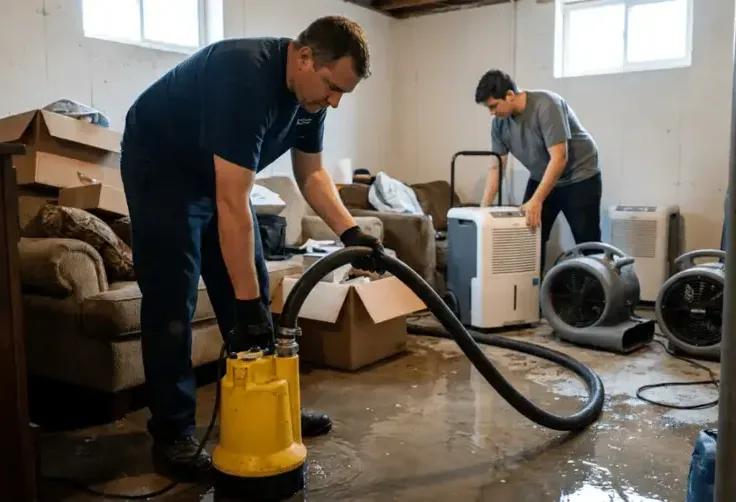
Extraction starts as soon as the water is shut off. Standing water is removed, and wet carpet or padding is lifted so the floor below can dry.
Walls and ceilings are opened only where moisture readings show water. That keeps removal small and prevents trapped moisture from spreading.
Then air movers and dehumidifiers go in. The crew returns to check readings, and equipment leaves only when walls and floors are dry.
A pipe that broke because of cold is also repaired by a plumber, because drying does not fix the pipe.
Different homes, different leak paths
Housing here includes single family homes, townhomes, condos and garden style communities, plus older homes with renovation potential. A cold break behaves differently in each.
In a single family house, the water often runs down through a floor and into the level below. In a townhome or condo, it may cross a shared wall, which makes fast shutoff and a prompt report to the building manager important.
Buyers of older homes are advised to check systems, drainage and roofing, and plumbing in unheated corners belongs on that list. Pipes close to exterior walls and porches deserve a look before winter, not after.
- Single family: check exterior walls, garages and porches.
- Townhome or condo: tell neighbors and the manager about a wall leak.
- Older house: ask a plumber to check pipes in unheated corners.
- Any home: label the main valve so anyone can find it.
Why the first hours decide the damage
Water that runs for a short time can stay in the floor covering. Water that runs for a long time climbs walls and soaks insulation.
A winter break often happens at night or while the family is away. That makes it more likely to run long, and that is why shutoff and extraction come before everything else.
What to record after a cold break
Records help the repair and any claim. Photographs of the leak, the wet walls and the floors, with dates, tell the story.
Note when the water was shut off, which rooms were wet and what was removed. Keep receipts for the plumber and for drying, and save a small sample of damaged material until the insurer agrees it can be discarded.
Preparing the house before the next cold snap
The steps are small and cheap compared with a flooded room. For a wet wall or ceiling, the Verona structural drying page lists the equipment and readings used.
- Insulate pipes in garages, porches and exterior walls.
- Let a faucet drip on the coldest nights.
- Open cabinet doors under sinks on exterior walls.
- Know where the main valve is, and test it once a year.
- Keep towels, a bucket and a flashlight where the family can find them.
- If the house will be empty, leave the heat on at a safe temperature.
Questions
What caused the December 2024 break?
Town officials believed cold temperatures caused the break of the 12 inch main near Brookside Terrace and Franklin Street.
Can a boil water advisory damage a house?
The advisory itself does not. The loss and return of pressure can expose weak fittings, so owners should check for leaks when water returns.
How cold does it get here?
January is the coldest month, with highs in the upper 30s F and lows in the lower 20s F. Snow is common from December to March.
What is the first thing to do if a pipe bursts?
Shut off the main valve, then switch off power to wet areas if it is safe, and photograph the damage before moving anything.
Does drying fix the pipe?
No. Drying handles the water in walls and floors. A plumber repairs the pipe itself.