
On October 5, 2022, a 74 inch water main broke along Bloomfield Avenue, and water ran in the street in front of homes. Residents were trapped in their neighborhoods, and about 300,000 people across Essex, Hudson and Passaic counties were affected. Most main breaks stay in the street, but some water finds a way inside. This post covers what a homeowner checks, how extraction works and how drying is verified.
Key takeaways
- A main break can put a large volume of water in the street quickly, and some of it may reach a doorway, a garage or a window well.
- Check the lowest rooms first, and look at baseboards and floors, not only at the carpet surface.
- Water from the street is handled as contaminated, so soaked porous materials are normally removed.
- Discolored water and low pressure after a break are separate from water damage, but both can occur together.
- Dry readings, not a dry feel, are the signal that walls and floors can be closed up.
What the October 2022 break looked like
The 74 inch main that broke was described by a resident as a state pipe passing through the township that does not supply the town. Even so, the break sent water into the street on Church Street and Bloomfield Avenue.
Water ran in front of homes, and residents were trapped in their neighborhoods. For some owners the question was not drinking water but what the water in the street might do to a doorway.
A second break on Franklin Avenue
Another water main break on Franklin Avenue, between Harrison Street and the Belleville line, caused discolored water, low pressure, road closures and detours. Franklin Avenue is the main shopping street and the center of the original village of Franklinville.
Shops there deal with a different set of problems than homes do, including customers who cannot reach the door. Residents and owners can follow the Nutley Water Department and the township, which post water and sewer notices.
How street water reaches a brick house
The township describes itself as tree streets, brick houses and parkland, a built out grid. That grid means houses sit close to the street and to each other, so water that pools on one side of the road may reach a neighbor's step too.
Brick keeps water out of the wall face, but it does not stop water from crossing a threshold, entering a window well or running into an attached garage.
Common entry points
- Front and back door thresholds
- Garage doors and the floor drains inside them
- Window wells at lower windows
- Utility openings where pipes or wires enter the wall
- Steps that lead down to a lower entrance
Signs water got in
Look for a dark line on baseboards, a musty smell, swelling in wood trim and a dampness that returns after wiping. Carpet that feels cold or squishy underfoot has water under it.
The first steps once water is inside
Water that comes from the street is treated as contaminated. The first steps are about safety, evidence and stopping the spread.
- Stay out of standing water until power to that area is confirmed safe.
- Photograph the water line and each damaged room before moving anything.
- Lift small items and papers to a dry spot.
- Do not run the vacuum or fans on wet carpet.
- Arrange extraction and a moisture survey of every room on the floor.
How extraction and drying work
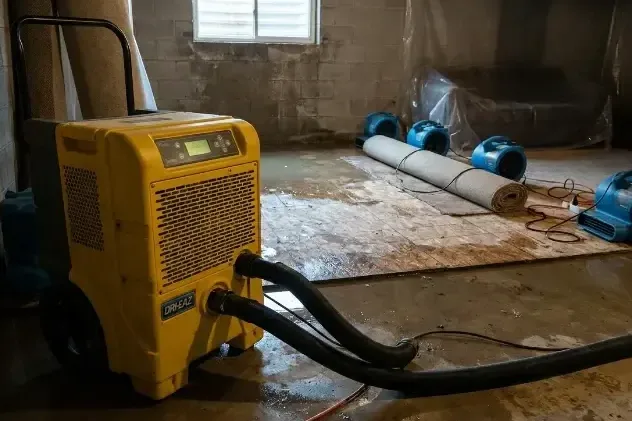
Extraction comes first. The water extraction page explains how standing water is removed with pumps and extractors, and how the lowest layers of flooring are handled.
Then the materials that cannot stay come out. Wet carpet padding, soaked insulation and drywall that wicked water above the wet line are removed so they do not keep releasing moisture.
Drying follows. The structural drying page describes how air movers and dehumidifiers are set, how readings are logged and how a crew decides when a wall is ready to close.
In a brick house, walls and floors can hold water longer than they look, so readings matter more than appearance.
- Standing water removed
- Porous and contaminated materials taken out
- Surfaces cleaned and treated
- Equipment placed with a moisture plan
- Readings repeated until dry
Discolored water and low pressure
Water quality and water damage are different things. Brown water in the mains occurs when flow in the mains is altered by unauthorized hydrant use, firefighting or a water main break.
The township advises running water 10 to 15 minutes until it clears.
That advice is about the tap. It does not tell an owner anything about a wet floor, so both checks are worth doing after a nearby break.
Garages, steps and the lowest rooms
After a break, the lowest spots collect water first. Attached garages, steps leading down to a side door and rooms at the back of a house are the usual places.
Cardboard, paper files and fabric stored on a garage floor soak up water quickly and are normally discarded. Plastic bins, metal tools and sealed containers can usually be cleaned and kept.
Where a door connects a garage to the house, the threshold is the test. Water that stops at the sill may leave the house dry.
Water that crosses it reaches flooring, baseboards and the bottom of walls, and that is when drying equipment is needed.
- Check the threshold between garage and house for a wet line.
- Sort garage contents into keep, clean and discard.
- Press on the bottom of interior walls to feel for soft drywall.
- Lift mats and runners so the floor under them can dry.
Records that help a claim
A claim is judged on evidence, so a short record pays off. Dated photographs, a written timeline and a list of discarded items make the process smoother.
Keep a small sample of damaged flooring or drywall until the insurer says it can go. Receipts for pump out, cleaning and drying belong in the same folder.
Preparing for the next break or storm
Main breaks are hard to predict, and a plan costs little. If a storm and not a main is the cause, the storm and flash flood cleanup page covers that case, and the Nutley hub lists every service.
- Know where the main shutoff valve and the electrical panel are.
- Keep sandbags or a barrier handy for doors that face the street.
- Photograph each room and store the images in a cloud folder.
- Raise stored items off the floor in garages and low rooms.
- Follow the township's water and sewer notices for updates.
Questions
Did the October 2022 main supply Nutley?
A resident described it as a state pipe passing through the township that does not supply the town. It still sent water into the street on Church Street and Bloomfield Avenue.
How many people did the break affect?
About 300,000 people across Essex, Hudson and Passaic counties were affected by the 74 inch main break on October 5, 2022.
Is street water inside a house contaminated?
Yes. It crosses pavement, gutters and yards before entering, so it is handled as contaminated and soaked porous materials are usually removed.
What causes brown water in the mains?
Brown water occurs when flow in the mains is altered by unauthorized hydrant use, firefighting or a water main break. The township advises running water 10 to 15 minutes until it clears.
Where are official notices posted?
The Nutley Water Department supplies drinking water, and the township posts its water and sewer notices.