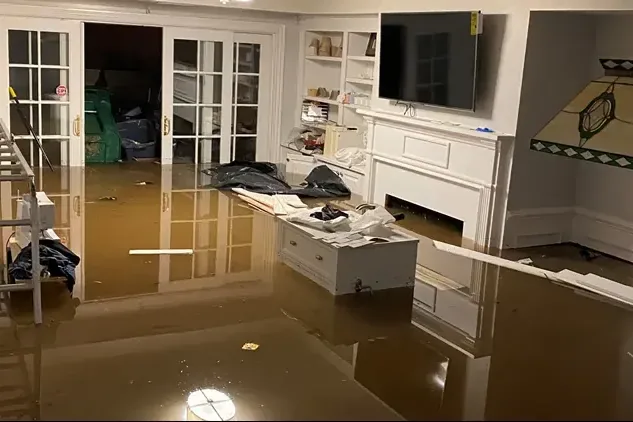
Three small waterways come together in Watsessing Park, and when a storm drops rain faster than the drains can move it, the nearby streets feel it. Residents report repeated flooding in the same places. This post explains what that means for a house or shop when runoff crosses the threshold, and how the cleanup is handled.
Key takeaways
- Runoff from brooks and storm drains is contaminated, so soaked porous materials are removed rather than saved.
- Streets near Watsessing Park have a record of repeated flooding, so owners there benefit from a written plan.
- Pump out the lowest spot first and photograph the water line before moving anything.
- Drainage upgrades reduce flooding but do not remove the risk, so keep drains clear before forecast storms.
- Drying with meter readings is what confirms that the building is safe to close up.
Where the water comes from
The Second River, Toney's Brook and Wigwam Brook come together in Watsessing Park. The park is shared with East Orange, with about 60 acres in the township, and it has stretches of the Second River and Toney's Brook.
When rain is heavy, those channels fill. Water that cannot enter them backs into streets and then into low doors, window wells and garages.
A record of repeated flooding
On August 28, 2013 a National Weather Service flash flood warning was issued and Watsessing Park flooded. It was not an isolated event.
Residents report repeated flooding on Thomas Street, Windsor Place and Beardsley Avenue and near Watsessing Park and the Second and Third rivers. For an owner nearby, that makes the first day plan a routine matter, not a once in a lifetime one.
A drainage system built long ago
The stormwater system dates to the late 19th and early 20th centuries and includes 2,587 inlets and 150 outfalls. Township officials say heavier storms, aging infrastructure and decades of development strain it.
A system of that age was designed for different rainfall, and it can fall behind when a downpour arrives in a short burst.
Work now under way
The township formed a Flood Mitigation Advisory Committee in 2024, now a subcommittee of the environmental commission. Projects include a rain garden at the Pitt Street lot, planned underground detention at the Conger Street lot, and drainage work on Ampere Parkway and Abington Avenue.
These steps reduce how often water reaches homes, but they do not remove the risk. Owners still need a plan.
Why this water is handled as contaminated
Runoff crosses lawns, roads and storm drains before it reaches a building. It carries soil, oil and debris, and it can mix with overflow from drains.
That is why the cleanup works differently from a supply pipe leak. The aim is to decide what can be cleaned and what has to leave the building.
- Carpet and padding soaked in runoff are normally removed.
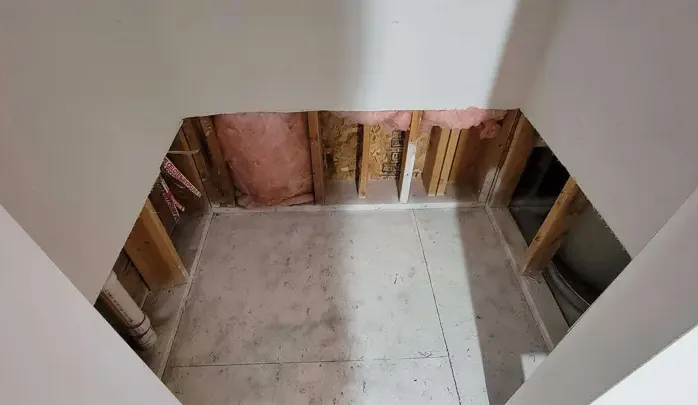
- Drywall and insulation that wicked water are cut back above the wet line.
- Sealed hard floors and many finished surfaces can be cleaned and treated.
- Contents on the floor are sorted into keep, clean and discard.
The first day at the property
Safety and documentation lead. After that, the water has to move out before it wicks into walls.
- Keep out of standing water until the power to that area is confirmed safe.
- Photograph the water line on walls, the damaged contents and the entry point.
- Lift papers and valuables to a dry room.
- Open interior doors so air can move once the water is out.
- Ask for pump out and a moisture map of the full floor.
How the cleanup runs
Extraction comes first. Details of that step are on the Bloomfield water extraction page, and the crew works from the lowest point of the floor outward.
Then the contaminated materials come out. Walls are opened where the wet line shows, and what cannot be saved is bagged and removed.
The storm and flash flood cleanup page lists the full sequence for runoff events.
Drying equipment follows. Air movers and dehumidifiers run until readings match dry reference points, and the crew returns to check the numbers instead of guessing.
For a wider view, the main city storm page explains how the same process applies across the area.
Looking beyond the park
Flooding in the township is not limited to the park. The Watsessing and Ampere North areas lie in the southern part of the township, and Silver Lake is shared with Belleville.
In September 2021 the remnants of Tropical Storm Ida passed through, and flooding caused a death. That outcome is a reminder to avoid floodwater on foot and in cars, not just to protect property.
Garages, ground floors and shops
Runoff rarely stops at one room. A garage floor sits lowest, so water enters there first and then moves toward the door that leads inside.
Ground floor shops and offices see the same pattern when water crosses a sill.
Contents stored on a garage floor are usually the first loss. Cardboard boxes, paper files and fabric soak up water within a short time and are normally discarded, while plastic bins and metal tools can be cleaned.
Where a door connects the garage to the house, the threshold becomes the test. Water that stops at the threshold may leave the house dry.
Water that crosses it reaches flooring, baseboards and the bottom of walls, and that is when drying equipment is needed.
- Check the threshold between garage and house for a wet line.
- Sort garage contents into keep, clean and discard.
- Look at the bottom of interior walls for staining or soft drywall.
- Lift mats and runners so the floor under them can dry.
What to record for the insurer
Records matter because a flood claim is judged on evidence. A dated photograph set, a short written timeline and a list of discarded items make the process smoother.
Keep a sample of damaged flooring or drywall until the insurer says it can be thrown out. Receipts for pump out, drying and cleaning belong in the same folder.
Preparing before the next warning
Preparation is practical. A few items make the first day easier.
- Clear leaves from the nearest drain and downspouts when a storm is forecast.
- Know where the electrical panel and the main water valve are.
- Store photographs of each room and a list of valuables in a cloud folder.
- Raise stored boxes and electronics off the floor in low rooms.
- Keep the township's alert information handy for flash flood warnings.
Questions
Is water from Watsessing Park area streets safe to clean up by hand?
Not without protection. Runoff is contaminated, so gloves, boots and a mask are the minimum, and a crew should handle large amounts.
Which streets report repeated flooding?
Residents report repeated flooding on Thomas Street, Windsor Place and Beardsley Avenue and near Watsessing Park and the Second and Third rivers.
Will township drainage projects stop the flooding?
They are meant to reduce it. A rain garden, planned underground detention and drainage work are in progress, but heavier storms still strain an old system.
What happens to carpet after runoff reaches it?
Carpet and padding that soaked in runoff are normally removed. Hard floors that can be cleaned and dried are treated and kept.
How is the building confirmed dry?
Moisture meter readings are logged during drying and compared with dry reference points. Equipment leaves only when walls and floors reach those levels.