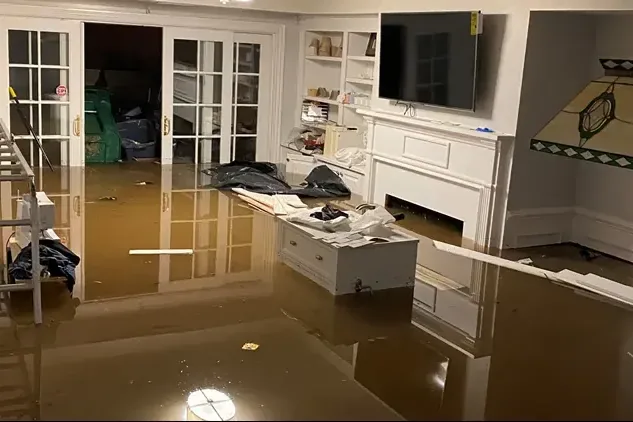
Two storms still shape how North Jersey thinks about flooding. Hurricane Irene in August 2011 and Superstorm Sandy in October 2012 both reached Essex County, and both left homes with water that did not come from a pipe. This post walks through the first day after storm water enters a house in Orange NJ, why that water is treated differently from a leak, and what the work looks like from pump out to dry down.
Key takeaways
- Storm and river water that enters a house is handled as contaminated, so porous materials it soaked are usually removed rather than saved.
- Turn off power to wet areas only when it is safe to reach the panel, and stay out of standing water that may be near outlets.
- Photograph everything before anything is moved, then pump out and start drying right away so the water does not wick into walls.
- the two storms showed that heavy rain and surge can arrive weeks and years apart, so a written plan beats an improvised one.
- Drying is verified with moisture readings, not by how a surface feels.
Why storm water is not the same as a leak
A burst supply pipe puts clean water into a house. Storm water does not.
Runoff crosses streets, yards and storm drains before it reaches a door, a window well or a garage, and it picks up soil, oil and whatever else it passes.
For that reason, restoration crews treat flood and runoff water as contaminated from the start. The goal changes from saving everything to deciding what can be cleaned and what must go.
- Carpet, padding and insulation that sat in storm water are normally discarded.
- Drywall that wicked water upward is cut back past the wet line.
- Hard surfaces such as sealed concrete and many tile floors can be cleaned and treated.
- Upholstery and mattresses that were soaked rarely recover.
What the two storms showed Essex County
The National Weather Service describes Irene as a rain event first. In August 2011 rainfall in excess of 10 inches inundated both the Passaic and Raritan basins, which together drain a large part of the state.
Sandy was a different kind of storm. On October 29, 2012, over 2 million customers statewide lost power, and Essex County was among the counties that saw some level of storm surge.
Rain driven flooding
Irene taught that saturated ground has nowhere to send more water. When rain keeps coming, runoff finds doorways, low windows and garage floors.
Water that arrives this way often stands in one area first, so pumping out the lowest spot early limits how far it spreads.
Surge and power loss
Sandy added a second problem. With power out, electric pumps stop and heat shuts down, so a wet house can sit for days without any drying.
That delay is when water climbs walls and finishes soak into subfloors. Anyone returning to a wet house should expect extra removal for that reason.
A reminder from further back
The 1903 Passaic River flood still ranks as North Jersey's worst. Newer storms have not matched it, but they are the reason local owners keep a plan ready.
The river and streets that carry the water
The East Branch of the Rahway River travels through the city, and Interstate 280 was built through the heart of the downtown area. Heavy rain moves toward those low corridors, so streets near them tend to see water first.
Principal local roads include Valley Street, Lincoln Avenue, Scotland Road and Highland Avenue, and County Route 508 follows Central Avenue. When these roads carry runoff, side streets and driveways pick it up next.
The city still features many tree lined streets with well maintained homes. Leaves and debris can block drains in a storm, which is one more reason water can pool at a front step or driveway.
The first day after storm water gets in
The order of the first day matters more than speed on any single task. Safety comes first, documentation second and water removal third.
- Do not wade through standing water until power to that area is confirmed off or the water is clear of outlets and cords.
- Take wide and close photographs of the water line, damaged contents and any visible source.
- Move valuables and papers to dry rooms, but leave heavy furniture alone until the floor is checked.
- Wear boots, gloves and a mask when handling anything the water touched.
- Ask for pump out and a moisture survey so the full extent is mapped, not just the visible puddle.
How the work moves from water to dry
Extraction comes first. Truck mounted and portable units pull standing water out, and the crew returns to squeeze remaining water from carpet, padding and the lowest layer of walls.
This is the work described on the water extraction page.
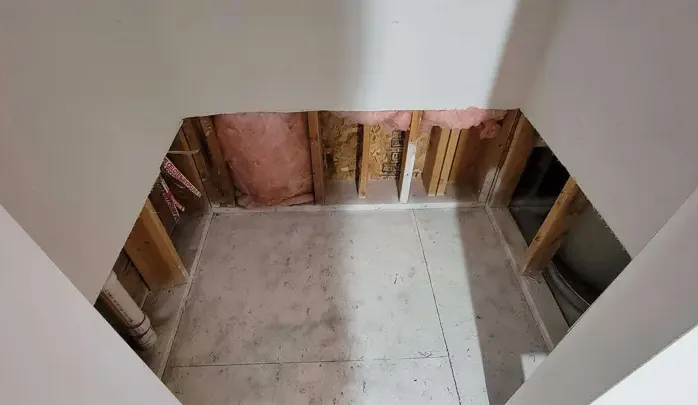
Next comes the removal of what cannot stay. Porous materials soaked by storm water are cut out and bagged, hard surfaces are cleaned, and cavities are opened so air can reach them.
Then drying equipment goes in. Air movers and dehumidifiers run while meter readings are logged, and the equipment stays until walls and floors read dry.
The structural drying page explains the steps, and the storm and flash flood cleanup page covers the contaminated water side of the job.
- Standing water removed and the lowest floor surveyed
- Porous and contaminated materials removed
- Hard surfaces cleaned and treated
- Cavities opened and drying equipment placed
- Daily readings until target levels are reached
When the water came up from below
Some storms push water in through the lowest level rather than the front door. If a cellar or finished lower level is wet, the basement flooding cleanup page lays out the pump out and dry down for that situation.
The same rule applies there. Water that rose from outside is treated as contaminated, and finished materials that absorbed it are usually removed.
Getting ready before the next storm
Snowmelt adds a seasonal angle. The National Weather Service notes that snowmelt flooding most often occurs in spring when rapidly warming temperatures melt snow and the water runs off already saturated ground.
A plan covers rain, surge and melt.
A short written plan is more useful than a long one. It should be saved where every adult in the home can find it.
- Know where the electrical panel and main water valve are.
- Keep a list of valuables to lift first and a spot to lift them to.
- Store insurance details and photographs of rooms in a cloud folder.
- Clear leaves from drains and downspouts before forecast storms.
- Decide in advance who handles pump out and drying so the decision is not made in a rush.
Questions
Is storm water in a house really contaminated?
Yes. Runoff and river water travel across streets and yards before they enter a building, so crews treat them as contaminated. That decides which materials are removed and which are cleaned.
Can wet carpet be saved after a flood?
Carpet and padding soaked by storm or river water are normally removed. Clean water from a supply pipe is more forgiving, but flood water is not.
What did the two storms have in common?
Both reached Essex County and left homes with floodwater, but by different routes. Irene was heavy rain across the Passaic and Raritan basins in August 2011. Sandy brought surge and widespread power loss on October 29, 2012.
Why does drying matter after the water is gone?
Water stays in framing, plaster and subfloors long after the surface looks fine. Drying equipment and meter readings confirm that walls and floors reached normal levels.
Should the power stay on in a flooded room?
Only if the room can be reached safely and the circuit is confirmed off for wet areas. When in doubt, keep out of the water and have the power checked first.