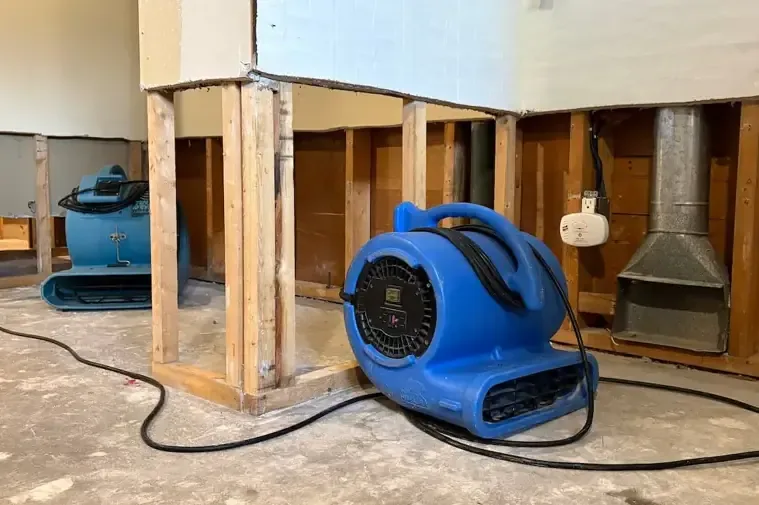
The first cold weeks of the season are when many heat systems start up after months of rest. Valves that sat idle can weep, joints can let go and boilers can show leaks that were not there in spring. This post is for owners of homes with radiators or a boiler in Orange NJ: how to spot a leak early, what to shut off and how the wet floor and ceiling below are dried.
Key takeaways
- Leaks often appear when heat first runs, because idle valves and joints are put under pressure again.
- A slow weep from a radiator valve can soak a floor and the ceiling below for weeks before a stain shows.
- Turn the system off and let it cool before touching anything, since hot water and steam can burn.
- Wet flooring and framing are extracted and dried, and the leak itself is repaired by a heating professional.
- Check the room below every radiator after the first week of heat.
Why leaks show up at the first heat
A heat system is quiet for months. When it runs again, water and steam move through valves, joints and fittings that have dried and shifted.
Some leak at once. Others weep slowly, leaving a small puddle that dries and returns.
A slow leak can soak a floor long before a stain appears.
A city of older buildings and tree lined streets
Orange was once the United States' hat making capital. The industry traces back to 1792, and by 1892 21 firms were in the trade.
The Orange Brewery was built in 1901, and a hat factory building followed in 1907.
Those dates are a reminder that the city has a long building history. The city also still features many tree lined streets with well maintained homes, and the city has about 12,883 housing units.
No single heating type applies to all of them, so the checks below fit any home that has radiators or a boiler.
Signs of a radiator or boiler leak
Most leaks announce themselves in small ways first.
A leak that runs at night or while the family is away is the most damaging, because nobody is there to stop it.
- A damp spot or white crust at a radiator valve
- A puddle or rust stain under a radiator
- Cupped or stained wood flooring near a heat source
- A new stain on the ceiling below a radiator
- A boiler that needs water added more often than before
- Water around the base of the boiler or its pipes
What to do when a leak shows
Hot water and steam can burn. The first step is to stop the system and let it cool.
- Turn the heating system off at the thermostat and the boiler switch.
- Wait until the radiator or pipe is cool before touching it.
- Place a pan or towel under the drip and mop the floor.
- Shut off the boiler's water feed if there is a valve and it is safe to reach.
- Photograph the leak and the damage, then arrange extraction if water has spread.
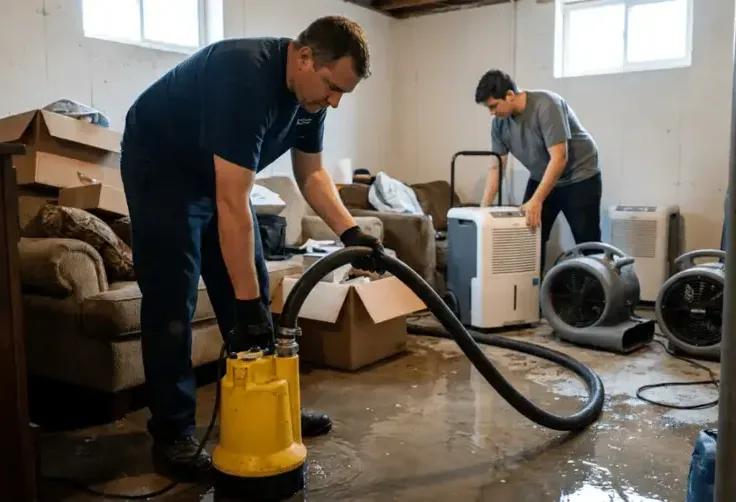
How the wet floor and ceiling are dried
Heating leaks are different from supply pipe leaks because the water can be warm and can run for days before anyone notices. By then it may have soaked the subfloor and the ceiling below.
The radiator and boiler leak page explains how water is extracted from floors and cabinets and how the cavity is dried. The structural drying page lists the equipment and readings that confirm the job is done.
Floors and subfloors
Wood floors can cup when water sits under them. Drying with the right equipment can save many floors if the water is caught before it spreads.
Ceilings and walls below
If a leak has reached the ceiling below, the ceiling leak water damage page covers how a wet ceiling is opened and dried. Insulation above the ceiling must be checked too.
Who fixes what
A restoration crew removes the water, dries the structure and documents the damage. A heating professional repairs the valve, joint or boiler.
The two jobs work best in sequence. Water removal can start as soon as the system is off, and the repair can follow once the area is safe.
- Restoration crew: extraction, removal of wet materials, drying, records
- Heating professional: valve, joint, pipe or boiler repair
- Owner: documentation, insurance contact, decisions on materials
Steam, hot water and why the leak looks different
A heat system leak can look different from a plumbing leak. Water from a radiator valve may be warm, may carry rust and may leave a mineral crust where it dries.
Steam systems can also release moisture that settles on walls and windows near a radiator. That is not always a leak, but a steady wet patch or a stain that grows is.
If a floor feels warm and damp near a heat source, treat it as a leak until a meter says otherwise. Early checks cost little compared with replacing a floor.
- Rust colored water points to the heating system, not a supply pipe.
- White crust on a valve means water has been escaping there.
- A boiler that needs water often is losing it somewhere.
- A damp wall behind a radiator may need to be opened to check.
What the owner should record
Records help both the repair and the claim. Photographs of the leak, the floor and the ceiling below, with dates, tell the story.
Note the date heat was first turned on, when the leak was seen and what was done. Keep receipts for the repair and for drying.
A short checklist for the cold season
A few minutes of checking in the first weeks of heat can prevent a big job later.
- Run the system for a short test before the first cold night.
- Look under each radiator and at each valve for moisture.
- Check the room below any radiator for ceiling stains.
- Note the boiler pressure gauge reading and watch for drops.
- Keep a towel and a pan near the oldest radiators.
Questions
Is a small radiator weep worth fixing?
Yes. A slow weep can soak a floor and the ceiling below for weeks before a stain shows, so it is worth repairing and checking the floor.
Can a wood floor be saved after a radiator leak?
Often yes, if the water is caught early and dried with the right equipment. Floors left wet for a long time may cup or need replacement.
Is boiler water hot enough to burn?
Yes. Let the system cool before touching pipes, valves or radiators, and do not open a hot valve.
Who repairs the radiator or boiler?
A heating professional repairs the valve, joint or boiler. A restoration crew handles the water, wet materials and drying.
How is the floor confirmed dry?
A moisture meter shows readings in the flooring and subfloor. Equipment stays until they match dry reference points.